Sunday, October 31, 2010

Archaeo-Futurism


Guillame Faye is the only person I know dealing with this level of synthesis.

Moreover, as the philosopher Raymond Ruyer, detested by the left-bank intelligentsia, foretold in his two important works, Les nuisances idéologiques and Les cents prochains siècles, once the historical digression of the nineteenth and twentieth centuries has finally closed, with egalitarianism's hallucinations having descended into catastrophe, humanity will return to archaic values, that is, quite simply, to biological and human (anthropological) values: distinctive sexual roles; the transmission of ethnic and popular traditions; spirituality and sacerdotal organization; visible and supervisory social hierarchies; the worship of ancestors; initiatory rites and tests; the reconstruction of organic communities that extend from the individual family unit to the overarching national community of the people; the deindividualization of marriage to involve the community as much as the couple; the end of the confusion of eroticism and conjugality; the prestige of the warrior caste; social inequality, not implicit, which is unjust and frustrating, as in today's egalitarian utopias, but explicit and ideologically justifiable; a proportioned balance of duties and rights; a rigorous justice whose dictates are applied strictly to acts and not to individual men, which will encourage a sense of responsibility in the latter; a definition of the people and of any constituted social body as a diachronic community of shared destiny, not as a synchronic mass of individual atoms, etc.


Sunday, October 24, 2010

Ἀνταίος


There exists in every age, in every society, a small, still choir of reason emanating from a few scattered thinkers ignored by the mainstream. The collective voices, when duly discovered a century or so too late, reveal what was wrong with that society and age, and how it could have been corrected if only people had listened and acted accordingly. ~ John Simon

Plato has never had success as a revolutionary and never will do so. But Plato himself will always live throughout the centuries of human history... and will be in each century the companion of the young and old who love pure thought, seeking only the light which it comprises." In other words, you can never really have a "revolution" of people oriented to the white point of wisdom discussed in yesterday's post. For one thing, it is an individual endeavor, not the sort of thing that could ever occur on a mass scale. And the left is a mass movement, which automatically condemns it to mediocrity and banality. It is led by a conformist herd of elites who imagine themselves superior, but nothing could be more foolish-- and self-contradictory -- than the idea of "mass excellence." In contrast to Plato, Karl Marx has enjoyed over a century "of astonishing success and has revolutionized the world. He has swept away millions -- those who went to the barricades and trenches in civil wars, and those who
went to the prisons, either as jailers or as prisoners."Really, can you name another philosopher who has enjoyed such a literally smashing success in such a short span of time? But you -- yes, you there -- "as a solitary human soul, a soul of depth and sobriety, what do you owe Karl Marx?"I don't know yet. Ask me next April 15th.The point is, "Plato illumines, whilst Marx sweeps away. Again, vertical man never obsesses, let alone enters the state of perpetual hysteria of leftist man. As Eliot wrote, "we fight rather to keep something alive than in the expectation that anything will triumph." Nevertheless, vertical man naturally frets about the deteriorating conditions of the interior of the human world, and its seemingly unimpeded slide into barbarism, spiritual exhaustion, scientistic magic, neo-paganism, self-worship, the cult of the body, abstract materialism, and a vapid and rudderless subjectivism. ~ One Cosmos

There is a lesson here, somewhere, Pogo, son...

As I was mentioning in an earlier post, there seems to be a sort of Platonic Renaissance stirring. The Radical Orthodoxy movement, Marion & other European theologians (like von Balthazar), Schuon & the traditionalists, etc. There is a growing recognition, in other words, that a surprisingly well-weathered and attractive alternative to Darwinian competition or Heckular Sub-manism is, actually, Plato. A lot has been said against Plato, although Pieper defended him in his book. G. Parkin Grant was basically a Platonist. And a great many people feel they understand him intimately - "Oh, he's that guy that believed that Ideas were more real than People, that's nuts. The real world isn't static & timeless, it's flux & change..." Which we are shortly to have even more and more of. Isn't Eternal Change about as Static as you can possibly get? I've asked this question before, and no one has a good answer. Why in the hell won't people listen to those who know? It's an old problem. You know it's bad when a classic liberal humanist like Fabius Maximus starts pulling a Moldbug and dredging up George Bernard Shaw with his Time Machine.

Still, no one has an answer to the ghosts of the past (Why were they so much more, oh, I don't know, "cultured"?). Why do they seem & loom so large to us? At least, those of us who still have an imagination left:

For as Schuon writes, the rationalist merely "calls 'reason' his lack of imagination and knowledge, and his ignorances are for him the 'data' of reason." When the unimaginative mentality grinds away at ignorance, the result is the kind of highflown philosophistry Russell spent his life producing and defending.

Yes, tidies & bundlemen, that's B. Russell. Who (even he) admitted that Size was a terrible snobbery to base one's epistemology or spirituality upon, which is common among his worshippers. The question really boils down to whether you conceive (or, in the worst cases, can even begin to imagine) that there may be something outside of us that is "bigger" which provides an ato-mo-sphere for the "Self". No God, no self. No Christ, no body. No Spirit, no soul. That sort of thing.

But if Progress is all there is, or all we can really know for sure, then there really isn't any kind of rebuke or truth that one can speak to Power. Which was really Plato's (and Polybius') point so long ago.

Saturday, October 23, 2010

Unity-in-Diversity ~ The Swiss Idea


The other choice is to pursue a pattern modeled after Switzerland’s. It has worked for centuries. Additionally, one of the world’s highest standards of living and GDP per person as well as unemployment around 3%, speak for the recipe. Four languages with their own Cantons, several religions and ways of life, and a location between great powers that had repeatedly fought each other, made the achievement anything but foreordained. Thus, we have a good example for making diversity into an asset and for allowing differences to serve as the soil in which constructive competitive conflicts thrive.

There is a lack of going back to roots here, a modern aversion to depth. Let's be denotationally correct ~ all political ideas have religious roots. But I agree with the point. Switzerland is what Europe ought to be. Perhaps the Saint who saved Switzerland had something to do with it? Elective affinities, indeed.

Those who ignore them, live on the surface...and despite their money and Crystal Cathedrals, have to go bankrupt one fine morning...

The Desolation of Science


One of my comments was an intelligent question from Nuallan, concerning the sketchy line I drew between Ockham & probabilism & modern day relativism. In order to better answer his question (which may confuse the issue more so), I'll draw another connection that is better delineated (ie., I have connected the dots). That doesn't mean I won't connect the dots for this, as well, just that I'll illustrate how things morph in Unity when people think they are segregated (notice how I use the vaguely disreputable connotation here for emphasis).

Feynman the physicist was fond of saying that "Philosophy of science is to Science as ornithology is to birds". You can immediately appreciate the emotional import of this statement. I had gotten into a prolonged, ugly, & hard-hitting argument with a modern "physicist", who wanted to maintain that modern Science has nothing to do with relativism, but was fond of quoting Feynman. I happened, HAPPENED, to stumble across this fact when reading Tom Wolfe's book on modern art (I forget the title right now, The Painted Word, I think).


Aesthetics is for artists what ornithology is for birds. Barnett
Newman

Now, tell me that culture & Science & philosophy don't share deeper connections than we realize. There are "elective affinities" (Goethe) at work here, which operate subconsciously (at the least) and I would argue transcendentally as well. Feynman pulled this quote out of the intellectual air which he breathed. He may have heard it directly, certainly it is dominant in his thought & praxis. He is an icon for many atheistic modern scientists (this interloquoter, for instance, denigrated Sir John Polkinghorne, Michael Polyani, and others, when pushed, which didn't take much). Feynman was his hero.

This is just one more example of the supposed "neutrality" in modern culture & Science. Now, here's the catch. I am NOT claiming neutrality can't exist. What I am claiming is that atheists/agnostics are RARELY capable of it. Additionally (and consequentially) they go to great lengths to hide the fact. The Weber separation of fact/value in sociology (here's another example) has had immense impact on the humanities in America.

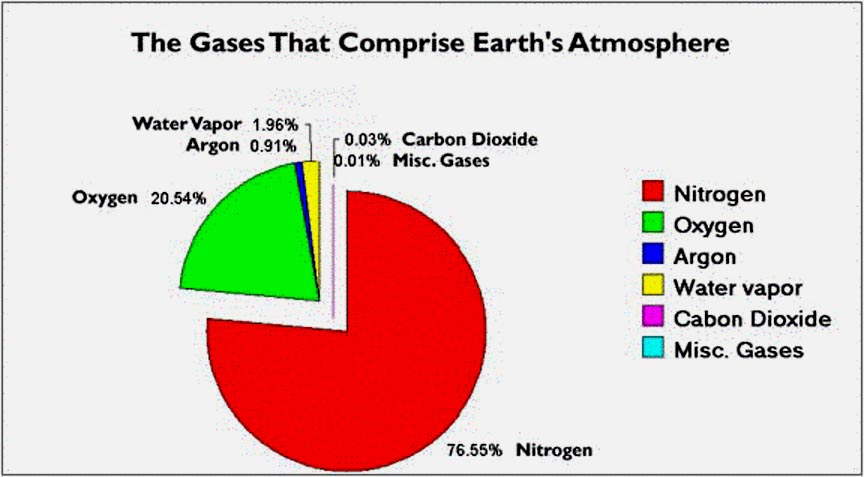
It is pointless to object that most people don't read Weber, or know of him, therefore, no direct connection exists. It is also rather foolish. It is in the air. It is all around us. Weber dominates the university landscape in modern day America like oxygen & nitrogen dominate our atmosphere. For all practical purposes, it is heresy to suggest anything contra-Weber, and also heresy to point out this fact. Weber rules.

I am not saying that I am infallibly correct about these "elective affinities", in all cases, but they do exist. Ockham's work made possible the generally diffused idea that simplicity was always a virtue. Therefore, if one was pondering a complex moral issues (and they are all complex at some level), it was oftentimes simpler to say "I have a doubt" and dispense with obligation. To disagree is not inherently foolish, but I've yet to come across a better explanation for how General Ideas filter down in seemingly chaotic systems. I find it hard to believe that Ockham's theories (which included epistemological and linguistic ones, as well as philosophical) did not impact the West at a gut level which made it easier to account for moral obligation by using negative reasons. John Stuart Mill's libertarianism may have some relevance here.

I issue a standing challenge to any & all comers to explain the origin of the Feynman quote without necessitating a discussion of Barnett Newman's views, which preceded Feynman's in historical time, and obviously have a connection.

Of course, if you like modern art, then I can only hope you read T. Wolfe's book. Which reminds me, Jacques Barzun has a very interesting book in which he passingly argues that Science has indirectly contributed to this popularization of "General Ideas Which Are In The Air". As a last side note, consider this ~ in an age of consumer democratization, Ideas which triumph are often not brilliant, but simply acceptable. Or should I say, compatible? Max Weber, Feynman, Barnett and that ilk come to the fore (or hide in the shadows) not because of their originality or brilliance, but because they are "system friendly". That is, there is something about the way Americans live on the North American continent that is compatible with fact vs. value.

Friday, October 22, 2010

Second World


America is no longer "First World". & We are starting to know it.

Thank you, Progress. What, in God's name, is this "Progress"?
Well, Progress is truth, light, peace, love & justice (especially Economic).
So, who would oppose such a thing.
God only knows. Reactionaries, coteries of bankers and autocrats, congeries of racists. That sort.
How do we know these people are execrable? Surely you don't mean to suggest...?
They oppose Progress. That is enough.
Isn't this just a question of power, then? Your enemies, defined as evil.
They aren't "my" enemies. This is a natural process. No one is coordinating it. It is destiny.
Mmmmm. No one? How does one discern this natural process?
Whatever conduces to Progress, naturally.
That's a tight little circle, there.
It's a natural process. Process & Progress.
So, how would we know if this was going awry? If it was highjacked? Or off the rails?
It would not Progress.
If it does not Progress, should we wait?
No, we should act.
Who is "we"?
Those who are in favor of it.
I thought you said this was a natural process.
It is. It occurs naturally.
Supernaturally.
Oh, no. Naturally. It works all by itself.
Except when we have to make it happen.
We mainly just don't obstruct the magic.
Is it ever not magical?
I've never seen it happen.
Thank you for your time.

Message received. How about turning to someone with something to say?

"-- or perhaps not -- this is one of the central themes of Borella's The Sense of the Supernatural. He is a French Catholic esoterist, completely orthodox in his thinking, as far as I can tell. He points out that it has only been in the last two or three centuries that we have developed this strict demarcation between "nature" and supranature, which means that the point-circle is taken to be the ultimate reality, instead of the cross-circle."


Rosenstock-Huessy took this line, with his "traject" and "preject", opposing (like all good thinkers) the worldview of Descartes. Apparently, Schuon has fleshed it out. The problem is that the Western world has this hangover binge that we seem to want to continue (that being the nature of binge drinking). "Progress" is a mental stopgap word for something we can't define; it is the object of mystification & dogmatic worship of the most dangerous kind. Orwell would say that it is a word used to hide our lack of understanding. "Progress" (through quantification) is of course, what Descartes' Reason is intended to achieve. And any fool can see the circle it leads to. Any fool, but the fool living through Progress.

Much better to worship the living God, whose insanity is wiser than the cunning of "Progress".

Wednesday, October 20, 2010

Radical Orthodoxy & Basileia tou Theou


Things just keep getting crazier. Something is brewing in the catacombs of the "conservative" camp, & this is just one example.

For Radical Orthodoxy, the particular Neoplatonic hierarchies of being, Being, and "beyond Being" are not decisive. What matters is the way in which Neoplatonism treats the world as a differentiated realm of beings and events knit together, not in spite of or against the discrete identities of things, but in harmonious order and toward a common purpose. This view, which Radical Orthodoxy argues is advanced and intensified by classical Christianity (especially by Augustine), operates outside the contrastive logic of identity and difference. Identity is neither a wound in the flux of difference, nor a vulnerable citadel to be defended. Dynamism and difference—"I am coming from and going toward"—constitute identity. The glue is sticky, but it never dries.
This, of course, is exactly the banner the New Pantagruel marched under. "Augustinianism" being short-hand for a perfection that is known and experienced, but incompletely, in the joy of material life under the sun. Imperfection with linking implies shadows, archetypes, a goal. In short, "NeoPlatonism". "Being" is not, after all, something we can dispense with in Christianity without loss.

This amounts to nothing less than Resurrection for cultural Christianity & the West. A declaration of war. Fix bayonets, refuse the line. Fight hand to hand if you have to. With joy. This is nothing like ordinary evangelicalism, even of the high caliber/octane John Piper variety. Stone cold Christianity. The stonewall. Rebuilding.

I am not sure about Reno's concluding note, which sounds overly tentative. At least these guys are literally killing their weight every day in hecular summanists. There is a lot to be said for going off half-cocked once in a while. If you never lose your head, it proves only that you've no head to lose (Rosenstock-Huessy). Stay tuned for more examples of this sort of thing. The Spirit is stocking up kindling in many varied places, and the wind is picking up. Look to see a huge turning radius & some surprising "revelations" about the supposedly modern world we live in, and that right soon.

Tuesday, October 19, 2010

Universalism

"Against Badiou and Zizek, who want to use Paul to defend a generic “universalism” that can become homogenization, John Caputo (St. Paul among the Philosophers (Indiana Series in the Philosophy of Religion)) argues that the universalism of Paul is more paradoxical, more Kierkegaardian (because Kierkegaard was Pauline): It is a “universalism of conversion to something quite concrete (grafting), not the formalism of a philosophical universal (subtraction), like the principle of causality, or a mathematical universal, like the Pythagorean theorem.”
He goes on to suggest that “it is not that all differences or distinctions are abolished, but that one difference or distinction in particular, the Jewish difference, is transformed and in being transformed proves to be transcendent, or better self-transcendent, in Christ Jesus, in whom it is able to break out of the particularity of the first form it took in the law and to trump and assimilate other differences, both its own early Jewish form and the Greek difference.”

That’s well said. I have more trouble with Caputo’s further claim that “Christ fulfills a Jewish promise, not a Greek one,” a claim based on the notion that events can only be recognized as events within a context and “the Christ-event is an event only in the context of the Jewish promise.” As central as Jewish particularity is, it doesn’t seem correct to say that “The crucifixion and resurrection of Christ is not an event for the Greeks.” The gospel is to the Jew and the to Greek, and it seems that Paul argues for some form of Gentile preparation for the coming of the gospel of the Jewish Jesus."

While it is good that Leithart is stepping back some from earlier statements on "a third way" of humanity = Christianity, and while few people wrestle with the issue at any deeper level, the problem remains within modern Christianity that ethnicity/kinship is a taboo subject which Christians are ill-equipped to handle & which they attempt to efface, just as they do in real life. Pre-committed as we are in our political religion to negating ethnicity, it is hardly virtuous or necessarily Christian to presuppose that such is something to enhance. It might be more productive to consider how Supernature transforms Nature & perfects it, and what this means for ethnicity. Also, how and why might this have implications for larger categories, like "whiteness"?

Spengler (Asia Times Online) declares he has no love for the "stench of the barbarian tribes". To which I would ask, have you seen an inner city ghetto in America lately? Or a nursing home? It's still with us, it's just out of sight, out of mind...this rhetoric begs the question most at stake ~ is there anything of value we have lost during our "evolution" out of tribes? The standard American political religion answer is No, ethnicity has no value whatsoever, or if it does, only in an individual context (miscegenation to create someone of "higher" qualities with another race). (One notable exception, of course.) But isn't this intermarriage just another race? How does this solve anything? It looks a lot (suspiciously a lot) like Hegelian synthesis (which I already reject, for reasons stated elsewhere, and violently). Inbreeding and outbreeding are both qualities of humanity which are valuable; after all, it's good to limit (inbreed) to the species. And Christ came to transform & perfect. Which implies that the nations will exist at the End of Times. Which is exactly what we find in Revelation. St. James warns those who would neglect their kith & kin. As GP Grant might say, our particular good (race/tribe) is not the Ideal, but without roots in the local particular, can we ever be nourished enough to begin the ascent to the Ideal?

The answer, naturally, is No. American political religion is a heresy, a Hegelian superstition and legalism, which is addicted to Idealism in the ideal, but which actually possesses immense hatred for all of the concrete realities it pretends to understand.

And Liberalism has weird connections to Fascism which I don't understand, or think anyone else does either. State control/coercion of economy, culture & religion is pretty close to "Fascist", and we are pretty close to the former, here in America, although much conformity is semi-voluntary (for now).