
Dedicated to the red and the white rose, to the eyes and the flame, to a more perfect unity... You can reach me @ cathasach71854@gmail.com
Showing posts with label Richard Mitchell. Show all posts
Showing posts with label Richard Mitchell. Show all posts
Thursday, November 24, 2011
The Temple of Intellect
Re-reading Barzun's Temple of Intellect, which the college library at Texarkana still has (amazingly) after the A&M move. It is astounding what good books many public libraries still possess, and one wonders "How much longer?". In any event, Barzun begins his thesis by showing how (using a minimum of evidence and a maximum of "rhetoric" and logic) Art, Science, & Philanthrophy have made themselves rebels and opponents of the Intellect, whose un-emotional claims are considered in bad taste (at best) in an era of massed democracy with its attendant panoply of technological goods and services, and its apparatus of public service bureaucracy. Barzun is right, of course, but he is refreshingly brilliant and powerful in a rather counter-intuitive and unusual diagnosis, one of the kinds which immediately shock you and prove themselves right at the same time. Why didn't I think of this? Because Barzun is using his intellect, and the rest of his aren't. Here is another writer with a penchant for doing just that, & an ability to see into the belly of the beast we dwell upon.


Tuesday, November 9, 2010
Language is Racist
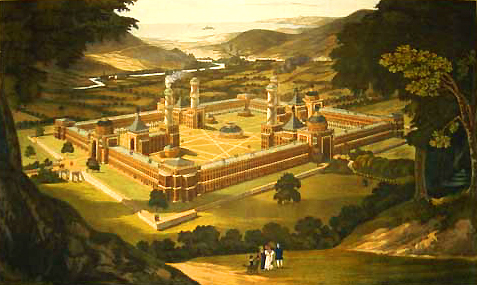 How far are they going to go in order to ensure the Modern Dystopia? Will racism continue to be ferreted out in new, unsuspected hidey-holes? It will have to be. Otherwise, it will be discredited. New burnings must occur. That is how it works.
Read Owen Barfield Night Operation.“A powerful movement arose for a return to the older and simpler practice of instructing children in ‘the three Rs’ (reading, writing, and arithmetic) and leaving it at that. Anything else would come under some such heading as ‘learning’ or ‘erudition’, the encouragement of which was admittedly undesirable. The sponsors of the movement argued something like this: It is agreed on all hands that the primary purpose of education is to avert elitism by scotching discrimination. But it also has a subsidiary aim, namely the transmission of knowledge, which has been widely regarded as an end in itself. If we confine education to the three Rs, then on the one hand we achieve its primary purpose, while on the other we lean firmly on an educational principle which has been established as effective by many centuries of practice.
To this argument their opponents had two replies. First, it is not the case that instruction limited to the three Rs discourages elitism. Some children acquire them more easily and apply them more cleverly than others and in doing so become different from those others. Obsession with the three Rs belongs to the old twentieth-century ideal of equality of opportunity. Modern education aims at equality of result. Mastery of the three Rs may end in using language correctly enough to convey coherent meaning, and an ingrained habit of speaking and writing correctly is the deepest and most pernicious of all the hidden roots of class-distinction and racism. But secondly, and more importantly, that whole approach to the problem is out of date. It is based on a way of life that has long been declining and has now practically disappeared.”
Owen foresaw (as did others) that the machinery of the state would one day be used to produce Manchurian candidates for citizens, and would eventually realize that real thought was subversive. It's not the "State" that's evil (in ideal form) but the "machinery" part. A real State, and a strong one, isn't necessarily huge. It is, however, powerful. But it isn't mechanistic. Because reality isn't a machine. Reality is a creature.
Sir Ken Robinson wonders why it (education) is failing. American kids are top of the world until the 3rd grade. Kids are creative & not afraid to be "wrong". "If you are not prepared to be wrong, you'll never come up with anything original." We've standardized this in educations and companies. (This is due to "mechanization" of ALL THINGS, Sir Ken. Since you've moved from Stratford upon Avon to LA, you are obviously thinking this over. Please read Richard Mitchell for the complete frontal assault on "education".)
Rough Transcript ~
"We all have bodies. Why do educate progressively from the waist up, and then focus on the head? Why is dance not as important as mathematics? The whole purpose of education seems to be to produce university professors. They are not the penultimate form of human life. They tend to live in their heads. They are disembodied, in a kind of literal way. They look on their body as a form of transport for their heads. Their body is there to get them to meetings. Education came into being to help get to the top of the industrial system or to get people into the admission process of universities. In the next 30 years, more people (according to UNESCO) will be graduating with degrees than have graduated in recorded history. Degrees will mean nothing. It's a process of academic inflation, which is shifting beneath our feet. IQ is varied & dynamic, as well as interactive. Creativity comes about from the interaction between different disciplines. IQ is also distinct. Some people have to move to think. Human ecology is diverse. We'll have to rethink fundamental principles of what we are looking for.
So why is "education" or "educator" a bad word? The Brits never went in for Lowest Common Denominator education (they kept the grammar schools). Sir Ken ignores, unfortunately, many other factors, but he is on to something. Perhaps he smells the Gnosticism inherent and implicit in the Modern Dystopia. How can we rethink fundamental principles merely by placing hope in kinetically savvy children?
On the contrary (and in addition to his strong opening) modern problems exist (at least in this sense) because children are denied a life of the mind, as well as an identity of the body. The ancient ideal always had held them together. Think of the playing fields of Rugby, and the modern language classes, as well as the chapels, which built the British Empire. Oxford and Cambridge turned out Latin scholars to whom Arabic & Sanscrit & Indian subdialects would be child's play. Any biography of this period (I am thinking of John Buchan's memoirs) will give you a portrait of a time in which education was for the "whole man".
There was not separation of fact/value, and certainly no snobbery towards the past in the name of the "modern". Rather, Humans were taught to subject themselves to rigorous discipline and initiation into archane arts, which then proved remarkably useful (somehow) for modern mastery.
So Language is racist. It is discriminatory and prejudiced. By learning the exactly right word for the precise thing, man was freed from immersion in the sensate and enabled to understand the world he lived in. This created a problem for the revolutionary state, once it had assumed the position of being "in control" (after WWII). How do revolutionaries "conserve" their victory? Easy, they go from chaos to chaos, which they produce, necessitating more revolutions.
Here's Sir Ken Robinson trying again. This is better, actually, fairly good. "The Enlightenment view of intelligence" however had little to do with a knowledge of the classics. This reminds me a little bit of Corelli Barnett's criticisms against older style education. I do agree that ADHD is a bogus diagnosis, particularly for boys, who are by nature so & should be. And I do agree that standardized testing and mechanized education is really, really bad (which C. Barnett thinks is good, as long as it's focused on technics).
Sir Ken is presenting this a la mode, but this is a "getting back to". There is nothing "modern" about a medieval style education. He is treating industrialist education (which manufactures batches of children with rubber stamps to support & be in its own image). Maybe the case is better made without dragging in older ways & mores, but effectively, that's what he is doing.
Defining "divergent thinking" is a lot like defining "forward thinking"; it occurs to one that one would just be happy to be able to think at all. The same thing for defining creativity "as having original ideas with value". What's a value? Is this different from a fact?
But I heartily agree that our education system destroys childhood. Seattle is now sending one year olds to kindergarten (the rich ones, anyway). And he is trying to something good. Why isn't he talking about the classical education movement? Or taking on the system like Richard Mitchell? Still, he has my support. Just not my imprimatur.
Education in America is a mind-job. Everyone knows it is. But no one does anything about it. Least of all the ones who could & should. You want to learn or think? You're on your own.
Quote of the day, From S. Sailer:
"We're not talking about reality, you see, just perceptions of reality and perceptions of perceptions of reality."
Bloody brilliant.
Sunday, October 24, 2010
Ἀνταίος

There exists in every age, in every society, a small, still choir of reason emanating from a few scattered thinkers ignored by the mainstream. The collective voices, when duly discovered a century or so too late, reveal what was wrong with that society and age, and how it could have been corrected if only people had listened and acted accordingly. ~ John Simon
Plato has never had success as a revolutionary and never will do so. But Plato himself will always live throughout the centuries of human history... and will be in each century the companion of the young and old who love pure thought, seeking only the light which it comprises." In other words, you can never really have a "revolution" of people oriented to the white point of wisdom discussed in yesterday's post. For one thing, it is an individual endeavor, not the sort of thing that could ever occur on a mass scale. And the left is a mass movement, which automatically condemns it to mediocrity and banality. It is led by a conformist herd of elites who imagine themselves superior, but nothing could be more foolish-- and self-contradictory -- than the idea of "mass excellence." In contrast to Plato, Karl Marx has enjoyed over a century "of astonishing success and has revolutionized the world. He has swept away millions -- those who went to the barricades and trenches in civil wars, and those who
went to the prisons, either as jailers or as prisoners."Really, can you name another philosopher who has enjoyed such a literally smashing success in such a short span of time? But you -- yes, you there -- "as a solitary human soul, a soul of depth and sobriety, what do you owe Karl Marx?"I don't know yet. Ask me next April 15th.The point is, "Plato illumines, whilst Marx sweeps away. Again, vertical man never obsesses, let alone enters the state of perpetual hysteria of leftist man. As Eliot wrote, "we fight rather to keep something alive than in the expectation that anything will triumph." Nevertheless, vertical man naturally frets about the deteriorating conditions of the interior of the human world, and its seemingly unimpeded slide into barbarism, spiritual exhaustion, scientistic magic, neo-paganism, self-worship, the cult of the body, abstract materialism, and a vapid and rudderless subjectivism. ~ One Cosmos
There is a lesson here, somewhere, Pogo, son...
As I was mentioning in an earlier post, there seems to be a sort of Platonic Renaissance stirring. The Radical Orthodoxy movement, Marion & other European theologians (like von Balthazar), Schuon & the traditionalists, etc. There is a growing recognition, in other words, that a surprisingly well-weathered and attractive alternative to Darwinian competition or Heckular Sub-manism is, actually, Plato. A lot has been said against Plato, although Pieper defended him in his book. G. Parkin Grant was basically a Platonist. And a great many people feel they understand him intimately - "Oh, he's that guy that believed that Ideas were more real than People, that's nuts. The real world isn't static & timeless, it's flux & change..." Which we are shortly to have even more and more of. Isn't Eternal Change about as Static as you can possibly get? I've asked this question before, and no one has a good answer. Why in the hell won't people listen to those who know? It's an old problem. You know it's bad when a classic liberal humanist like Fabius Maximus starts pulling a Moldbug and dredging up George Bernard Shaw with his Time Machine.
Still, no one has an answer to the ghosts of the past (Why were they so much more, oh, I don't know, "cultured"?). Why do they seem & loom so large to us? At least, those of us who still have an imagination left:
For as Schuon writes, the rationalist merely "calls 'reason' his lack of imagination and knowledge, and his ignorances are for him the 'data' of reason." When the unimaginative mentality grinds away at ignorance, the result is the kind of highflown philosophistry Russell spent his life producing and defending.
Yes, tidies & bundlemen, that's B. Russell. Who (even he) admitted that Size was a terrible snobbery to base one's epistemology or spirituality upon, which is common among his worshippers. The question really boils down to whether you conceive (or, in the worst cases, can even begin to imagine) that there may be something outside of us that is "bigger" which provides an ato-mo-sphere for the "Self". No God, no self. No Christ, no body. No Spirit, no soul. That sort of thing.
But if Progress is all there is, or all we can really know for sure, then there really isn't any kind of rebuke or truth that one can speak to Power. Which was really Plato's (and Polybius') point so long ago.
Subscribe to:
Posts (Atom)