“Nothing belongs any longer to the realm of the gods or the supernatural. The individual who lives in the technical milieu knows very well that there is nothing spiritual anywhere. But man cannot live without the sacred. He therefore transfers his sense of the sacred to the very thing itself that has destroyed its former object: to technique itself.” Jacques Ellul
By contrast, the noble man seeks the Grail, which is the heavenly Europe. No technological technique can guarantee this - it is a conquest of soul, first the self - the noble man loves to dominate himself, and is capable of dominating others, but prefers not to. Rather, he shows clemency, insofar as possible, but is capable of whatever action is needed in a crisis, because he rules himself.
Dedicated to the red and the white rose, to the eyes and the flame, to a more perfect unity... You can reach me @ cathasach71854@gmail.com
Showing posts with label Science. Show all posts
Showing posts with label Science. Show all posts
Saturday, September 3, 2011


Thursday, January 6, 2011
Modern Science

Electromagnetic Frontier
The prevalent alibi of modern science is the claim to power; and that argument, in this context, deserves to be considered, since shakti as power, as well as siddhis (namely, powers), plays an important role in Tantrism and related currents. Modern science offers the proof of its validity through the positive results achieved, particularly by putting at man's disposal such a power that has, so it is claimed, no precedents in previous civilizations.
We are dealing here with a misconception of the term power, since no distinction is made between a relative, external, inorganic, conditioned power and true power. Obviously, all the opportunites offered by science and technology to people of the Kali Yuga are exclusively of the first type. Action produces results only because it conforms itself to given laws, which scientific research has pointed out, laws that action presupposes and obeys to the letter. The effect, therefore, is not directly connected to man, to the Self, or to his free will, as to its cause; between action and result there is a series of intermediaries that do not depend on the Self, and that are necessary in order to achieve what one wants. It is not just a matter of devices and machines, but of laws, of natural determinism that could go this way or that way, unintelligible in its essence; such mechanical power, is, after all, precarious.
In no way does it represent a possession of the Self, nor is it one of the Self's powers. What has been said about scientific knowledge applies as well: it does not change the human condition, the existential situation of an individual, nor does it presuppose or require any transformation of that kind. It is rather something added on, superimposed, which does not imply any self-transformation. No one claims that we show any real superiority when we are capable of doing this or that by availing ourselves of any technical means: we do not cease to be mere humans, not even as lords of atomic weapons who can disintegrate a planet by pushing a button. And worse yet, if as a consequence of any given cataclysm people living in the Kali Yuga were deprived of all their machines, in the greatest majority of cases they would probably find themselves in a worse predicament than uncivilized primitives do when facing the forces of nature and the elements. That is because machines and technology have atrophied their true strength. We may well say that modern man, by virtue of a diabolical mirage, has been seduced by the "power" he has at his disposal, and of which he is so very proud.
Does this mean that Christians can stop arguing with atheists over whether Christianity created or inhibited the rise of Modern Science?
Just as one can use the conscious mind, in a dream, harnessing it's higher reality to alter your dream, so there is a higher reality than Life itself, something greater than Life and more than Life, which can be harnessed to alter Life.
Saturday, October 23, 2010
The Desolation of Science


One of my comments was an intelligent question from Nuallan, concerning the sketchy line I drew between Ockham & probabilism & modern day relativism. In order to better answer his question (which may confuse the issue more so), I'll draw another connection that is better delineated (ie., I have connected the dots). That doesn't mean I won't connect the dots for this, as well, just that I'll illustrate how things morph in Unity when people think they are segregated (notice how I use the vaguely disreputable connotation here for emphasis).
Feynman the physicist was fond of saying that "Philosophy of science is to Science as ornithology is to birds". You can immediately appreciate the emotional import of this statement. I had gotten into a prolonged, ugly, & hard-hitting argument with a modern "physicist", who wanted to maintain that modern Science has nothing to do with relativism, but was fond of quoting Feynman. I happened, HAPPENED, to stumble across this fact when reading Tom Wolfe's book on modern art (I forget the title right now, The Painted Word, I think).
Now, tell me that culture & Science & philosophy don't share deeper connections than we realize. There are "elective affinities" (Goethe) at work here, which operate subconsciously (at the least) and I would argue transcendentally as well. Feynman pulled this quote out of the intellectual air which he breathed. He may have heard it directly, certainly it is dominant in his thought & praxis. He is an icon for many atheistic modern scientists (this interloquoter, for instance, denigrated Sir John Polkinghorne, Michael Polyani, and others, when pushed, which didn't take much). Feynman was his hero.
This is just one more example of the supposed "neutrality" in modern culture & Science. Now, here's the catch. I am NOT claiming neutrality can't exist. What I am claiming is that atheists/agnostics are RARELY capable of it. Additionally (and consequentially) they go to great lengths to hide the fact. The Weber separation of fact/value in sociology (here's another example) has had immense impact on the humanities in America.
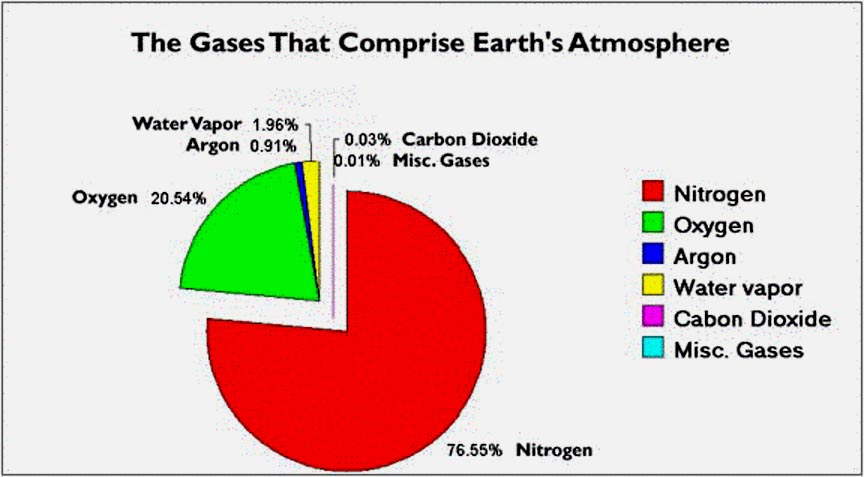
It is pointless to object that most people don't read Weber, or know of him, therefore, no direct connection exists. It is also rather foolish. It is in the air. It is all around us. Weber dominates the university landscape in modern day America like oxygen & nitrogen dominate our atmosphere. For all practical purposes, it is heresy to suggest anything contra-Weber, and also heresy to point out this fact. Weber rules.
Feynman the physicist was fond of saying that "Philosophy of science is to Science as ornithology is to birds". You can immediately appreciate the emotional import of this statement. I had gotten into a prolonged, ugly, & hard-hitting argument with a modern "physicist", who wanted to maintain that modern Science has nothing to do with relativism, but was fond of quoting Feynman. I happened, HAPPENED, to stumble across this fact when reading Tom Wolfe's book on modern art (I forget the title right now, The Painted Word, I think).
Aesthetics is for artists what ornithology is for birds. Barnett
Newman
Now, tell me that culture & Science & philosophy don't share deeper connections than we realize. There are "elective affinities" (Goethe) at work here, which operate subconsciously (at the least) and I would argue transcendentally as well. Feynman pulled this quote out of the intellectual air which he breathed. He may have heard it directly, certainly it is dominant in his thought & praxis. He is an icon for many atheistic modern scientists (this interloquoter, for instance, denigrated Sir John Polkinghorne, Michael Polyani, and others, when pushed, which didn't take much). Feynman was his hero.
This is just one more example of the supposed "neutrality" in modern culture & Science. Now, here's the catch. I am NOT claiming neutrality can't exist. What I am claiming is that atheists/agnostics are RARELY capable of it. Additionally (and consequentially) they go to great lengths to hide the fact. The Weber separation of fact/value in sociology (here's another example) has had immense impact on the humanities in America.
It is pointless to object that most people don't read Weber, or know of him, therefore, no direct connection exists. It is also rather foolish. It is in the air. It is all around us. Weber dominates the university landscape in modern day America like oxygen & nitrogen dominate our atmosphere. For all practical purposes, it is heresy to suggest anything contra-Weber, and also heresy to point out this fact. Weber rules.
I am not saying that I am infallibly correct about these "elective affinities", in all cases, but they do exist. Ockham's work made possible the generally diffused idea that simplicity was always a virtue. Therefore, if one was pondering a complex moral issues (and they are all complex at some level), it was oftentimes simpler to say "I have a doubt" and dispense with obligation. To disagree is not inherently foolish, but I've yet to come across a better explanation for how General Ideas filter down in seemingly chaotic systems. I find it hard to believe that Ockham's theories (which included epistemological and linguistic ones, as well as philosophical) did not impact the West at a gut level which made it easier to account for moral obligation by using negative reasons. John Stuart Mill's libertarianism may have some relevance here.
I issue a standing challenge to any & all comers to explain the origin of the Feynman quote without necessitating a discussion of Barnett Newman's views, which preceded Feynman's in historical time, and obviously have a connection.
Of course, if you like modern art, then I can only hope you read T. Wolfe's book. Which reminds me, Jacques Barzun has a very interesting book in which he passingly argues that Science has indirectly contributed to this popularization of "General Ideas Which Are In The Air". As a last side note, consider this ~ in an age of consumer democratization, Ideas which triumph are often not brilliant, but simply acceptable. Or should I say, compatible? Max Weber, Feynman, Barnett and that ilk come to the fore (or hide in the shadows) not because of their originality or brilliance, but because they are "system friendly". That is, there is something about the way Americans live on the North American continent that is compatible with fact vs. value.
Thursday, October 14, 2010
Lincoln & Charity
"Whereas [the founding fathers] Jay, Hamilton, and Madison are describing the meaning and process of government in profoundly secular terms (they rarely mention Christianity), Lincoln's speeches resonate with theological themes...."Grant N. Havers is Professor of Philosophy and Political Studies at Trinity Western University, Canada.
"Thus, it is a literal (↓↑), like an exteriorization of the interior followed by an interiorization of the exterior. And clearly, the descending or involutionary arrow must be prior in this relationship, one more reason why scientism and metaphysical Darwinism are such absurdities."
One might speculate that it is the deprivation of the vertical that creates "Science", which is the unraveling of God's Creation backward (for certain purposes?), while in other "fields" or "arts", the re-verticalization (through charity?) which restores meaning. Two qualifiers: Lincoln was willing to "sacrifice" a great deal of other people to accomplish this charity; and Ur-Spengler (the original Oswald Spengler) was no fan of "English Darwinian" evolution and the sciences which rested upon it, since it represented the victory of Aristotle over Plato.
Science (and the political theology of liberal democracy) do seem to share something in common, but it is difficult to put my finger precisely upon it. Or is this an illusion created by their contingent/material linking?
Wednesday, August 11, 2010
Dead Letter of Science

Can Psychology and Physics provide salvation & comfort...for the whole man? Only if they are re-defined so as to basically subsume religion.
"Scientists/witches like Watho attempt to know nature, but are in error: “human science is but the backward undoing of the tapestry-web of God’s science” (2, 236). MacDonald does not contradict science, nor does he press a theistic interpretation onto his readers. In fact, allegorising too would come close to an “undoing the tapestry” which would be quite alien to MacDonald. Rather he replaces anthropocentric science with an ecological perspective in which nature and its “sympathetic forms” come first, whether religious/fantastic or scientific/rational."
I find myself in basic agreement with John Pridmore when he writes that “the discourse which thus speaks of nature has its own authenticity and autonomy—The theistic and non-theistic accounts of nature are neither incompatible nor is the one to be reduced to the other.” This is not synthesis nor dichotomy."Instead MacDonald’s art is to present nature in a natural form, that is, in the form of the fairy tale. The cut-up, labelled, specimen means nothing; the flower is everything: “To know a primrose is a higher thing than to know all the botany of it” (Unspoken Sermons)
Obviously, Goethe is triumphant in this. Goethe and Novalis. RH Gammel's work on F. Thompson's poem might be a modern example of such attempts to get at truth through the very avoidance itself of "numbering the people", the sin which David was punished for. Is Science potentially demonic in its invitation to consider that Man Can Live By Bread Alone?
Subscribe to:
Posts (Atom)