Friday, January 28, 2011

State of the Cosmos


As Obama gave his address to the "last, best hope of earth", Egypt is the next fall guy. No one is asking who will replace him, whether or not we were instrumental in keeping him there for so long, or who might have been there in his place. Nor (indeed) is anyone keen to discuss our role in bringing about his fall (the Obama regime is calling for him to be "responsive" to the people), nor to remark that such an "authoritarian strong man" is so easily laid low by the power of the peaceful people. Was Mubarak a despot or strong man at all, that a word from our White House can send him reeling and usher in God only knows what? Speak not the forbidden word "authority"; in a world dominated by chaos perceived only as goodness by those who are bitter for the utopia they can never have and settle (like hogs) for the next best thing (a world in which the illusion of utopia is fed to lust in a world sorcery state), those upon the side of peace & order will have to "ride the tiger". For surely, in the land of fools, the mad one is king.

Sunday, January 23, 2011

The West Must be Reborn


The West no longer knows Wisdom: it no longer knows the majestic silence of those who have mastered themselves, the bright calm of the Seers, the superb “solar” reality of those in whom the idea has made itself blood, life, and power. Wisdom has been supplanted by the rhetoric of “philosophy” and “culture”, the realm of professors, journalists, and sportsmen—the plan, the program, the proclamation. It has succumbed to sentimental, religious, humanitarian contamination, and the race of chatterers who run around madly exalting “becoming” and “practice”, because silence and contemplation frighten them.~ Julius Evola, Pagan Imperialism

The brilliant Stephen Tonsor explains:

Molnar views the 'republique des lettres' essentially as a conspiracy of the intellectuals; a kind of Grand Orient of the intellect, capable of deposing kings and emptying churches...the French Revolution (is) a consequence of this great conspiracy...(this) loose yet solid framework of writers and 'philosophes' became the 'invisible power' which commands everywhere, including the king's palace... Moreover, Molnar believes that ' a replica of the intellectuals' republic exists' at the present time in the United States composed of the 'manipulators of ideas and images, writers, professors, artists, journalists' with sufficient power to make revolutionary attitudes 'respectable to the point of gradually being looked upon as legitimate, and more...as the only legitimate thesis...

Thomas Molnar

Federalism

The Afrikaner Weerstandsbeweging (AWB) wants a piece of land for its people to govern and call their own, a spokesperson said in Ventersdorp on Tuesday.

"All we want is a piece of land in South Africa where we can settle ourselves and call it our own and govern ourselves with our religion... and our own laws," said organisation leader Pieter Steyn.


Sounds good.

Saturday, January 22, 2011

A Sense of Nature

Scire, Potere, Audere, Tacere
Filed under: Hermetism — by Cologero @ 22:38
Tags: Fulcanelli

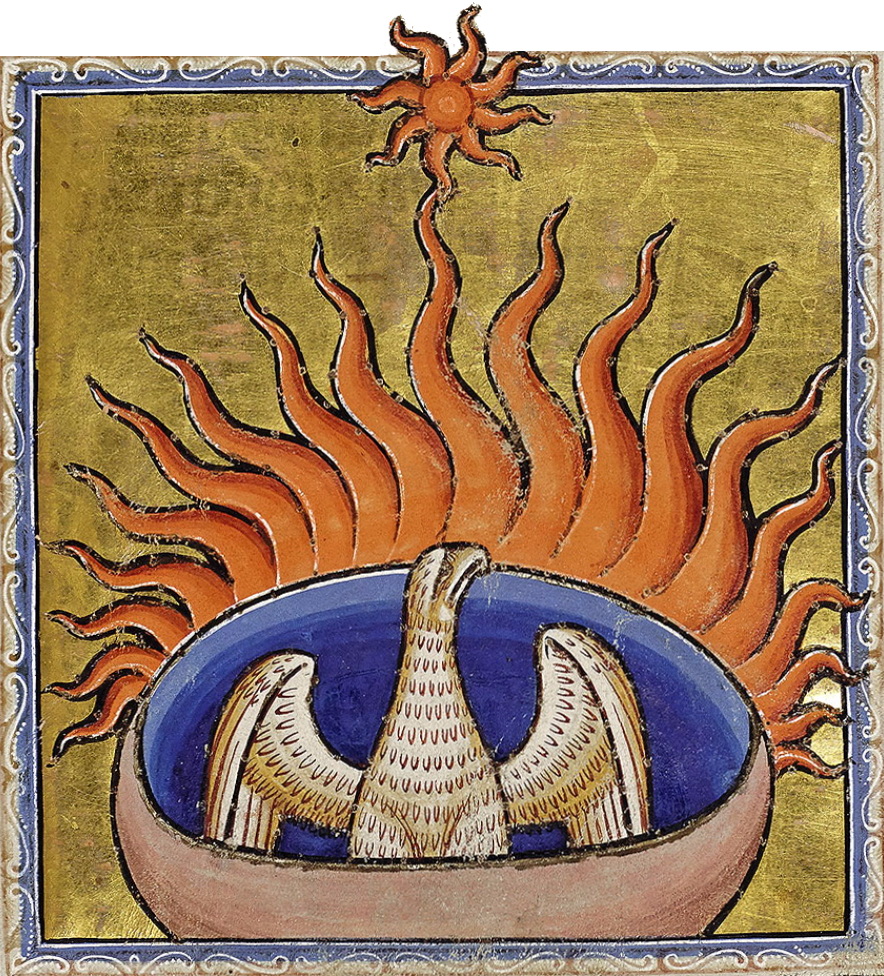
Scire, Potere, Audere, Tacere
To know, to be able, to dare, to keep silent
~Zoroaster

Fulcanelli

Nature does not open the door of the sanctuary to anyone.

In these pages, the uninitiated will perhaps discover some proof of a genuine and positive science. I do not however, flatter myself that I shall convert them, for I know full well the obstinacy of prejudice and the great strength of preconceived opinions. The disciple will derive greater benefit form this book, provided always that he does not despise the works of the old Philosophers and that he studies with care and penetration the classical text, until he has acquired sufficient perception to understand the obscure points of the practice.

No one may aspire to possess the great secret, if he does not direct his life in accordance with the researches he has undertaken.

It is not enough to be studious, active, and persevering, if one has no firm principles, no solid basis, if immoderate enthusiasm blinds one to reason, if pride overrules judgment, if greed expands before the prospect of a golden future.

The mysterious science requires great precision, accuracy and perspicacity in observing the facts, a healthy, logical and reflective mind, a lively but not over-excitable imagination, a warm and pure heart. It also demands the greatest simplicity and complete indifference with regard to theories, systems and hypotheses, which are generally accepted without question on the testimony of books or the reputation of their authors, it requires its candidates to learn to think more with their own brains and less with those of others. Finally, it insists that they should check the truth of its principles, the knowledge of its doctrine and the practice of its operations from nature, the mother of us all.

By constant exercise of the faculties of observation and reasoning and bu meditation, the novice will climb the steps leading to
Knowledge

A simple imitation of natural processes, skill combined with ingenuity, the insight born of long experience will secure for him
Power

Having obtained that, he will still have need of patience, constancy and unshakeable will. Brave and resolute, he will be enabled by the certainty and confidence born of a strong faith, to
Dare

Finally, when success has crowned so many years of labour, when his desires have been accomplished, the Wise Man, despising the vanities of the world, will draw near to the humble, the disinherited, to all those who work, suffer, struggle and weep here below. As an anonymous and dumb disciple of eternal Nature, he will remain faithful to his vow of silence. In Science, in Goodness, the adept must evermore
Keep Silent
Thursday, January 20, 2011

The Idea of the West

Someone else has usually said "it" so much more clearly...this is why I am "traditionalist":
To the profound comprehension of this law of the intellectual generation of ideas, are due the marvels of Catholic civilisation. To that wonderful civilisation is due all that we admire and all that we see. Its theologians, even considered humanly, put to the blush modern and ancient philosophers; her doctors excite wonder by the immensity of their science; its historians by their generalising and comprehensive views, cast those of antiquity into the shade. St Augustine’s “City of God” is, even today, the most profound book of history which genius, illuminated by the rays of Catholicity, has presented to the astonished eyes of men. The acts of her Councils, leaving aside the divine inspiration, are the most finished monuments of human prudence. The Canonical, excel in wisdom the Roman, and the feudal, laws. Who is before St Thomas in science, St Augustine in genius, Bossuet in majesty, St Paul in power? Who is greater as a poet than Dante? Who is equal to Shakespeare? Who surpasses Calderon? Who, like Raphael, infused life and inspiration into the canvas?

Place people in sight of the pyramids of Egypt, and they will tell you, “Here has passed a grand and barbarous civilisation.” Place them in sight of the Grecian statues and temples, and they will tell you, “Here has passed a graceful, ephemeral, and brilliant civilisation.” Place them in sight of a Roman monument, and they will tell you, “Here has passed a great people.” Place them in sight of a cathedral, and on beholding such majesty united to such beauty, such grandeur to such taste, such grace to such delicacy, such severe unity to such rich variety, such measure to such boldness, such heaviness in the stones, with such suavity in their outlines, and such wonderful harmony between silence and light, shade and colour, they will tell you,

Here has passed the greatest people of history, and the most astounding of human civilisations: that people must have taken grandeur from the Egyptian, brilliancy from the Greek, strength from the Roman, and, beyond the strength, the brilliancy, and grandeur, something more valuable than grandeur, strength, and brilliancy—immortality and perfection.


That said, creative genius will have to go beyond this, but not in a "titanic" or grasping manner, in which the past is "overcome". Rather, the past will have to be brought to completion, not evolutionarily (merely) but alchemically and through regeneration.

Monday, January 17, 2011

One Must Approach Without Fear


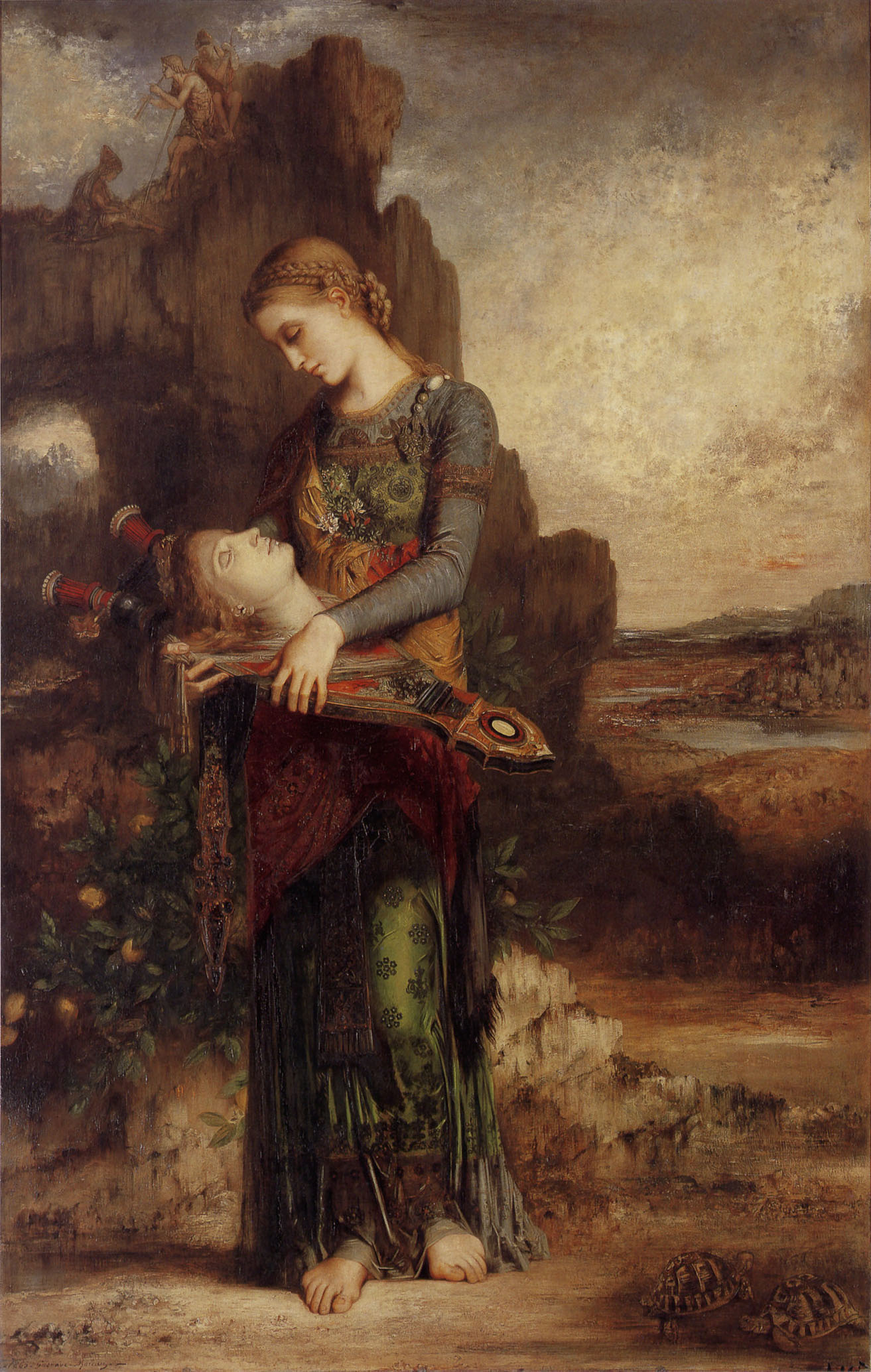
El Desdichado (The disinherited)
Gérard De Nerval (translation: Richard Sieburth)

I am the man of gloom - widowed - unconsoled
The prince of Aquitaine, his tower in ruin:
My sole star is dead - and my constellated lute
Bears the Black Sun of Melancholia.

In the night of the tomb, you, my consolation,
Give me back Posillipo and the Italian sea,
The flower that so eased my heart's desolation,
And the trellis that twines the rose into the vine.

Am I Eros or Phoebus? Lusignan or Biron?
My brow is still red with the kiss of the queen;
I have dreamt in the grotto where the siren swims. . .

And, twice victorious, I have crossed Acheron:
My Orphic lyre in turn modulating the strains
Of the sighs of the saint and the cries of the fay.

Sunday, January 16, 2011