Dedicated to the red and the white rose, to the eyes and the flame, to a more perfect unity... You can reach me @ cathasach71854@gmail.com
Sunday, January 16, 2011
Western Hermeticism + Western Affirmation
A novel suggestion. If somewhat far afield, dear reader...


Did Aquinas create the Golden Rod to Measure God?

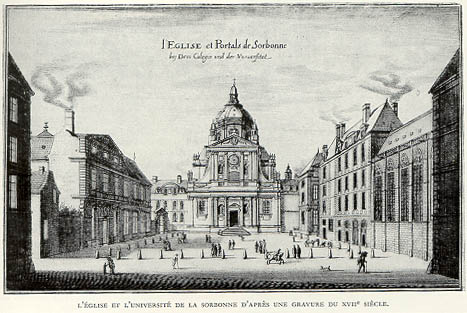
Certain scholars (and others) have lately claimed that rationalism began in the Scholastic era, with Aquinas. Here is an article on "The Senses" of the Middle Ages.
According to Aristotle, sensus communis, or common sense, is the one function of the ψυχή that gains perceptions of all objects, a common central organ of perception in which the separate communications received by the proper senses are combined into a unity. Common sense can also display synthetic power by grasping the common properties in he qualities of the common sensibles. In fact, the common sensibles (movement, figure, etc.) are the proper objects of the common sense. In addition, common sense has the power to separate and distinguish among the various sensations, and yet it must preserve the unity of sense perception. In short, it is the common ground, "the fontal principle of all external senses", as Thomas Aquinas puts it in his commentary on Aristotle's De anima, and as Dante himself calls it in the same chapter of Convivio (3.9.9
Saturday, January 15, 2011
WH Auden Again...

My English professor once remarked that Auden was a "disgusting" human being physically (I have no idea if he was refering to his slobby demeanour, or to his "queerness"), but a "great" poet. This was the same professor who wrote his dissertation on Graham Greene (a novelist my wife has read more on than myself), and had read Karl Barth's Church Dogmatics through three times, and yet regarded himself (in a personal letter to my father at my graduation) as "lazy" and "slothful".
So I am reading an article on Auden. As is my wont, I like to read a review of a review, or an article, or to take some "indirect" approach into the material.
The Auden-Eliot debate over the nature of "religion" seems intensely interesting. Auden was a natural elite who was anti-elitist. He and Chesterton shared a vision of a democratic God. However problematic this is (as anyone who has read a little of my website knows I believe), Auden was no dummy. He ended up his life in a Russian Orthodox Church, after helping his Anglican parish remodel their liturgy. Utterly Auden.
T.S. Eliot thought of religion as “the still point in the turning world,” “the heart of light,” “the crowned knot of fire,” “the door we never opened”—something that remained inaccessible, perfect, and eternal, whether or not he or anyone else cared about it, something absolutely unlike the sordid transience of human life.
W.H. Auden thought of religion as derived from the commandment “Thou shalt love thy neighbor as thyself”—an obligation to other human beings despite all their imperfections and his own, and an obligation to the inescapable reality of this world, not a visionary, inaccessible world that might or might not exist somewhere else.
Wednesday, January 12, 2011
Hegel & Hermeticism

Apparently, Hegel has connections with Hermeticism. This might be an interesting study, as GP Grant claims that Hegel takes two severe ethos (Classicalism and Christianity), combines them, & ends up with an ethos that is neither one nor the other, nor is it severe. However, Hegel might reward another angle of reading, if he were interpreted as concealing portions of the truth which he talked about openly.

Tuesday, January 11, 2011
The Kernel of Truth in Harry Potter May be as the Pope Fears
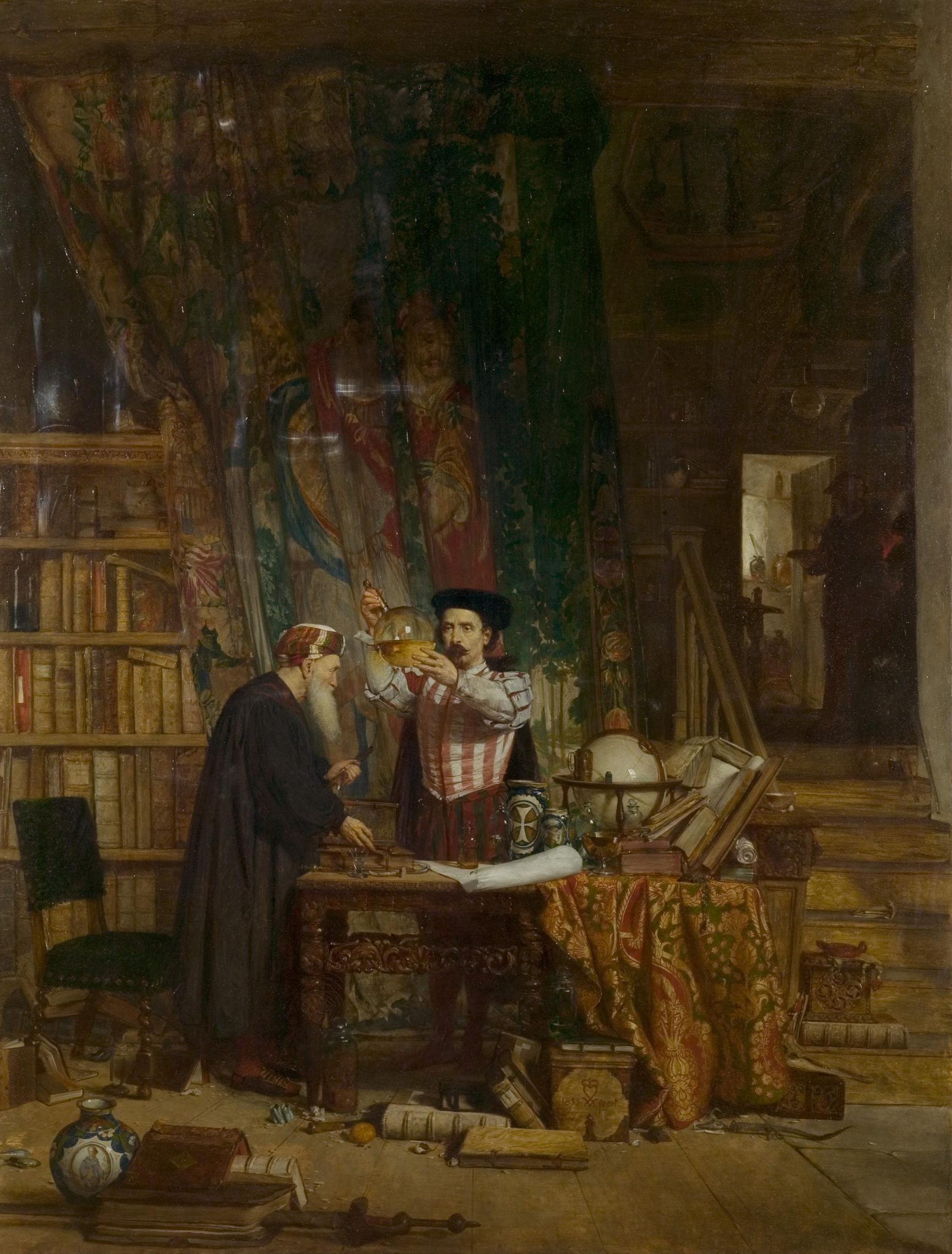
This distinguishes Hermetic philosophy from academic philosophy. It is not sufficient to know. One must also will and dare. This is what makes the ideas actual.
Abraxas tells us that it is necessary to firmly and actively establish a new quality, by becoming the master of a part of your life. The path to becoming one among the Solar race involves:
1. Become innerly detached from yourself and from what surrounds you; maintain a sober, effortless, neutral, and well-balanced lifestyle, without excesses. Sleep only as needed and eat little.
2. Let your body be whole, calm, harmonized. Temper your soul with the power that is in you; cleanse it from impulsiveness, passions, restlessness, and then stabilize it and amalgamate it with your body.
3. Other beings do not exist. Do not let their actions, thoughts, or judgments affect you, no matter what they are.
4. Make sure that nothing will secretly creep into you: watch over everything that comes from the outside and that emerges from the unexplored depths of your consciousness. Observe all things in silence with your mind and remain unperturbed, stopping every judgment with a firm hand.
5. If passions bother you, do not react or become perturbed. Bring them deliberately to satisfaction, and then get rid of them.
6. Grow in this direction until you are able to realize the frivolity, uselessness, and the threat of every thought, so that your mind, too, may slowly calm down and silently crouch at your feet.
7. In this way you can slowly build up a strength inside you, similar to a lord whose glance instills silence, respect, or confusion in the servants around him.
THIS IS OUR GOLD.
Advice from Evola, in the Hermetic Tradition
The basic idea here (may or could) seem(s) to be that one cannot assist another (Love Thy Neighbor) until one has a core, inviolable center which is immovable in that which is irresistible. In this way, the yoke becomes easy. One cannot conquer heaven by storm without taking possession of one's self, which allows one to fulfill the Law. Exoteric Christianity (eg., the "Church") will always have difficulty with the esoteric tradition, which attempts to reclaim the wells that have poisoned by Satan. What better way to cripple something than to stunt it, to convince it that that which is "the one thing necessary" is actually part of the Enemy?
Monday, January 10, 2011
Nuclear Presuppositional Apologetics, Centuries Before Van Til
The abovementioned polemical remark against those who think of the world as illusion was obviously aimed at that current of thought whose most extreme expression was represented by the Vedantic doctrine of Shankara. It is not meaningless, at this point, to see how that polemic was conducted. Vedanta claims that the only reality is that of the plain Absolute, in its formless and undetermined aspect, the so-called nirguna-brahman. Everything else, the world and all its manifestations, is "false," a mere product of the imagination (kalpana), a mere appearance (avastu): here is the well-known and much -abused concept of maya, of the world as maya. A hiatus is thus established: nothing unites the real, brahman, with the manifestation, the world. Between them there is not even an antithesis, since one is and the other is not.
In the polemics carried on by the Tantras, their orientation toward concreteness is confirmed. It is true that from the point of view of the Absoute, the manifestation cannot exist in and by itself, since there cannot be a being outside of Being. A question may be asked, however, as to what exactly is one who professes the doctrine of maya: if he is Brahman itself or one of the beings that exist in the realm of maya. As long as one remains a human, namely a finite and conditioned being, one certainly cannot be calle nirguna-brahman, which is the unchanging pure Absolute without determinations and forms. Therefore, such a person cannot be but maya, since outside of nirguna-brahman one finds only maya. But if that person - the extremist Vedantist - in his existential reality, as a human, a jiva, a living being, is maya, then everything that he claims will be but maya (appearance and falsehood), including hs theory according to which only nirguna-brahman is real while everything else is illusion and falsehood.
J. Evola on the Yoga of Power
Subscribe to:
Posts (Atom)