Tuesday, May 27, 2014

The High Priestess


The High Priestess


When God manifested in the created plane, the Two inescapably arose. First of all, as secondary to God, and secondly as articulations within itself, to create the pyramid and hierarchy of all Being. There is nothing wrong with Two: as Cologero notes, the animus within the woman is necessary for her healthy development. The Two is very good in itself, but not by itself. This is noted earlier on as it is not good for man to be alone. This would also apply to the feminine part within man’s own interior.
Watch a political debate, read a cutting edge expose of the Gospels, pick up a history book, or (worse) sample a modern textbook. For that matter, pick an acquaintance’s brain. What you will inevitably almost always discover is someone for whom the Two is not merely a good, but is actually God, subsisting alone. Not only have they made a false god out of what is created, but (for them) the One and indeed any other competing Twos simply don’t exist. Thus, those who think the Catholic Church was part of a vast cosmic conspiracy involving the Demi-Urge suppressing channellers from the stars simply never get around to asking themselves the simple question, If God is a fake God (Yahweh is the Demi-urge) then how do I know the One True Light God is not just in on the fix? What if the deception is even more elaborate than I first believed? No for them what is an important psychological insight gets distorted into a cosmology, an ideology, and at last, a madness. They cannot square the circle. This phenomena is common today.

Psychologically and humanly speaking, people like modern liberals, civil rights activists, free thinkers and others may certainly possess a modicum of truth. Yet, what lie does not contain modicums of truth? It is not hard to be partly right. But this is not what is claimed: it is claimed that this is the truth, the whole truth, nothing but the truth, and (most importantly) the only truth which could possibly matter. And it must be taken as presented, which is to say, in isolation from the One. It is, at root, a narrative created by the demonic power of the egocentric mind, which attempts to enslave others to its dominating will. This is the opposite of the what the Priestess was created to be: instead of the alma mater, we have the devouring wrath of the psychotic Lilith, who hates Eve, and attempts to destroy Adam (this is how salvation comes from the woman, for Eve will oppose Lilith).

We see at work here the very power of distortion and twisting which they claim to see in the One. To quote Phillip Dick, “Those who fight the Empire, become the Empire“. Or to quote Jesus, “resist not evil, but overcome evil with Good”. Anyone who uses the Ring of Sauron against Sauron is doomed to either become like him, or to be turned into a slave. God Himself does not overcome evil with evil, but rather overturns Hell from the inside out. Good triumphs because it remains unchanged when Evil touches it, and is capable of changing Evil into its opposite. Evil cannot make this claim, and therefore, has no true power. Evil can only uncover what is already Evil, and test what is Good.

This is not to say one cannot be a warrior and a man of the One. There are beautiful stories about how to reconcile the two, & many men have done it extremely well, so well they merit great titles and honors, and perhaps even more than man can say. Giorgio has pointed out that the warrior (however) is female in relation to the brahmin or priest. That is, the warrior has to overcome the flesh to arrive at the one, he has to fight himself. He has to struggle against the tendency to carve out a separate kingdom away from the Law of the One. This is the first temptation faced by man, to divide himself into Two and to make a kingdom of his own, separate from the aboriginality of the Self Beyond the Selves.

How can this be? How can the virile, manly warrior be female? When the universe is taken hierarchically, we can say that that which is above something is male in relation to it, and that which is below something is female in relation to it. Things below revolve around, cling to, and require for their health and sanity the relation to that which stems from above. When something is detached, it careens off into the outer darkness, and although it may retain its own hierarchy for a time, there is a process of decay that sets in immediately. The horizontal cannot sustain itself by itself. It requires a link to the vertical. Thus, everything is male/female, and yet we can properly speak of certain things as “male” or “female” in configuration to each other.

Neither is privileged. Without the female, the male does not make itself known. If there is a privilege, it consists of duties. To quote the Baron, loving,proud obedience and humble command are the duties of respective stations. Since all of Being involves climbing the ladder or the Tree, there is no Black Iron Prison of compartments or boxes, but rather a kind of dance. If you are living in a Black Iron Prison, it is because your soul (to that extent) is tainted and evil, and God manifests to you as the oppressor. The eye, being not single, cannot see the Light. The psychological insight (however) of this state is correct: you are seeing that the God you made in your own image is actually a Demi-Urge. Angels appear as demons, men of good breeding and sound sense are tyrants, Western civilization is the greatest evil on earth, etc. The only way out is “deeper in”, that is to say, to pull the beam out of your own Eye.

The lesson of the second Card is that Two cannot exist alone. Which (put this way) is irrefutable. QED. Or, put another way, Two can only exist together as One.

Tomberg gives an example of what happens when the Two wants to be alone:
“Passing on to mysticism which has not given birth to gnosis, magic and Hermetic philosophy – such a mysticism must, sooner or later, necessarily degenerate into ‘spiritual enjoyment’ or ‘intoxication’. The mystic who wants only the experience of mystical states without understanding them, without drawing practical conclusions from them for life, and without wanting to be useful to others, who forgets everyone and everything in order to enjoy the mystical experience, can only be compared to a spiritual drunkard.”
He mentions that those who develop the spiritual sense develop a “touch” which allows him to apply and understand what he has experienced. This is analogous to the virginal pool, which more deeply reflects (until it engenders or creates) what is shining on it from above : the Sun gives birth over the void, or the waters. One begins to examine the thoughts that enters one’s mind, to make them pass “tests” (smell, touch, hearing) before true gnosis (or sight) is finally engendered, much as a baby learns to see in three dimensions and to arrange shapes in proper contours to the forms emanating them. This is the meaning of “become as little children”, who are female/passive at first as regards that which is already fully grown and solar.

The Gnostic challenge to the Church is an opportunity to recover what was Once: an exoteric Church which is sustained by a Life, to reunify the split between Gnosis and Faith that spiraled out of control in the early development of the West. Neither the New Age or Gnostics on the one hand, nor the purely exoteric believer on the other can long subsist in division. Such a division engenders monsters, more confusion, and less and less life. We can apply this pattern to the post-colonial schools of thought in literature, to the revolutionary and reactionary schools of thoughts in politics, and to the endless culture debates in sociology and geopolitics.
“On the part of the human being it is the act of daring to aspire to the supreme Reality, and this act is real and effective only when the soul is serene and the body completely relaxed – without smoke and crackling fire.”
We remember the One, because gnosis and magic and alchemy “do not dazzle God.” In the eyes of God, their practitioners are “dear sheep to him: in his consideration of them he desires that they shall never go astray and that they shall have life increasingly and unceasingly”.

The yoke is easy, the burden is light. There are more dangers ahead, but to learn the lesson of the One is to pass into abundant Life.

Thought-Speak

The word "racism" has officially lost every shred of possible meaning in modern America. As Orwell noted of the word "fascism", it now means "something bad in the thought and actions of those I don't like".

Donald Sterling is undoubtedly a very crude public figure, but his remark was made (it would appear) in confidence, & therefore to publicize this remark amounts to (as Gornahoor pointed out) detraction, which in a healthier age would itself have been prosecuted legally. The remark was followed by outrageous other remarks made by semi-public figures, such as calling for the creation of an all black basketball league (presumably, this would mean making the NBA all black, as I doubt they were calling for a separate league of their own that would take a second seat).

"Racism" isn't a sin.  The Sterling affair was likely cooked up to give a desirable franchise into "certain" hands.

The idea that someone is to have his private property confiscated for having "undesirable attitudes" is an interesting symptom of the coming times we are cooking up for ourselves. Will we eventually have to pass "attitudinal correctness" tests in order to hold jobs? We are halfway there. The State can't enforce it yet, but they can certainly encourage private corporations to enforce it on themselves, thus saving a lot of time and energy in preparing the ground work for a massively corrupt and intimidated society of "free people" who live in fear of being denounced or "discovered". At my Catholic hospital, they hang up posters for "sexual diversity" during certain months of the year - it's important at Christian hospitals to remember that God created some people with problems others don't have. Or something like that....

Why is it wrong for whites to have a white neighborhood or college, but this is just legitimate aspiration and "community-building" when it comes to other groups? This amounts to a massive failure of nerve and intellect in defining Justice. It is dysfunctional, and if it continues, will become something much uglier, although what exactly, is hard to say. The one thing we should be able to know is that it will be worse.

Eventually, these kinds of lies and hypocrisy will tear apart the social fabric of America, what is left of it, and there will be nothing left to put in its place, all social good will being exhausted.

Blacks do have legitimate grievances. Unfortunately, they are not the ones currently being peddled in the public sphere. There are also legitimate grievances against "them" as a group, but no one is allowed to mention them or even to think of this.


Saturday, April 26, 2014

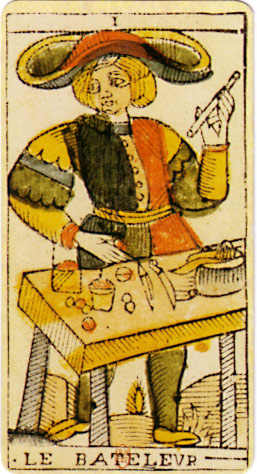
Le Bateleur, or Thus Endeth the Lesson


I will assume, for this, a basic familiarity with the text, as well as perhaps some of the items and discussions on the mailing list. Rather, we will look at several prisms or aphorisms or anecdotes from this chapter, to help elucidate in precise detail what quarry Tomberg is hunting.
First of all, like his master, Tomberg affirms that the “most dangerous spiritual malady” is “self-complacency”. This is a huge claim, and we will see later how it is justified in detail. Tomberg was well aware of the dangers of megalomania and insanity, & apparently thought worse of this first sin (question: can we rank the seven deadly sins?). Elsewhere, in a similar spirit, he remarks that “vice is oppressive or disgusting and virtue is boring” : it is concentration that matters. By this he certainly does not reject the “moral tradition of the virtues”, but rather is commenting on the legalism or moralism that is always too busy relating moral principles in concrete hierarchies of rules to be bothered with attaining the whole purpose of the Law. He (also) elsewhere relates that the Law appears to us as (Phillip Rieff would say) an interdict, & that this fact is important (has an esoteric meaning) because what it means is that God is not an egregore, or reflection of the human mind that responds to corruption and sin. God is Who He is, & that is Good News. The Law is Good News. So much for Luther. So the first virtue is “poverty of spirit” (the Beatitudes) and alack of self-complacency. Angels can fly because they take themselves lightly. Other sins (like hypocrisy or pride) are lesser: of course all sins have an element of the first Arcana of Sin, so this is not a justification of sinning, that grace may abound.

2, He mentions the perpetual service of Sacre Couer de Montmarte as a picture of the inner reality of a lack of self-complacency, which is the one thing needful. This silence, by an ancient law, engenders the influx of holy forces. As all numbers are multiples of One, so all spiritual Arcana flow from poverty of spirit. “You will receive power from on High”: “in Paris one works, one amuses one’s self, one sleeps, one dies”…all the while, the center of the city holds in the form of a sacrament in silence. This is an important metaphor, given how much time Tomberg spent in France. Evidently, he viewed the Church there as essentially creating the jovial atmosphere of Paris.

3. The world is not a mosaic. Diversity can only bring us together once a real, true, beautiful, & good Unity has previously unified Man. If the world is not One, it is not knowable. So there is a place for beginning with Dogma or exoteric practice, where a framework is established in anticipation of the scaffolding being pulled down one day when the living temple is completed. There is no room here for starting (as Revolutionaries and binary thinkers do) with the Dyad as the Monad. First things first.

4. He draws an enormous amount of attention in the first chapter to the Emerald Tablet. This tablet teaches us that the phenomenal world is not nothing, because it is moved (like sand) in the wind: nevertheless, it must be affirmed that the Wind is not like the patterns in the sand in a literal way. Wind and sand are not equivalent. Tomberg will affirm in this and future chapters that the uniqueness of Christianity lay in its desire and power and calling to sublimate both inner and outer way (Sand and Wind) into one picture in which nothing was lost of either the one or the other. The old Greek question of the One-and-The-Many was resolved in perichoresis, Trinity, & Incarnation. “As philosophers, Christians, and scientists, we embrace the Emerald Tablet”. The line of succession is Enoch/Hermes Trismegistus, Orpheus, Pythagoras, Philolaus (Divi Platonis nostri praeceptor), Plato, the NeoPythagoreans (Apollonius), the NeoPlatonists (Plotinus), continued down (for example) through Ficino (since Ficino is the one citing the line of succession).

5. The method of analogy is the only means of apprehending or beginning to apprehend Truth as the intuition develops; although it is quite possible to err with this method, it nevertheless is the door to truth: “it is qualified to lead to the discovery of essential Truths”. We reason that the Sun sets with glorious colors (it bleeds), Night falls, but we wait for the Dayspring, which must return, pace Hume. Even Science heightens probability in order to sharpen analogies to yield the most to intuitions (the Double Helix code, for instance), notes J. Maynard Keynes. Tomberg is making a vast and overarching case here. Nature teaches us that the acorn does not “resemble” the tree (to the naked eye), unless one is paying attention, that is, intuiting the process as it unfolds in play. All tree like things have seeds, and all seed like things contain trees.

6. He affirms the basic table of correspondences which obtain and hold between metals and planets, common to all ancient and traditional Cultures, with minor variants and errors, but notes that the correspondences with the Tarot are far from agreed upon. Tomberg is no idiot: he is clearing the ground of objections by showing he has taken them into consideration. This is the act of a scholar and a man of good breeding. It is also a clue to his purpose: he will provide the Tarot with the symbols and arcana which it lacks via the stars, due to confusion.

7. He connects this intuition towards play with classical European ideas as well, such as Schiller’s Speiltrieb (the urge to play)and Jung’s “individuation” (synthesis of the conscious and unconscious elements in the personality), in which the perfect vision of the beautiful Good transforms duty into a delight. Nonetheless, there is Play and there is play. Be careful when you play, otherwise, you will become a charlatan. Alas, says Tomberg, too many are both charlatan and genius, so let Le Batteleur be a perpetual Guardian of the Threshold to always return to! He quotes an anonymous author:
To perceive and to know, to try and to be able to, are all different things. There are mirages above, as there are mirages below; you only know that which is verified by the agreement of all forms of experience in its totality – experience of the sense, moral experience, psychic experience, the collective experience of other seekers for the truth, and finally the experience of those whose knowing merits the title of wisdom and whose striving has been crowned by the title of saint. Academia and the Church stipulate methodical and moral conditions for one who desires to progress. Carry them out strictly, before and after each flight into the region beyond the domain of work and effort. If you do this, you will be a sage and a mage. If you do not do this – you will only be a charlatan.
The Arcanum of Geniality of Intelligence, analogous but not identical to the play of a little child, is the First and Final Good, the Monad and the One, identical to the Archetypal (space) and Mythical (time) of the Godhead, which is the arena in which souls are exercised in a vast gymnasium designed to produce “greater than angels”. That is our begging beginning, and our triumphant End-ividuation.

Saturday, April 12, 2014

Tomberg’s Labor


Valentin Tomberg (as any reader of this blog by now knows) plays a not insignificant role in linking Christianity with esotericism, even paganism (of the older kind). It would be easy to just go through and cherry pick random quotes from Tomberg: this would actually turn out much better than one might imagine, since Tomberg manages to stuff every sentence with profound meaning and an inner direction which helps even isolated sentences maintain their context.

There is a particular section of text which helps to elucidate his purpose more sharply and pointedly than is his wont, as Tomberg usually manages to hide in plain sight. On my first reading of the text, I apparently gleaned much less than I missed, and am ashamed to say that this only jumped out on a second reading.
The macrocosmic sphere of paradise (St Paul’s third heaven) and the microcosmic layer of Eden are the initia (beginning) to which one is initiated in the macrocosmic initiation as well as in the microcosmic initiation. Ecstasy to the heights beyond one’s self and entasy into the depths within one’s self lead to knowledge of the same fundamental truth. Christian esotericism unites these two methods of initiation.
There is his entire program in a nutshell (incidentally we see that the Christian method is more about the union of the modes, rather than emphasis on the division between the two techniques). He is writing a secular “John” for a modern age. This is very like Goethe re-casting Job in Faust, except thankfully Tomberg actually claims to know what he is doing, and seems to back this up. In other words, Valentin Tomberg is actually claiming that a Christian can mingle the exoteric and esoteric modes of knowing in their own person, without (and this is the important point) compromising or losing either one individually.
If this claim reminds you of the claims regarding Christ and the homo ouison with or without iotas (made by successive councils) it should, for that is actually his aim. The Christian is a “little Christ”, and Tomberg wishes to perfect Nature (exoteric religion) with Super-Nature (esoteric meaning), without however losing either the Self or the “Self beyond the Selves”. Jesus is the man-God, and Christians are also called to be fully God and truly man. He is not splitting hairs, he is describing or coming to terms with, something he had already fully experienced.

The figure of the Emperor is the “truest man” (King David), and the hermit (prophet) is the most like God (fully God), remarks Tomberg in his chapter on the Pope. The pope (or priest) actually balances earth with heaven. So an invisible principle of union is here shown to be concretely uniting two seeming opposites. Here we have Soloviev’s “Ideas”, with the veil lift by for a moment, Tomberg explaining the Arcanum that shows even the invisible worlds correspond to Law rather than Chaos. For here it is not a matter of seeing contrasts, and is never a matter of contrasts. John Michael Greer brilliantly points out that focusing on differences actually obscures them (this is because, as Iamblichus teaches, you have to start with One, not Two). If you focus on similarities, the differences are seen truly and starkly for what they are.
Any present or future set of events, however unique it may be in terms of the fine details, has points of similarity with events in the past, and those points of similarity allow the past events to be taken as a guide to the present and future. This works best if you’ve got a series of past events, as different from each other as any one of them is from the present or future situation you’re trying to predict; if you can find common patterns in the whole range of past parallels, it’s usually a safe bet that the same pattern will recur again. Any time you approach a present or future event, then, you have two choices: you can look for the features that event has in common with other events, despite the differences of detail, or you can focus on the differences and ignore the common features.  The first of those choices, it’s worth noting, allows you to consider both the similarities and the differences.  Once you’ve got the common pattern, it then becomes possible to modify it as needed to take into account the special characteristics of the situation you’re trying to understand or predict: to notice, for example, that the dark age that will follow our civilization will have to contend with nuclear and chemical pollution on top of the more ordinary consequences of decline and fall.If you start from the assumption that the event you’re trying to predict is unlike anything that’s ever happened before, though, you’ve thrown out your chance of perceiving the common pattern. What happens instead, with motononous regularity, is that pop-culture narratives such as the sudden overnight collapse beloved of Hollywood screenplay writers smuggle themselves into the picture, and cement themselves in place with the help of confirmation bias. The result is the endless recycling of repeatedly failed predictions that plays so central a role in the collective imagination of our time, and has helped so many people blind themselves to the unwelcome future closing in on us.
So the “hermetic” method is actually just sanity, applied in depth and height, of the common-sense-rule of having a unity-principle and not forcing apples to be seen as oranges. If one sees sleep follow work, then awakening follow sleep in Nature, one can assume (by analogy) that Death follows Life, and then Life supersedes Death. This is the affirmation of the Great Chain of Being, the “Book of Nature”, the Analogia Entis.

So (too) we can say that it is the inner “priest” in man which reconciles the manly-earthly King with the God-mad prophet, in the dark of night, before the black turns to red, white, then gold at the dawning of the Sun. There is always a balance, and always a “higher level”. This is because God is always God: “higher up, and further in”. As Tomberg says, choose spiritual death, and choose hell: choose Life, and you have chosen God. It’s so simple, children can do it, and so complex, that even seraphim yearn to be able to see clearly.

This occurs within Christian esotericism, and within the Christian esotericist, who privileges neither the badge of Christianity nor the heritage or technique of ancient practices which are given new life through baptism. Does anyone really suppose that it would be “spiritually exciting” to live under the rule of the tutelary stars in the same sense that the heathen did? So that an ill omen meant almost certain death? The heathen are a picture of our natural man, sunk in darkness. Paradoxically, it is the man who learns that he is under the rule of stars who then begins to escape that rule of the stars, and the wise man becometh free. This is why astrology is as much an art as a science, and why the Middle Ages baptized it, but did not use it to replace the mass and the organized Christian religion. In any event, men like Pythagoras were not subject to the stars in the same sense that the local god-fearing goat-herders were. He learned to judge the angels, & it was this that made him free. So the “Christian” sees that while there is “progress” (and man learns to be “free” of powers), yet these things were altogether written for our sakes, because we have the same process to over go in miniature. So, in a sense we are more free, in a sense we are less: welcome to the Kali Yuga. The point is to find God.

In the same manner, it is the true “Christian” who both grasps intuitively the power of the antique Tradition, & yet sees it living through its transformations in Christianity and onto into and despite the Kali Yuga; he or she it is who can keep the contradictions together because he approaches from a standpoint of faith, rather than doubt, and thus doesn’t sink into experience through the moving, opening, readying of wavering doubt (like Eve before the apple). This is the man who can keep entasy (unpeeling one’s soul layers) and ecstasy (voyaging into God) from dissolving together into the slime of muddle and confusion that tends to stamp those trying to be “spiritual” in the Dark Ages, using the one to heighten and enhance the other. The same wind wrecks one vessel, and lifts another one over the waves. The same wind drives down some birds, and causes the hawk to soar. Jesus the God-man is the true in hoc signo vinces for the esotericist or exotericist, since both are valid, and both “mean” the same thing. This is one of the meanings of the hypostatic union: that there is fully each, without loss of either.

Faith precedes experience because sense experience alone takes too long, and tends to lose one in a “dark wood”. Additionally, “faith” is actually a divine principle which begins to work before it is either deserved or understood. It thus appears “blind” to the blind, and “powerless” to the powerless. It is actually the power and potency of God, Who is willing to act long before man is worthy of it. Thus, it is power, because man (at that juncture) has no power. In this way, man is invited to cooperate with God, and that is the price of ascent and the meaning of the night time, which sees great growth. But this merely accords with the Nature principle of paganism: a seed has to first fall into the ground and die, before it can have the life of the tree. Likewise, God’s power is so great, it first has to die, because it has to “make a little space” for man by withdrawing, or else man could not be. God is so powerful, He can afford to suffer in silence. God alone can afford it. Here is the meaning both of kenosis and of grace.
We will be looking at Tomberg’s journey, through the eyes of the Meditations (and using some of the notes sent out on the mailing list, not to mention Cologero’s observations and thoughts), however, it will primarily be an attempt to unfold or unpack some of his meaning, so that it stands out more clearly, so that others can “meditate” (which was his whole purpose anyway).

Friday, April 4, 2014

La Revolution Devore Ses Infants


During the years leading up to 1789, Paris had increasingly become the exclusive city in France, a city-among-cities, with no peer. One of the dynamics behind the destruction of the ancien regime was Paris’ desire to subordinate the legitimate and ancient diversity of the pays (regions) of old France. Paris would become the truly capital city, rather than the body of the king, since in the medieval world, the city or seat of sovereignty, was in the actual person of the king, wherever he happened to be touring. With the Enlightenment justifying its bourgeois aspirations, and Art turning to the bizarre and degenerate, the entire city descended from famine into chaos.

We can see an analogous process at work today. America has decided to be the “Paris” of a global order which encompasses nothing less than the world plantation. All of the world’s goods flow into American territory, just as French produce and goods flowed into the environs of the burgeoning Parisian enclaves. With a philosophy behind it to justify its aspirations (multiculturalism, tribalism, and the continuance of Revolution), the “new American” seems poised to plunge his country into the same chaos that engulfed France in 1789. This is because, as we all know, the Revolution must play on.
With notable differences (Paris had a lot more potential to control the local French countryside than America has to control all of the world, and Paris was more homogeneous than America is today), it is true to say that America and its satellites and imitators comprise a global arrangement increasingly aspiring to universal “values”, which is to say, global sway. This is what the neo-liberal consensus comes to mean. When they say “human rights”, what they mean is the “customary rights of those over whom we hold sway, our serfs”. There are no visible aristocrats, just beautiful people making large incomes living in good style, in cosmopolitan centers of “Westerness” all over the world. Oswald Spengler points out how the megalopoloi come to dominate the countryside in late phases of civilization, reaching their tentacles into the land to suck wealth out of it and legitimize itself by aggrandizement vis a vis the provinces. In the final analysis of this cycle, it is the ostentatious display of arbitrary power and wealth, at the expense of everything else, which marks the final phase. The outer shell of civilization, precisely as it grasps power, wastes away.

In something reminiscient of pyramid schemes and cultic orders, with perhaps a bit of sheer bee-like and herd-like behaviour thrown in, everyone’s greatest concern is to escape the smaller town and go “where something is happening”, which is to say, money, power, and other attractions.
This phase is operates to help America become a “world city”. More and more people are invited; more and more countries are invaded. The entire country, from the Everglades to Gnome, Alaska, becomes a truly diverse cosmopolis. This befits America’s status as “most advanced region” of the planet, future home of the “world-city” that turns all other places into backwaters, from which to draw more staying power and ferment. True, others imitate us (Europe, most of all), yet half-heartedly. Some regions even attempt to un-imitate us: witness Putin’s intransigence over the Ukraine. And wouldn’t the invasion of the Ukraine make Russia more diverse?

What happens when 1789 comes round again, & the countryside (this time) is prepared to resist, not just in the Vendee, but all across the planet, when China and Brazil and Portugal all say “no” to the unbridled spread of the end of history?  Or will they? Will America be forced to fulminate more Revolution at home, in order both to project enough power, and to maintain enough solidarity to convince the other regions to cooperate? What happens when the Revolution begins to devour its own children? My guess is that the stakes have risen, since America is becoming divided, and losing its power to project grandiosity and force. So there is a lot on the table, to lose, at this point, for the Revolution, with Russia thinking about dusting off the crown of Christ and China waffling over whether liberal democracy is really a valid replacement for a civilization that lasted over 4000 years.

What ought to be done to prepare, in an outward sense?

Plinio Correa de Oliveira makes some tantalizing remarks about the Revolution and Counter-Revolution which should help the contemporary “American”.

1. Those who are “of the Reaction” are, by their very nature, exposed to ridicule and a feeling of helplessness, sometimes even in their own eyes, as their ignorance contributes to a lack of realization of who they are: in this sense, the “wholeness” they partially lack is mimicked by competing systems of thought which may confuse their soul, providing a sense that although they can never fit, yet what they cannot fit into possesses some of the qualities they intuitively seek, such as legitimacy (in this case, illusory). It forces them to view themselves in a tragic light. This, of course, is all the better for “the Revolution”, as it consigns their worst enemies to the outer darkness, partially self-imposed. We get to pay the upkeep on our own soul-prison.

2. Many are latent Reactionaries: that is, their upper levels of soul are dominated by the current thought paradigms, but deeper down, they are instinctively “men of the Right”. These people simply need firm guidance, and to be shown strong moral character, coupled with principled action and depth of soul. They will be drawn, just as instinctively, to those of the first category who have stabilized themselves and emerged with the Hyperborean spirit. This second category could be termed “Demeterian“, instinctively drawn to those who can incarnate the power that they seek and lack. This would be a warrior class, maybe even a priest class, and in converting these classes, the natural capos or leaders would achieve a preponderance of force that would allow for an overthrow of the Revolution, and a change in the balance of power. The Revolution succeeds by hiding its aims; the Counter Revolution can only succeed by revealing its aims to this class, but the manifestation has to be multi-dimensional, profound, and utterly authentic. Nothing less would convince the sturdy, hapless enforcers of Revolution who unwittingly serve the very forces they hate at a deeper level.

3. He compares the Revolution to the vine in the Amazon rain forests called the strangler fig. I have often made the mistake of thinking (and so have others, I suppose) that “this couldn’t last”. But in a startling metaphor from the Liber Naturae, (Buch der Natur), our author shows us that the goal of the strangler fig is to kill the host and establish itself as a free standing tree. Of course, the original tree will not be allowed to live after it has served its purpose: this is why the Revolution hid and covered its aims. It wanted “this and that”, or “old and new”, together: tolerance for the lower castes, that’s all. But the true aim is the annihilation of the original tree, which suggests that envy and hatred are, in reality, the real motivating causes of the Revolution after all, rather than compassion. The two organisms are incompatible, and only one has the essence of Life. This dissembling is a weak point in the Left, as they are now the “authentic and legitimate order”, and our author says that firm and unwavering contradiction in a manly spirit, even against overwhelming social disapproval, is the only way of unmasking the lie – as Veuillot says, the emptiness flees contradiction. Any real resistance will be met by deceived men of the number two category, and their involvement in persecution will only serve to enlighten them as to the real aims of the Revolution and the real worth of the “rebel” (who is the opposite of one). The Left has been winning without even trying for so long, that a real dose of suffering of any kind, at whatever level (including the wallet) would quickly make it clear that only the men of the Right have the freedom to overcome circumstances. This is quite clear right now in the crisis over Crimea: Russians are willing to sacrifice to restore the Third Rome, however imperfectly, and Americans are too lazy to even understand the issues involved, let alone drip any blood. Russia wins. America has been purging herself of the men who are of the mettle to make American force stick overseas; it remains to be seen whether she can perfectly finish the Revolution at home, as more and more of the aims come out of the closet in order to ascend the decayed altars like demons haunting the throne.

4. It is imperative to promote the association of men who are truly of the Right. Cologero has gone to great lengths to do just that, & it will be up to us to continue this push. By providing a “home” and the camaraderie that all men need, noble or not, but which we alone tend to lack, given the circumstances, an important element of morale is introduced, as well as the opportunity to learn from one another, and no longer feel “alone”. Many here have voiced how lonely it is out there, and this is true. But the hearth fire burns, despite the cold winter night. There are various ways of seeking this kind of fellowship, but it is fundamental to mental sanity during the apex of Revolution, the height of its power, just before it begins to turn upon itself. We are going to need all of our wits and resources in the years ahead, as Chaos is standing at offstage right, and the raving lunatics of the Left are congregating at stage left. After all, when Satan is on the throne, what can he really say about Revolution?

That’s probably insulting to Satan. What we’ve got on our throne is a collective demon or elemental force, generated by centuries of passions and muddled thought. Satan is a man of Law, and wouldn’t dream of having dinner with revolutionaries. He’d rather joust with a man of the Right.

Friday, March 7, 2014

The Metalogikon


The Medieval period represents, for Western man, a kind of germinal gestation of the Spirit in the form of an actualized Christian civilization, one which was fully in accord with Tradition, as far as it was able to go. We know this because, for the neo-pagans, it is too “Christian” & for the neo-Christians, it is too “pagan”. Something with this many enemies has to have more going for it than meets the eye, & when one begins to dig in its archives, or leave through its holy books, or experience its ghosts in an old castle, you get a cold breath of fresh air that refreshes the heart.
I wrote in an earlier post:
Cologero’s translations have provided this gem, from de Giorgio:
“We could also call it “intuition” although no psychological quality is given to this term: the psyche in fact is below the spirit, the intellect, the heart—these three terms denoting, under three aspects, the same type of integrative activity of the divine. The spirit expresses the direct integration whose absolute type is the divine breath, the intellect expresses the cognitive permeation, the heart expresses radiant receptivity: by means of the first, one is elevated, with the second, absorbed, in the third, one is welcomed and realizes himself. Representing here a vertical axis, the spirit is the peak, the intellect the base, the heart the center that gathers the two extreme points and extends them, prolonging them horizontally, hence the Cross as radiant symbol of universality and unifying centrality.”
The intellect, the heart, and the spirit are One...
John of Salisbury was a minor church official in England, & yet he ably defended the classical ideal (expressed in Seneca and Cicero) of the philosopher: the lover of wisdom has to live as if these things (the Tao) were actually true, subordinating earthly desires and concerns to a higher goal. To this end, one studied grammar as the foundation, proceeded to logic-dialectic to pursue the ends of what was begun, and summarized this rhetorically in the “living flame” of a common chase after the Logos. Errors in grammar (mixing categories of speech) are analogous to conflating Spirit & matter, or of admixing them (eg., “race” = the spirit). Errors in logic are analogous to perverse twisting of the Logos inside one’s self (eg., it’s some one else’s fault). Errors in rhetoric are analogous to not being able to judge the spirits, following will’o'the’wisps (eg., Equality as God).  Therefore, the educated man pursues a formal calling (for which he is more harshly held to account) in learning to tell what is true from what is false, & what is good from what is better or Best. The uneducated man has to look to his betters for guidance (as indeed does the educated man, as sainthood or herodom actualizes liberal studies in real freedom).

Where is anyone of John’s stature today? If he exists, he is certainly not holding an official post: that is the difference between then & now.

Because of the chiasm formed by earth and heaven, in which the material world becomes the divine drama or staging ground for salvation, and in which whatever you bind will be bound, whatever loosed, loosed, the Hermetic method is to continue the medieval project of christening earth and humanizing heaven: that is, earth must be baptized, & heaven taken by storm. Rather than effacing human nature, personality, and the Logos as it sustains the “shields of the earth”, it overcomes General Law by drawing the entire human person up into the Divine order, simultaneously actualizing and drawing down the celestial powers, as was the original intent of God.

One only has to compare Eastern Orthodox icons to the Book of Kells to appreciate the difference in Western spirituality, which very early on committed itself to a playful acknowledgement and sublimation of the natural order. It was no accident that Pelagius hailed from Ireland, or that the Irish monks “saved Western classical civilization”. Whereas the East has been more heavily influenced by the idea of breaking out of the charmed, magic circle of the Fall, the West has been more willing to run the risk of damnation by insisting on a full recognition of the Logos in the material Creation. This does not mean that Eastern Orthodoxy is opposed to the Western Church, far from it. It is simply to point out that they are, in the end, returning to the same place, from a different point, like radii back to the center of the circle. The French hermetic tradition which inspired Tomberg openly admits and acknowledges the importance of co-inherence of the two worlds, which are One. Charles Williams (who drew attention to the term) was influenced by some of the same circles as Tomberg was.

So it is not merely a matter of all Westerners re-converting to the Eastern Church (although perhaps this is how God shall choose to re-unify?), but rather of rediscovering that one’s lines have “fallen in pleasant places & that I have a goodly heritage” (Psalms). In re-reading works such as John Cardinal Newman’s The Idea of the University, or John of Salisbury’s Metalogicon, or perhaps Boethius’ Consolations, we can see the Western, classical yearning for the order of the City, for Tradition, for the true & original religion, which pre-existed the Christ, but was re-energized by the appearance of its crown prince.
I have pointed out that Grammar corresponds to Spirit, Logic to Logos, and rhetoric to the archetype or Father. This is how liberal learning can again be brought into a right relationship not merely with right Reason, but with the embodied and personal Good, which is a super-Person:
If we were relating this to a knowledge of castes and Order (including internal order) we would say that the Spirit correlates to Fact, the Heart to Logic, and the Intellect to Rhetoric (for true self-consciousness is consciousness of the Master inside, allowing domination of both Self and Destiny). The Spirit initiates, or factualizes the supernatural; the Heart has its inner logic that we must learn to listen to; the Intellect realizes and epitomizes the power of the Invisible made Visible, the fruit of what has gone before.
In this way (surprisingly) the Spirit “chiasms” (or inverts by crossing a boundary in a creative way, the opposite of revolution, which is not fecundate) with “Fact” (which we tend to identify somewhat strangely with pure matter, the Son who is “matter incarnate” is seen as the heart of the worlds with a logic that transcends analytical power alone, and the Father is not the brutal demi-God who oppresses, but rather the Archetype or “Ground”, the “infinite possibility” Himself, out of which all proceeds.
Tomberg has pointed out that pantheism, emanationism, demi-urgism, and creation ex nihilo all correspond to various aspects or levels of Being, all true, which can be properly coordinated in the One.
This is why the medievals did not mind reading the Timaeus, which frankly teaches that there is a demi-Urge, or perusing the Stoics (whose spirituality they did not share as much in common with as the theurgic tradition of Plotinus), which emphasizes the unity of the Logos in the natural world (pantheism), or in picking up Iamblichus or Plotinus (whose systems of theurgy were incorporated into the Roman mass). They held all this together with the Grammar of Dogma, which demanded that the mystery of the Spirit as it actualizes in matter is the foundation point for slowly climbing Parnassus and reaching the heights which in earlier ages may have been scaled more swiftly or dramatically by avatars and heroes who shared a small portion of the charisma of Christ.

Now that Christ has come, the real work begins! Rather than rely on being born as a “son of God” dedicate to Apollo (like Pythagoras), or being conceived by the interaction between Olympian celestials and mortals (like Hercules), we have been fully restored. But being fully restored, the work has only just begun, as it is now our calling in this darkest and brightest of all Ages to achieve on the inside, project on the outside, and re-echo the divine nuptials that have been consummated between Heaven and Earth. This is the chivalric destiny the Middle Ages glimpsed and began to achieve, & this is what each must set themselves again to do.

To that end, it is encouraging that, even in John of Salisbury’s “bright age of Faith”, he complains that false philosophers and fake Christians abounded, that learning was already turning dim, that madness was loose upon the earth in the form of institutional folly, and that corruption too often triumphed over virtue (he and Thomas Beckett were allies). Maybe the Age we live in, as Cologero has said, has its own unique advantages, and that much can be done in candlelight, away from the hustle and bustle of a world that (even at its best) was ambiguous about accepting the Lordship of the King.

Friday, February 28, 2014

Western Social Order – Part 2


A recent comment by John of Salisbury made me think:
“Not only were these scholars unable to drive out the bad scholars, but in combating insanity, they temporarily became insane…”
I thought about this question in relation to other questions or comments relating to the “inner struggle” of the man of Tradition in today’s very untraditional world. I had a good acquaintance on the Internet give up study in that area because he needed something more cheerful. If you will notice, Cologero does not restrict his reading to Guenon and Evola, but also studies a wider range of writers on a diverse array of subjects. It is probably true that a steady diet of Evola and Guenon has the potential to unsettle one. Caleb is planning to put up a post that addresses part of this, in that Tomberg’s Meditations are designed to lay a firm foundation, without which (if you neglect the first card of the Tarot), the rest becomes unstable. Cologero has done a fine job of supplementing Evola and Guenon (whom he terms the “Master of Tradition”), with the meditations on the Meditation. The Tarot discussion list (and Caleb’s article) is designed to assist in this process. In trying to imitate our betters, we often overstep or over-estimate our own capabilities, sometimes not deliberately, as we try to “come up to speed”. Incidentally, much of Phillip Rieff’s thought in Culture and Its Second Death explores the danger of being initiated into our elder’s/better’s debates too swiftly, including the fundamentally erotic desire to criticize those to whom we owe everything. Rosenstock-Huessy called this “Teaching too Early, Learning to Late”, in which the danger is that we learn just enough to be dangerous, to ourselves and others.
A little knowledge is a dangerous thing – drink deep, or taste not the Pierian spring!
I can certainly relate to this, having passed in and through and back into such phases, over the course of my short 40 years. In the case of Gornahoor, the best possible foundation has been laid down, but it has been made freely and openly available (with no secrets) laying out the Arcanum that must be mastered before entrance into the Mysteries. But the danger is still there, just a necessary one: in our chaotic age, one has to invite everyone, since those who should be ready are not. Jesus gave this in parable form in the tale of the Wedding Feast invitations.

John of Salisbury cites a medieval authority who claimed that there are three types of souls: those who fly, those who crawl, those who walk. Those who fly learn much, and swiftly, but soon forget. They make poor students (I think this is my soul’s danger, for instance). Poetry may be a help to such students. Those who crawl are dull of soul – in Pythagorean circles, they would not be allowed to be initiated, for instance, during the old days. Those who walk, steadily and constantly, those who are pilgrims, make the best students, fit to climb Parnassus and drink from its springs.

There was another recent article on Gornahoor that explained some of this quite well – different types or souls have to be handled differently. MIchel’s comment on this post by Cologero gets to an esoteric root that lies behind a lot of misunderstandings that occur during these confusing times. Different types or differing potentials require completely different spiritual trajectories: in Mouravieff’s words, if the center is God, and we all find ourselves scattered at various circumferences, the trajectory back of necessity takes a variety of angles and forms. And some people don’t necessarily manage to make a straight line, either!

All of this is to say that the “care of souls” remains paramount: even if one is caring for one’s own soul, in which case, even more “care” is required, not less.
In some denominations of Christianity, the cure of souls (Latin: cura animarum), an archaic translation which is better rendered today as “care of souls” is the exercise by priests of their office. This typically embraces instruction, by sermons, admonitions and administration of sacraments, to the congregation over which they have authority from the church. In countries where the Roman Catholic Church acted as the national church, the “cure” was not only over a congregation or congregations, but over a district. The assignment of a priest to a district subdividing a diocese was a process begun in the 4th century AD. The term parish as applied to this district comes from the Greek word for district, ????????. Those who earned their living on a position without cure of souls were known to have a sinecure (hence the expression).
Even when one is taking the “dry path”, and investigating the layers of one’s own soul in an esoteric manner, there is a care or “art” involved, & note merely a science (this may be where the balance between
East and West is reached, as the East approaches spiritual things almost mechanistically).
This pervasive feeling of hopelessness, of fighting against fearful odds, of being doomed, can be viewed and attacked from several angles. Since I’ve been asked several questions lately that pertain to it, I assume it’s relevant, and am relating it back to the conquest or reconquest of Western Social Order. It may relate to the “noonday demon” that attacked the desert monks, a lassitude and despair that could only be overcome with productive work: this is why Cologero has emphasized that practicing one’s caste and craft is as important as becoming “enlightened”. This is in the spirit of the Patristic fathers, who had monks weave baskets, plant gardens, build buildings, etc., because (as the Philokalia teaches) Satan can only attack along one front when we are working, rather than all fronts simultaneously.

First, as noted above, it is paramount to appreciate that simultaneously, Guenon is both the measuring rod (for several reasons, not least of which is that our teacher, Cologero, regards him as such) & also that which is to be transcended. That is, the goal is to not make Guenon’s mistakes. For a Westerner, then, we recognize that Guenon advocates a path away from exoteric form, in favor of an East that (in his day) was less tainted, and a source of hope. Of course, today, we see that the East has imitated the West, and that Coca-Cola and blue jeans have flattened the globe. Cologero has done a huge service in upholding Guenon’s standards, but eschewing some of his conclusions.

Secondly, we avoid the pit of getting caught up in erotic disputations over nothings. We’ve seen a lot of posters come and go – many wanted to dispute with Cologero over various bagatelles or supposed critical mistakes. The Hermetic method (favored by Western thought that is faithful to Plato, Bonaventura, etc.) eschews such disputes, as does St. Paul. Avoid fruitless disputation….

Thirdly, for the above reasons, we should probably avoid a pure diet of Guenon and Evola and traditional thinkers, if for no other reason (this is an additional one) than that those who battle vampires and monsters develop a kind of hardness about them that can be monstrous. It is not natural (and they would have recognized this) to have to spend your whole life in combating insanity, from dusk till dawn. Rejoice over their gift to us, but don’t forget to plant a fig tree. Our times are conditioned by different possibilities; many battles are lost, others are looming, and some new possibilities have deepened or awakened. As our master Goethe says, a man who is not of his own times, can be a man of no other time. Read a mystery novel, watch a movie. Even the medieval thinkers (such as the author of Philobiblikon) says that it is possible to appreciate modern thinkers and writers, along with the ancient ones. Evola and Guenon have modern dimensions to their thinking. The entire Quantity/Quality distinction can become (at times) almost a quantitative category which taints our perception of Quality. The medievals emphasized the value of Estimation, in which the beginner practiced his craft of working by esteeming that which had objective, natural moral value, in their own day. Even in our day, there are people which have dignity, things or activities which have value, etc.

So temper it. If it gets you down so much you can’t function at all, and quenches the inner fire, even down to the last spark, find something more cheerful for awhile. But realize it isn’t Guenon or Evola’s fault – its a privation within ourselves. Luckily, within the Christian esoteric and exoteric tradition, we are allowed holy-days and feast days, in which we can re-create ourselves in the wonder of Creation, which abides, even in our horribly dark days.  As our teacher Wordsworth says, one impulse from a vernal wood, can teach you more of man, of moral evil and of good, than all the sages can. Presumably, Wordsworth didn’t even have access to the sages which we do, so temper this with grateful knowledge, and spend some time learning the constellations, or admiring the wonder of a storm. In the Romance of the Rose, an initiatic text, the writer asks rhetorically, what can be done with someone who doesn’t appreciate the approach of Spring and the gods of Love!

Fourthly, there are other thinkers out there, perhaps secular ones, who can be as circumstantially valuable to us as Evola and Guenon, under certain conditions. I would class Phillip Rieff in this category, at least for those like myself. He gives a feeling of “utter hopelessness”, but this is meant to be curative, in the spirit of Kafka. And it is aimed at the hubris and ignorance of our modern self. Some self-hatred and the cutting off of limbs or eyes is appropriate (symbolically speaking) as most moderns are in a rather unique bind, being cut off from their own soul, which is naturaliter anima Christiana (Tertullian). So a little Theodore Dalrymple, Richard Weaver, Phillip Rieff, Christopher Lasch, or other such notable secular saints is of great value to many – if nothing else, it’s a safer way to process (like the liver) the toxins of our intellectual age, which are in the air we breathe. Just realize that (being creatures) we have to balance our diet intellectually (until we are enlightened, when all things become pure). If you read Rieff, you’ll realize you should probably be listening to Haydn’s classical music (or some other classical composers!). However, the trip is worth it. Rieff shows us (in Culture, Its Second Death) that all of our spiritual states (even the Sartrean hell, which lurks for us today) are manifestations of our soul’s possibilities along the Vertical. There is no escape (or no false escape) from the vertical – we have to face up to the real problems and questions, first. As Solomon says, the house of mourning is more fruitful than the house of laughter, if it is a mourning of repentance. If (however) one is past this, then one is past it.

Christians are “ahead of the times”: we are not immersed in them. So just because this is the Kali Yuga, it (everything) still matters very much. One of my teachers, a Lithuanian who taught literature, once berated me for reading Christianity into Shalamov’s work: the whole point of his story was how small acts had meaning in and of themselves, regardless of a Christian interpretation or outcome! The character (interned in a camp) had found a can of condensed milk. For a short time, this can was God’s grace, without being officially God’s grace! Such is the mighty, eternal, and infinite mercy of God, which mercy endures forever, His chief attribute. This is the lesson Tomberg teaches also – not control, but mercy and Love, which is the Queen of Magic.
This is our burden, this is our time. It is hard, and we have to help each other. We have to show mercy, while remembering Truth. I hope this is encouraging, & look forward to being taught and helped by others on this path.