
Dedicated to the red and the white rose, to the eyes and the flame, to a more perfect unity... You can reach me @ cathasach71854@gmail.com
Wednesday, December 15, 2010


Tuesday, December 14, 2010
Faust upon the Wold

Daniel P Goldman contemplates, one more time, what the meaning of Germany is, through the lens of Judaism. Germany & the fate of the Jews are intertwined. What the meaning of that fate is, the greatest thinkers and seers are yet powerless to completely fathom. Perhaps because there is a Jew in each German, and a German in every Jew, now more than ever, and not merely ethnically, the two must eventually make a peace, over the embers of the world. So much of the modern world flows from this quarrel & friendship that one is left to wonder what else there is to say. And yet, because of the nature of the quarrel, there must be more. And because of the nature of that quarrel in particular, there will always be more. Man will forever reclaim the infinite, and the infinite lays claim to him. It is time to bury the dead, or better, let them bury themselves. We seek not just an eternal God, but an eternal home & people & an eternal self. Or, should I say, it is I who seek all things, and all things which answer me. Surely nothing but a god put this wound into the breast of man.
Monday, December 13, 2010
Sol Invictus
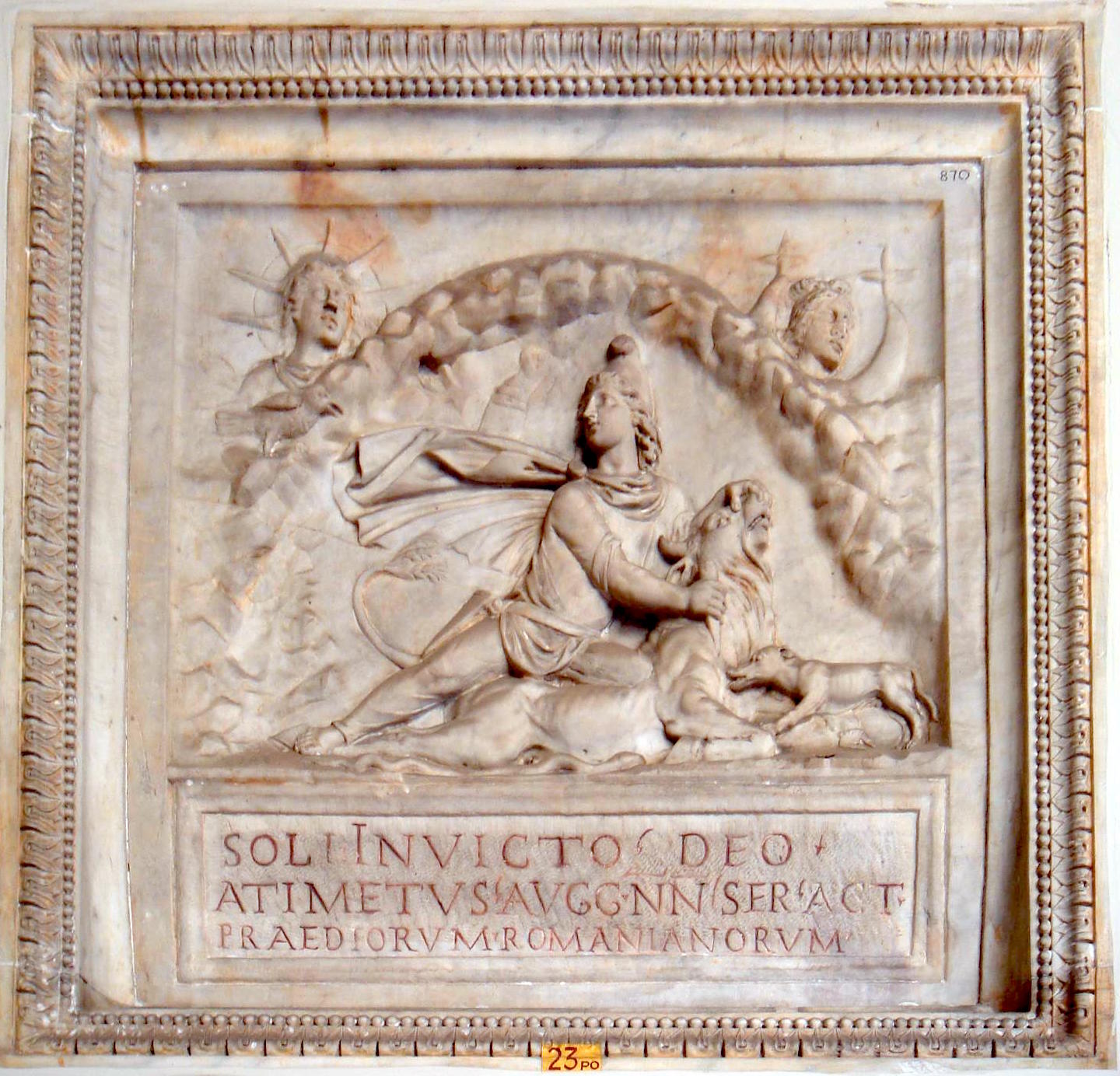 There is something that has not been told of Rome. People re-imagine it every day, it is quite popular now. Why is it that heroes like Robin Hood, and dreams of Empire, such as Rome, are popular in the mass culture? I don't mean popular on MTV, but popular in a persistent & unique way.
Ernest Renan believed that had Christianity not swept over the Empire, Mithra's Cult would have become the dominant religion of Rome.
It was especially popular among the Legions, where Christianity was also popular. The soldiers were under no illusions about the future of civilization without something "higher" to stabilize it.
One wonders if what Christianity needs desperately today is a revival of Mithric influence (what might have been) in initiatic & aristocratic or militaristic forms, upon the rotting corpse of Christ's Church.
Some are beginning to think the same.
The Ghosts of the Past circle us like the shadows of gloom, which will master us, or we them.
Thursday, December 9, 2010
Dead Leaves

Why must the past be remembered to be understood, let alone loved? Probably because man is a creature of the ages, of eternity, as Koheleth teaches (3:14-15). It is why Finkelkraut attempted to summon up the ghost of Benda, for instance. It is interesting that man cannot dismiss the past. Even when it is dismissed, it looms. Modern man is defensive about the past. Criminally so.
The past comes floating up to my still, green pool, unfettered by the death of ages. The refuse of our glittering age, such dead leaves speak to me still, of what was, and is, and might have been. One such volume which pick through is a commentary on Tennyson picked up for $2 at a library book sale. It is pre-World War I, and its author was mocked by the new teachers at Oxford like FR Leavis (who would ever study under someone named Leavis?). After Leavis came the Interregnum, and then women, and then those who hate England, such as Achebe, with his xenotic-racist and uncomprehending lectures on Conrad. Death comes not with Death, but with those who would cheat it. Those mocked by the new scholars will endure, and the scraps of faded leaves from the past will (one day) overturn the tower of Babel. Even such a tiny link in the chain as Bradley.
Santayana is worth quoting:
The past comes floating up to my still, green pool, unfettered by the death of ages. The refuse of our glittering age, such dead leaves speak to me still, of what was, and is, and might have been. One such volume which pick through is a commentary on Tennyson picked up for $2 at a library book sale. It is pre-World War I, and its author was mocked by the new teachers at Oxford like FR Leavis (who would ever study under someone named Leavis?). After Leavis came the Interregnum, and then women, and then those who hate England, such as Achebe, with his xenotic-racist and uncomprehending lectures on Conrad. Death comes not with Death, but with those who would cheat it. Those mocked by the new scholars will endure, and the scraps of faded leaves from the past will (one day) overturn the tower of Babel. Even such a tiny link in the chain as Bradley.
Santayana is worth quoting:
Imaginative Reconstruction
George Santayana, "Moral Symbols in the Bible," in The Idler and his Works, and Other Essays, ed. Daniel Cory (1957; rpt. Freeport: Books for Libraries Press, 1969), pp. 152-178 (at 153-154):If you open any ancient book, even the oldest in existence, you are at once confronted by a finished language, a multitude of assumed persons and things, a full-fledged pantheon, and a current morality. Thus history begins by plunging, like the approved epic, in medias res. We have no means of going further back; and in order to understand the background of the earliest records our one resource is to read on. Gradually the uses of words will reveal their acceptation: the persons named, by their attributions and conduct, will disclose their character; and we shall come to know the world we read of as we have in a measure unraveled the world in which we live, by gradual acquaintance and shrewd hypothesis. Every feature in an ancient document and in the life it describes is a symbol which we must endeavor to interpret. It is an expression the significance of which we have to reconstruct, a result the causes and meaning of which we have to discover.
In the Bible we find many such symbols standing for things easily recognized and familiar to every age: words for sun, moon, horse, bread, water. Yet even here much imaginative reconstruction is needed if we wish to render back to those names the full resonance they had in antiquity. Who but a poet could ever say what the moon was to the shepherds of Asia, or the horse or the well to men who lived in the desert?
Unless all the poets are dead forever, we shall know what they meant in the ancient books.
Tuesday, December 7, 2010
"Nostalgia"?
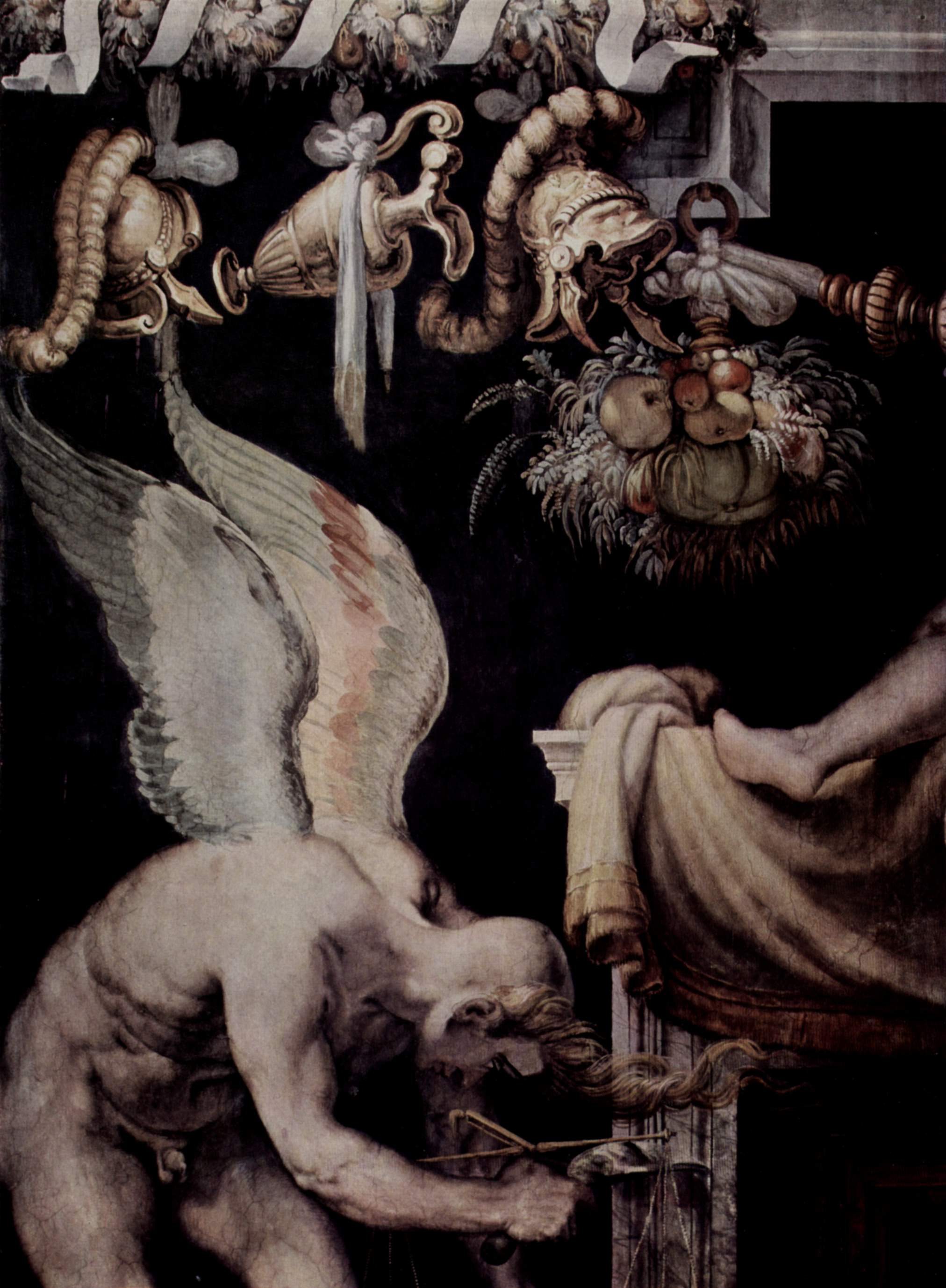
An argument against "nostalgia" for the past.
"There is an element of cultural and religious slumming involved, one that has its origins in petit-bourgeois malaise concerning the monotony of modern life. We have tricked ourselves into thinking that our daily life is so boring, so full of tedium, that something needs to step in to provide us with a means to escape it. Most people alleviate this by spending or buying something. Look only to the structure of television commercials: you can eat/drink/acquire this and you will be both satiated and healthy, indulging and responsible, etc. Those of more exotic tastes (the market is always pleased to indulge any taste as long as you have the money) will delve into other opportunities for personal fulfillment. These include exercises in medieval piety, Eastern monasticism, meditation, Gregorian chant, monarchist politics and other less popular boutique items. Instead of going to the pound and finding a dog or a cat for a pet, some people go to the zoo or a llama farm. Some people want a chinchilla; some want a goat. The mechanism is the same: find yourself in something that you can acquire outside of yourself in order to continue to blissfully ignore the social relations that actually govern your life. These are not exercises in wisdom but rather in self-deception through self-absorption."
I agree with this critique, yet "nostalgia" must always be part of the arsenal of the good life, for it lies buried in the present, and to what else can one appeal to exercise the lost art of memory?
"Man has to love the past in order to remember it." ~ Valentin Tomberg
Christopher Lasch points out in the magisterial Once & Future Heaven (A History of Progress) that "nostalgia" is the only category for the past which "moderns" are capable of conceiving. That is, they simply cannot imagine a people or person or nation or entity with more than a sentimental connection to the past (which was not morally wrong or even evil). Anything else is "fascism". This (of course) virtually abnegates the entire corpus of Western canonical literature (eg., Wordsworth, Samuel Johnson, Samuel Coleridge, Bossuett, etc. to pick a few notable examples). I would argue that (from any "realistic" standpoint) man has to be able to connect past and future and present. If he is unable or unwilling to do so, spiritual death results.
William Watson, Home-Rootedness:
I cannot boast myself cosmopolite;
I own to "insularity," although
'Tis fall'n from fashion, as full well I know.
For somehow, being a plain and simple wight,
I am skin-deep a child of the new light,
But chiefly am mere Englishman below,
Of island-fostering; and can hate a foe,
And trust my kin before the Muscovite.
Whom shall I trust if not my kin? And whom
Account so near in natural bonds as these
Born of my mother England's mighty womb,
Nursed on my mother England's mighty knees,
And lull'd as I was lull'd in glory and gloom
With cradle-song of her protecting seas?
Sunday, December 5, 2010
Subscribe to:
Posts (Atom)