I am particularly taken by Stephen’s critical insight – following Don Colacho – above: “Intellectual resistance is more demanding than military resistance. As the Colombian aphorist Nicolás Gómez Dávila said, ‘To think against is more difficult than to act against.’”This is, I believe, profoundly true, as the necessary understanding – thoroughly assimilated, firmly held to and hard against the grain of modernity – is sufficiently difficult as to be largely inconceivable to the mass of contemporary individuals. What is needed is a ‘heroic act of the intellect’, a conversion – or, better, an un-inversion – of worldview, with all the concomitant consequences for the soul that flow from this. Man, having turned away from God, must turn back, and – having worked himself into an intellectual cul-de-sac – this re-turning will necessarily be, in critical aspect, intellectual in character.
Let me pass to a garland of quotations from Frithjof Schuon that exemplify the articulation of ‘intellectual resistance’ such as is needful:
“The ‘mystique’ of modern man is one of revolt. Between the spirit of revolt and the spirit of submission there is no communication: like oil and water they neither mix nor understand one another; they speak different languages or lead incompatible lives; there is between them a fundamental divergence of imagination and sensibility, to say the least of it. This spirit of revolt has nothing to do with the holy wrath that is by definition directed against error and vice, but is rather a case of pride posing as victim; it marks both a ‘hardening’ and a ‘freezing’ of the soul; it is a spiritually deadly petrification – for hatred is inseparable from it – and an agitation without issue which only intelligence and grace can conquer.”
– Frithjof Schuon, “Dimensions of Islam”, p.39
“Most ‘intellectuals’, to speak without euphemism, are not intelligent enough to understand writers like Saint Anselm or Saint Thomas Aquinas, that is to say to understand them in depth and to find there evidence of God. The darkening of our world – whether we mean the West properly so called or its ramifications in the East and elsewhere – appears patently in the fact that an extreme mental dexterity goes hand in hand with a no less excessive intellectual superficiality; it has become habitual to treat concepts as if they were playthings of the mind, committing one to nothing, in other words everything is touched on and nothing is assimilated; ideas no longer bite into the intelligence, which slides over concepts without taking time to really to grasp them. The modern mind moves ‘on the surface’, all the time playing with mental images, while not knowing their possibilities and role; whereas the traditional mind proceeds in depth, whence come doctrines, which may seem dogmatist, but are fully sufficient and effectual for those who know what a doctrine is. Twentieth century man has lost the sense of repose and contemplation; living on husks, he no longer knows what fruit is like.”
Frithjof Schuon, “Stations of Wisdom”, pp.x-xi
“Independently of doctrinal atheism and of cultural peculiarities, modern man moves in the world as if existence were nothing, or as if he had invented it; in his eyes it is a commonplace thing like the dust beneath his feet – more especially as he has no consciousness of the Principle at once transcendent and immanent – and he makes use of it with assurance and inadvertence in a life that has been de-consecrated into meaninglessness. Everything is conceived through the haze of a tissue of contingencies, relationships, prejudices; no phenomenon is any longer considered in itself, in its being, and grasped at its root; the contingent has usurped the rank of the absolute; man scarcely reasons any more except in terms of his imagination falsified by ideologies on the one hand and by his artificial surroundings on the other.…What we need is to become once again capable of grasping the value of existence and, amid the multitude of phenomena, the meaning of man; we must once again find the measure of the real!”
– Frithjof Schuon, “Light on the Ancient Worlds”, p.41
“Promethean minds believe themselves to be creatures of chance moving freely in a vacuum and capable of ‘self-creation’, all within the framework of an existence devoid of meaning; the world, so it seems, is absurd, but no notice is taken – and this is typical – of the absurdity of admitting the appearance within an absurd world of a being regarded as capable of remarking that absurdity. Modern man is fundamentally ignorant of what the most childish of catechisms reveals, doubtless in a language that is pictorial and sentimental, yet adequate for its purpose; namely, that we are inwardly connected with a Substance which is Being, Consciousness, and Life, and of which we are contingent and transitory modalities. He is consequently unaware of being involved in a titanic drama in terms of which this world, seemingly so solid, is as tenuous as a spider’s web.”
– Frithjof Schuon, “Logic and Transcendence”, pp.59-60
“It has been said that modern man has lost the sense of sin, the kind of attitude in question can best be described by saying that man no longer has a feeling of his own smallness or that he has become insensitive to all the violations brought about through the decadence of his nature, in short, that he has become insensitive to the point of being pleased with himself and of no longer having any awareness of the ambiguity attaching to his own condition. The empty shadow of this awareness he calls ‘anguish’ and he hates all those who, still possessing this awareness and accepting the positive responsibilities implied therein, escape this ‘anguish’ and thereby also escape ‘revolt’; these two complexes, anguish and revolt, he wishes to make universal, for it is in the nature of man not to wish to go to perdition alone.”
– Frithjof Schuon, “Treasures of Buddhism”, p.57-8
Dedicated to the red and the white rose, to the eyes and the flame, to a more perfect unity... You can reach me @ cathasach71854@gmail.com
Showing posts with label Schuon. Show all posts
Showing posts with label Schuon. Show all posts
Sunday, February 19, 2012
Quoted in Full (Shuon & Modern Men)


Wednesday, February 8, 2012
Sola Gratia
There is another definition of sola gratia, which may find more favor in the eyes of disgusted moderns who are properly disgusted, not only with the world, but with themselves. Alistair McGrath explored some of this in relation to existentialism in one of his many works (before he went nutters and claimed that the Third World Christian would and ought to replace the "orthodox mainliners" - not that I disagree with the second half of that.
Let us suppose that man, instead of being a pile of dung like Luther argues, is actually made in God's image. Not "man" as we imagine, think, and experience ourselves to be, which is often a dung pile (Luther was not so much wrong, as confused, and stuck in a certain kind of mystical psychism). But the root of our being is what is missed here - Our primordial self. This "self" is connected to the One Self, who is God. In Christian theology, the archetype (at least in Orthodox Eastern theology) is the "Father". The Father manifests first of all (if we wish to nod towards the West) in the Son. The Son before the foundations of the earth is crucified - that is, he becomes man, in the shape of the cross.
Jesus, in submission to God the Father, reunites us to our primordial Self. But this "Self" must still transcend itself and go beyond even itself, into the future of the Father, as one star joins the other constellations, and finally the Star of Stars who gave birth to the Cosmos. In this path, the Spirit leads us, back to the Father. This is the mystery of Recapitulation. Saint Paul spoke of it in Colossians. In the end, Jesus will resubmit himself and all who are with him to the Father.
There are, thus, many levels of Being, and many dimensions, which are (in the end), only One.
Let us suppose that man, instead of being a pile of dung like Luther argues, is actually made in God's image. Not "man" as we imagine, think, and experience ourselves to be, which is often a dung pile (Luther was not so much wrong, as confused, and stuck in a certain kind of mystical psychism). But the root of our being is what is missed here - Our primordial self. This "self" is connected to the One Self, who is God. In Christian theology, the archetype (at least in Orthodox Eastern theology) is the "Father". The Father manifests first of all (if we wish to nod towards the West) in the Son. The Son before the foundations of the earth is crucified - that is, he becomes man, in the shape of the cross.

Jesus, in submission to God the Father, reunites us to our primordial Self. But this "Self" must still transcend itself and go beyond even itself, into the future of the Father, as one star joins the other constellations, and finally the Star of Stars who gave birth to the Cosmos. In this path, the Spirit leads us, back to the Father. This is the mystery of Recapitulation. Saint Paul spoke of it in Colossians. In the end, Jesus will resubmit himself and all who are with him to the Father.
There are, thus, many levels of Being, and many dimensions, which are (in the end), only One.
Saturday, December 18, 2010
Gleanings....
Schuon has written an entire book on Christianity, which looks helpful. Schuon was not specifically Christian, although he remained a Christian (if you want that explained, leave a note). The argument that he and other traditionalists would make with dogmatic Christianity is that it is bifurcated, historically and from its earliest days, into dualism and subsequent "regressions" which lead progressively to the decay of our day, in which the inner meaning and intellectual content of the most sacred rituals are despised on the one hand, and lost on the other.
We have to recover this. And Christianity in its present form will not help.
Meanwhile, the Chinese have developed an interest in classical education, Leo Strauss, and Carl Schmitt. As well as Calvin. This does not bode well for the ultra-liberal West.
We have to recover this. And Christianity in its present form will not help.
Meanwhile, the Chinese have developed an interest in classical education, Leo Strauss, and Carl Schmitt. As well as Calvin. This does not bode well for the ultra-liberal West.
Thursday, December 16, 2010
Sur le symbolisme Guénon est imbattable
"It must be admitted that the progressivists are not entirely wrong in thinking that there is something in religion which no longer works; in fact the individualistic and sentimental argumentation with which traditional piety operates has lost almost all its power to pierce consciences, and the reason for this is not merely that modern man is irreligious but also that the usual religious arguments, through not probing sufficiently to the depth of things and not having had previously any need to do so, are psychologically somewhat outworn and fail to satisfy certain needs of causality. If human societies degenerate on the one hand with the passage of time, they accumulate on the other hand experiences in virtue of old age, however intermingled with errors their experience may be; this paradox is something that any pastoral teaching should take into account, not by drawing new directives from the general error but on the contrary by using arguments of a higher order, intellectual rather than sentimental; as a result some at least would be saved -- a greater number than one might be tempted to suppose -- whereas the demagogic scientistic pastoralist saves no one."
The likes of Kurzweil are opposed to Tradition.
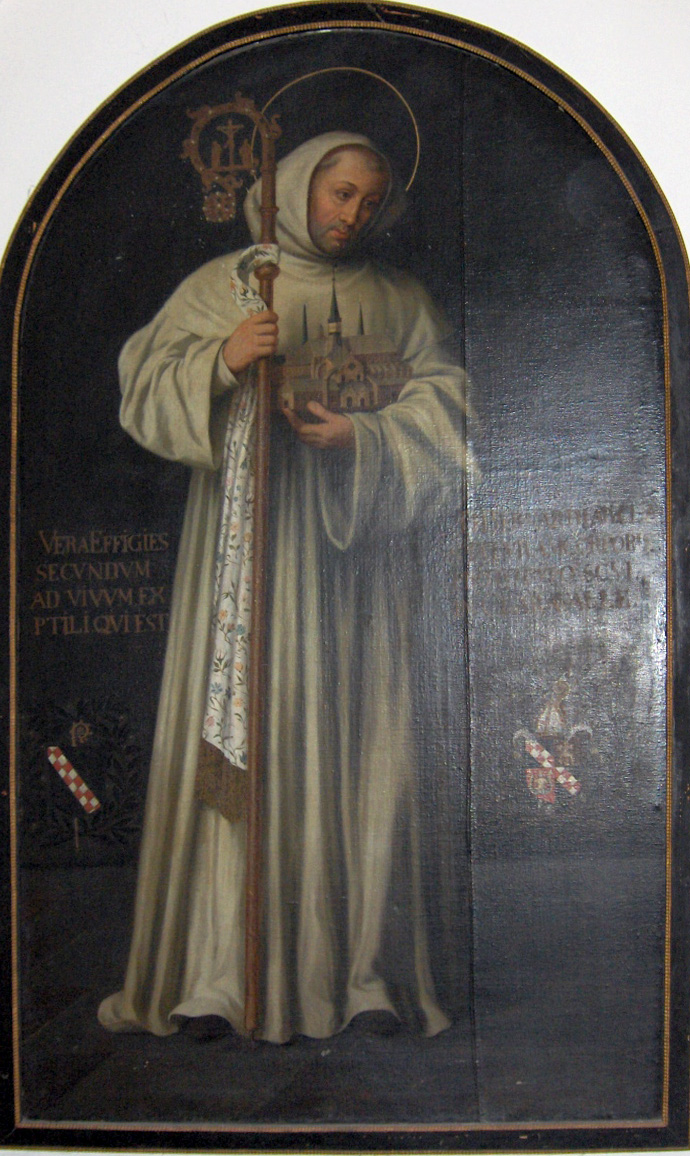
Guenon on St. Bernard.
Correspondence.
Friday, October 15, 2010
Symbols
"We believe that we invent symbols. The truth is that they invent us; we are their creatures, shaped by their hard, defining edges. When soldiers take their oath they are given a coin, an asimi stamped with the profile of the Autarch. Their acceptance of that coin is their acceptance of the special duties and burdens of military life--they are soldiers from that moment, though they may know nothing of the management of arms. I did not know that then, but it is a profound mistake to believe that we must know of such things to be influenced by them, and in fact to believe so is to believe in the most debased and superstitious kind of magic. The would-be sorcerer alone has faith in the efficacy of pure knowledge; rational people know that things act of themselves or not at all."Gene Wolfe, Shadow of the Torturer
Getting close...
The complexity of Reality has to do with the Incarnation:
"History is neither necessity nor freedom, but rather their flexible integration. In fact, history results neither from impersonal necessity nor from human caprice, but rather from a dialectic of the will where free choice unfolds into necessary consequences. History does not develop as a unique and autonomous dialectic, which extends in vital dialectic the dialectic of inanimate nature, but rather as a pluralism of dialectical processes, numerous as free acts and tied to the diversity of their fleshly grounds."Davila, again. The vertical movement down (Schuon) into matter, but what transpires after that is flesh and spirit. Neither half one, half the other, or both at once separately, or capable of separation...reality is existential, but not intellectually. It is what it is, and how it is. Art and poetics and philosophy are ALL used to grip it, or recreate it, or evoke it.
The symbol is the closest thing we have to incarnation, among us. It begins to comprehend the paradoxes at the heart of the truth of what happened & is happening.
Schuon agrees that Westerners tend not to "have a sense of the metaphysical transparency of phenomenon," and instead "insist as a matter of preference on penitential means" of religious practice. In short, they emphasize the "moral alternative, not that of contemplative participation." But as a courtesy to other spiritual types, "if these fideists have no wish to use their intelligence, at least they should not forbid others to do so" (Schuon).
OneCosmos is doing a good job of using Platonism as a means/vehicle to achieve Christian objectives. The Reason and Intellect have suffered mutilation in various ways in the West, which is now extremely anti-intellectual, even (and most especially) when it is pretending to be most intellectual. Marx, for instance, for all of his dialectic, says "the point of history is not to understand it, but to change it". This assassination of Intellect, after its worship, effectively enthrones Will in such a manner as to be beyond question. In this sense, Nietzsche & Lenin & Adam Smith all carpool to work together.
But if all are corrupt (which is to say, partial) visions/liturgies, then where is truth to be found?
Baby steps, but the insanity of God is wiser than the wisdom of men.
Yet, as a human, clearly, something which transcends either Right or Left would be desirable.
Saturday, August 14, 2010
The Sword
Saint Paul exhorts Christians to compete against one another in godliness, to stimulate excellence. Competition seems to be, not so much a fact of life, as Life itself. We all struggle, primarily (if we are wise) against ourselves, but indirectly this affects others. "Reason" and "liberalism" and "secularism" essentially either deny this totally, or embrace it in an animalistic context. Thus, politics consists in making sure CNN drifts farther left day by day, while protesting loudly against Republican domination of small talk radio. Cover words like "fairness" and "equality" are used as cloaks of maliciousness, to disguise the ugliness of the political act, both in itself as an end, but also the means, which has to be covered in velvet. Both sides do this - the "free"market today operates on the crony capitalist model with words like "choice" and "opportunity". The solution is not to castrate man (the Left) or to baptize convenient "as-isms" (the Right) but to direct man's attention to the inward spiritual struggle against himself. Anything else will first provide food for the carrion, & turn to carrion itself in turn.
Here is Jeffers (courtesy of D. Layman at First Things, who inspired this article...)
Contemplation Of The Sword
"Reason will not decide at last; the sword will decide. The sword: an obsolete instrument of bronze or steel, formerly used to kill men, but here In the sense of a symbol. The sword: that is: the storms and counter-storms of general destruction; killing of men, Destruction of all goods and materials; massacre, more or less intentional, of children and women; Destruction poured down from wings, the air made accomplice, the innocent air Perverted into assasin and poisoner. The sword: that is: treachery and cowardice, incredible baseness, incredible courage, loyalties, insanities. The sword: weeping and despair, mass-enslavement, mass-tourture, frustration of all hopes That starred man's forhead. Tyranny for freedom, horror for happiness, famine for bread, carrion for children. Reason will not decide at last, the sword will decide. Dear God, who are the whole splendor of things and the sacred stars, but also the cruelty and greed, the treacheries And vileness, insanities and filth and anguish: now that this thing comes near us again I am finding it hard To praise you with a whole heart. I know what pain is, but pain can shine. I know what death is, I have sometimes Longed for it. But cruelty and slavery and degredation, pestilence, filth, the pitifulness Of men like hurt little birds and animals . . . if you were only Waves beating rock, the wind and the iron-cored earth, With what a heart I could praise your beauty. You will not repent, nor cancel life, nor free man from anguish For many ages to come. You are the one that tortures himself to discover himself: I am One that watches you and discovers you, and praises you in little parables, idyl or tragedy, beautiful Intolerable God. The sword: that is: I have two sons whom I love. They are twins, they were born in nineteen sixteen, which seemed to us a dark year Of a great war, and they are now of the age That war prefers. The first-born is like his mother, he is so beautiful That persons I hardly know have stopped me on the street to speak of the grave beauty of the boy's face. The second-born has strength for his beauty; when he strips for swimming the hero shoulders and wrestler loins Make him seem clothed. The sword: that is: loathsome disfigurements, blindness, mutilation, locked lips of boys Too proud to scream. Reason will not decide at last: the sword will decide."
Robinson Jeffers
Man is an animal. But that is not all he is, or if he is, then -
"Thus materialism amounts to reducing man to the animal, and even to the lowest, since the lowest is the most collective; this explains the materialists' hatred for all that is supra-terrestrial, transcendent, spiritual, for it is precisely the spiritual by which man is not an animal. To deny the spiritual is to deny the human: the moral and legal distinction between man and animal then becomes purely arbitrary, like any other tyranny..." --F. Schuon
As OneCosmos has it, man is an animal with this inconvenience, that he knows he is one. This is the terrible anxiety of modern man, because (of course), none of it is true. The knowledge of this truth/un-truth is both innate, and the product of a struggle with self. This used to be in our bones. Now, the denial of the Absolute, absolutely, is in almost all the air we breath. Western man is dying because he is not God, knows it, and believes that this makes him God. And so the vicious circle goes; the lower we sink, collectively, the harder it is to remember those intimations of deprivation which alert us to the living and real.
"Reason will not decide at last; the sword will decide. The sword: an obsolete instrument of bronze or steel, formerly used to kill men, but here In the sense of a symbol. The sword: that is: the storms and counter-storms of general destruction; killing of men, Destruction of all goods and materials; massacre, more or less intentional, of children and women; Destruction poured down from wings, the air made accomplice, the innocent air Perverted into assasin and poisoner. The sword: that is: treachery and cowardice, incredible baseness, incredible courage, loyalties, insanities. The sword: weeping and despair, mass-enslavement, mass-tourture, frustration of all hopes That starred man's forhead. Tyranny for freedom, horror for happiness, famine for bread, carrion for children. Reason will not decide at last, the sword will decide. Dear God, who are the whole splendor of things and the sacred stars, but also the cruelty and greed, the treacheries And vileness, insanities and filth and anguish: now that this thing comes near us again I am finding it hard To praise you with a whole heart. I know what pain is, but pain can shine. I know what death is, I have sometimes Longed for it. But cruelty and slavery and degredation, pestilence, filth, the pitifulness Of men like hurt little birds and animals . . . if you were only Waves beating rock, the wind and the iron-cored earth, With what a heart I could praise your beauty. You will not repent, nor cancel life, nor free man from anguish For many ages to come. You are the one that tortures himself to discover himself: I am One that watches you and discovers you, and praises you in little parables, idyl or tragedy, beautiful Intolerable God. The sword: that is: I have two sons whom I love. They are twins, they were born in nineteen sixteen, which seemed to us a dark year Of a great war, and they are now of the age That war prefers. The first-born is like his mother, he is so beautiful That persons I hardly know have stopped me on the street to speak of the grave beauty of the boy's face. The second-born has strength for his beauty; when he strips for swimming the hero shoulders and wrestler loins Make him seem clothed. The sword: that is: loathsome disfigurements, blindness, mutilation, locked lips of boys Too proud to scream. Reason will not decide at last: the sword will decide."
Robinson Jeffers
Man is an animal. But that is not all he is, or if he is, then -
"Thus materialism amounts to reducing man to the animal, and even to the lowest, since the lowest is the most collective; this explains the materialists' hatred for all that is supra-terrestrial, transcendent, spiritual, for it is precisely the spiritual by which man is not an animal. To deny the spiritual is to deny the human: the moral and legal distinction between man and animal then becomes purely arbitrary, like any other tyranny..." --F. Schuon
As OneCosmos has it, man is an animal with this inconvenience, that he knows he is one. This is the terrible anxiety of modern man, because (of course), none of it is true. The knowledge of this truth/un-truth is both innate, and the product of a struggle with self. This used to be in our bones. Now, the denial of the Absolute, absolutely, is in almost all the air we breath. Western man is dying because he is not God, knows it, and believes that this makes him God. And so the vicious circle goes; the lower we sink, collectively, the harder it is to remember those intimations of deprivation which alert us to the living and real.
Friday, August 13, 2010
Lift the Anathema!

John Philoponus was ahead of his time. Anticipating Galileo and Mirandola by generations, literally centuries, he endeavored to explicate the Trinity in terms satisfactory to the peace of the Empire and with the goal of non-schism for the Church. Due to Imperial politics, he was eventually anathematized, but theologians like T. Torrance are dedicating time to "rehabilitating" him, primarily by re-examining and understanding his thought.
One of the interesting things in his work is that he anticipates quantum physics in talking about a kind of hyper-reality in which God works and has reserved for His working. A possible explanation for miracles and other wonders, it also provides a model or way of thinking (imagistically) about "how" God creates the world out of nothing and how He interacts with it, an interaction which culminates in the Incarnation of His Son.
Schuon discusses the concepts of Being and Beyond-Being in his 20th century work, and OneCosmosBlogspot.com has been covering this. This is another way of talking about the essence/energy distinction (in Orthodoxy): we cannot ever know God in His essence, but we do experience His energies, which is His Love, towards us, and is more properly "Who" God is. Schuon would identify the Beyond-Being with the person of the Father, who is archetectonic, or the archetype for Creation. Jesus is identified with revealed Being, which is the "face" of God towards his finite, flawed, and weak creatures. The Orthodox theologian Bulgakov, I believe, also ventured onto some of this ground with his Mariology and focus on Sophia, or the wisdom of God.
The traditional Church has focused on Faith (pistis) perhaps to the detriment of Gnosis and Wisdom, although this balance is redressed somewhat in Eastern Orthodox thought. Philoponus' work may be a way for the Western Church to begin to re-examine and move back "into" the early concepts and struggles of the Early Church (which are more and more relevant to our time).
The important point here, vis a vis John Whitehead and process theology, is that Christianity implies some form of ontology, and is ineluctably bound up with the theology of earlier ages through the communion of the saints, not to mention the development of tradition and the language that emerges out of history. While God may be, for us, more "potential" than actual, and while Whitehead's thoughts may yield insights spiritually along these lines, it is always useful to dig through history and find a potentially more thorough and sound interlocutor that is working with the same lines and struggling with the same issues.
Given Philoponus' position in tradition, he may at least be useful ballast to efforts to re-vivify and re-articulate a "fresh" Platonic theology for our day, a theology which is classical, Christian, & well-adapted to modern conditions.
The important point here, boys and girls, is that safety lies in the deeper part of the stream, which mingles otherwise dangerous currents and influences, and is both deep and wide. If our bark is strong, that is the place to be...
Subscribe to:
Posts (Atom)