Been reading John Adams, as recommended by a mad Tea Partier.
I simply can't stomach this stuff, even from Adams. He is right, if viewed as a conservative - someone preserving the rights of Englishmen. He is absolutely mistaken when taken as a revolutionary - as someone arguing abstractly for what should be the best (and only) method of government - for all revolutionaries and "men of principle" have this in common, that they are willing to start a war over a misinterpreted clause in a Constitution. What difference is there between this, and that fanaticism of those who began the Wars of Religion?
God help this poor country. And this is coming from those who care.
(See Van Hervey's Blogodidact)
I will NEVER be a revolutionary, liberal or otherwise.
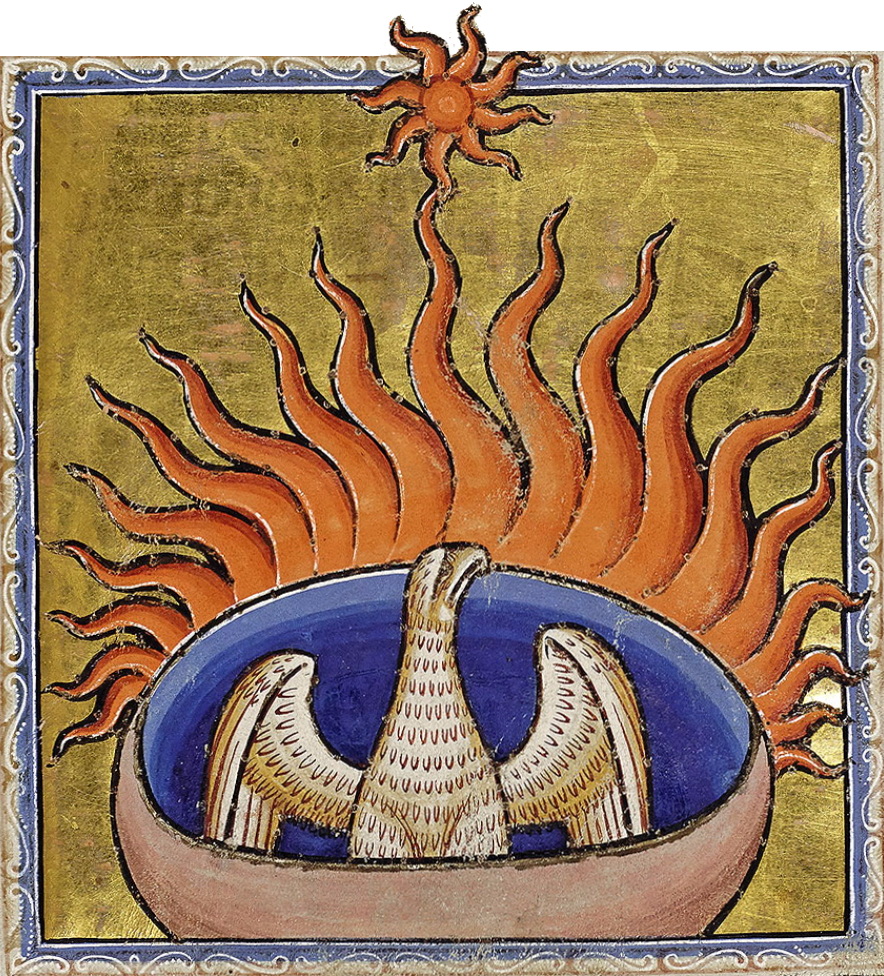
Dedicated to the red and the white rose, to the eyes and the flame, to a more perfect unity... You can reach me @ cathasach71854@gmail.com
Saturday, October 29, 2011


Wednesday, October 26, 2011
Plato Maligned Again
"Back in 1984, Culianu defined himself as one of the rising stars of the academic firmament with a book titled Eros and Magic in the Renaissance. The academic study of Renaissance magic had been a hot field since the Sixties, when Frances Yates finally blew the lid off a generations-old habit of scholarly disdain for occultism, but even by the standards of the Eighties Culianu’s book was startling. It took magic seriously as a system of psychological manipulation that used the cravings and desires of its target—the “eros” of the title—to shape human behavior. It suggested on that basis that modern advertising, which does exactly this, is simply the current form of magic, and that contemporary Western nations are “magician states” governed by the magical manipulation of public consensus...."
Even the archdruid isn't getting it quite right.
The problem with this analysis (and I heartily recommend his distinction between theurgy and thaumaturgy, Culianu and Ficino!) is that it assumes that societies can be run on "geometry" - that what is true in mathematics is true in the social sphere, legal sphere, etc. Certainly, anyone can learn mathematics - most men (for instance) are fairly good at it, as opposed to women.
"In the dialogue Meno, to note only one example, Plato has Socrates demonstrate a point about the deep structure of the human mind by walking an illiterate servant boy through a geometrical proof. The boy doesn’t know a thing about geometry, but he is able to follow Socrates’ logic, and by the end of the process has understood what at that time was cutting-edge mathematics. Socrates’ point is that anyone, anywhere, could be taught the same thing—and that’s a point for which Plato’s Republic has no room at all. In the Republic, reason is for the few; honor and social commitments are for another minority, separate from the first; the majority has nothing but appetite. It’s therefore fair to say that in the Republic, nobody is allowed to be more than one-third of a complete human being.
That’s always the problem with utopian schemes; the inhabitants are never allowed to be fully human, though the restrictions are rarely handled with the geometric precision Plato displayed. When a utopian scheme is put into practice, in turn, what inevitably happens is that whatever dimension of the human is supposedly abolished happens anyway, and defines the fault line along which the scheme breaks down. Marxism is a great example; in theory, people in Marxist societies are motivated solely by noble ideals; in practice, getting people to go through the motions of being motivated solely by noble ideals required an ever-expanding system of apparatchiks, secret police and prison camps, and even that ultimately failed to do the job. One way or another, trying to create heaven on earth reliably yields the opposite; whatever resembles Plato’s Republic on paper turns into Pluto’s Republic in practice."
While I heartily recommend his theurgy/thaumaturgy distinction (later in article), note that mathematics isn't governed by the same laws as the sphere of human action. This is a pervasive problem with all critiques of caste orders or traditionalism - they simply don't accept the fact that very, very, very few people have the aptitude or ability to govern themselves, let alone other people.
Sunday, October 23, 2011

Am I the only one?
To believe in the equality of all men, when we see them all unequal; to believe in liberty, when we see slavery established in all parts; to believe that all men are brothers, when history tells all are enemies; to believe that there is a common mass of misfortunes and of glories for all men born, when I see nothing but individual glories and misfortunes; to believe I am referred to humanity, when I know humanity is referred to me; to believe that humanity is my centre, when I constituted myself the centre of all; and finally, to believe that I should believe these things, when they are proposed to me by those who tell me that I should believe only my own reason, which contradicts all those things they propose to me, is an absurdity so stupendous, an abberation so inconceivable, that I stand mute and astounded in its presence.
My astonishment increases when I observe that those who affirm human solidarity, deny that of the family, which is to affirm that enemies are brothers, and that brothers should not be brothers; that those who affirm human solidarity are the same who a little before denied the political, which is to affirm I have nothing in common with my own, and all in common with strangers; that those who affirm human solidarity deny religion, though the former cannot be explained without the latter; and from all this I deduce in legitimate consequence that the Socialistic schools are at once illogical and absurd— illogical, because after demonstrating against the Liberal school that some solidarities cannot be accepted while others are rejected, they fall into the same error, accepting one amongst all, and rejecting the remainder—absurd, because precisely the one they proposed to me is not a point of reason but of faith, and because this proposal comes to me from those who deny faith and proclaim the imprescriptable right of reason to empire and sovereignty."
Gornahoor
Servants of the Secret Fire
Some people are genuinely puzzled over Gandalf's words to the Balrog of Moria when he first warns it:
I was re-reading the Silmarillion for references to what the "Secret Fire" that Gandalf serves, and I found the following:
As to what is meant by Gandalf's words "Flame of Udun", I simply infer that this is another word for Balrog. Balrogs are demons of fire, and the word Udun is found as an entry in the glossary of The Silmarillion under "tum":
Just conjecture, of course.
Source
" 'You cannot pass,' he said. The orcs stood still and a silence fell. 'I am a servant of the Secret Fire, wielder of the Flame of Anor. You cannot pass. The dark fire will not avail you, flame of Udun. Go back to the Shadow. You cannot pass!' "Some people have taken this to mean that Gandalf serves his Ring of Fire, Narya. But this is not consistent or appropriate when Gandalf's history is taken as a whole.
[The Fellowship of the Ring]
I was re-reading the Silmarillion for references to what the "Secret Fire" that Gandalf serves, and I found the following:
"He [Melkor] had gone often alone into the void places seeking the Imperishable Flame; for desire grew hot within him to bring into Being things of his own, and it seemed to him that Iluvatar took no thought for the Void, and he was impatient of its emptiness. Yet he found not the Fire, for it is with Iluvatar."Then later:
[The Silmarillion]
"Therefore Iluvatar gave to their vision Being, and set it amid the Void, and the Secret Fire was sent to burn at the heart of the World; and it was called Ea."The Imperishable Flame and the Secret Fire seem to represent the same thing; the power of Iluvatar to impart actual Being to his thought - the spirit of creation, if you will. It seems fitting that this would be something that Gandalf (as a Maia sent from the West by the Valar) would "serve" as counterposed to the evil of the Balrog. In this context, any notion of Gandalf serving the power of his ring Narya is absurd, IMHO (g).
[The Silmarillion]
As to what is meant by Gandalf's words "Flame of Udun", I simply infer that this is another word for Balrog. Balrogs are demons of fire, and the word Udun is found as an entry in the glossary of The Silmarillion under "tum":
"Cf. Utumno, Sindarin Udun (Gandalf in Moria named the Balrog 'Flame of Udun'), a name afterwards used of the deep dale in Moria between the Morannon and the Isenmouthe."And Utumno is of course the first stronghold of Melkor in the North of Middle-earth. Hence, Flame of Udun could be read as Servant of Morgoth or Balrog from Morgoth's Fortress [Udun].
Just conjecture, of course.
Source
Subscribe to:
Posts (Atom)