Friday, March 7, 2014

The Metalogikon


The Medieval period represents, for Western man, a kind of germinal gestation of the Spirit in the form of an actualized Christian civilization, one which was fully in accord with Tradition, as far as it was able to go. We know this because, for the neo-pagans, it is too “Christian” & for the neo-Christians, it is too “pagan”. Something with this many enemies has to have more going for it than meets the eye, & when one begins to dig in its archives, or leave through its holy books, or experience its ghosts in an old castle, you get a cold breath of fresh air that refreshes the heart.
I wrote in an earlier post:
Cologero’s translations have provided this gem, from de Giorgio:
“We could also call it “intuition” although no psychological quality is given to this term: the psyche in fact is below the spirit, the intellect, the heart—these three terms denoting, under three aspects, the same type of integrative activity of the divine. The spirit expresses the direct integration whose absolute type is the divine breath, the intellect expresses the cognitive permeation, the heart expresses radiant receptivity: by means of the first, one is elevated, with the second, absorbed, in the third, one is welcomed and realizes himself. Representing here a vertical axis, the spirit is the peak, the intellect the base, the heart the center that gathers the two extreme points and extends them, prolonging them horizontally, hence the Cross as radiant symbol of universality and unifying centrality.”
The intellect, the heart, and the spirit are One...
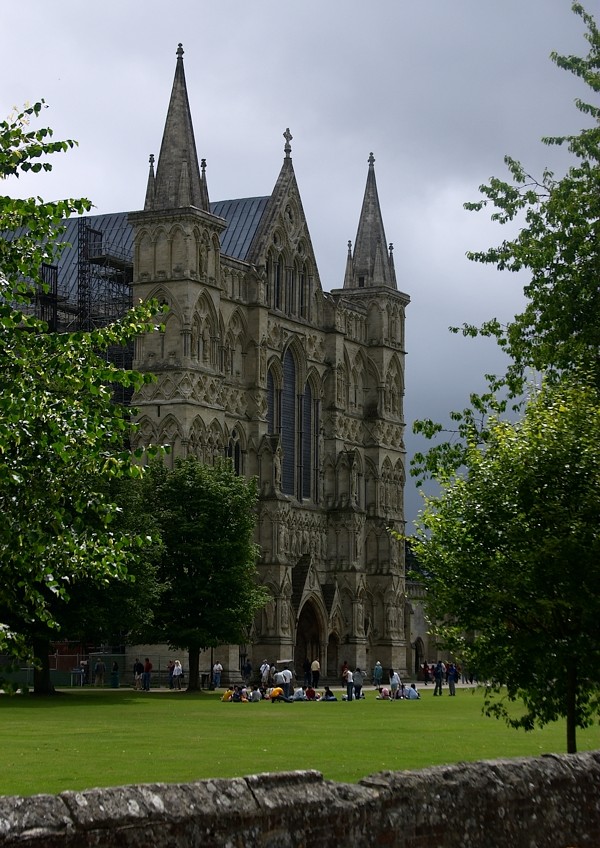
John of Salisbury was a minor church official in England, & yet he ably defended the classical ideal (expressed in Seneca and Cicero) of the philosopher: the lover of wisdom has to live as if these things (the Tao) were actually true, subordinating earthly desires and concerns to a higher goal. To this end, one studied grammar as the foundation, proceeded to logic-dialectic to pursue the ends of what was begun, and summarized this rhetorically in the “living flame” of a common chase after the Logos. Errors in grammar (mixing categories of speech) are analogous to conflating Spirit & matter, or of admixing them (eg., “race” = the spirit). Errors in logic are analogous to perverse twisting of the Logos inside one’s self (eg., it’s some one else’s fault). Errors in rhetoric are analogous to not being able to judge the spirits, following will’o'the’wisps (eg., Equality as God).  Therefore, the educated man pursues a formal calling (for which he is more harshly held to account) in learning to tell what is true from what is false, & what is good from what is better or Best. The uneducated man has to look to his betters for guidance (as indeed does the educated man, as sainthood or herodom actualizes liberal studies in real freedom).

Where is anyone of John’s stature today? If he exists, he is certainly not holding an official post: that is the difference between then & now.

Because of the chiasm formed by earth and heaven, in which the material world becomes the divine drama or staging ground for salvation, and in which whatever you bind will be bound, whatever loosed, loosed, the Hermetic method is to continue the medieval project of christening earth and humanizing heaven: that is, earth must be baptized, & heaven taken by storm. Rather than effacing human nature, personality, and the Logos as it sustains the “shields of the earth”, it overcomes General Law by drawing the entire human person up into the Divine order, simultaneously actualizing and drawing down the celestial powers, as was the original intent of God.

One only has to compare Eastern Orthodox icons to the Book of Kells to appreciate the difference in Western spirituality, which very early on committed itself to a playful acknowledgement and sublimation of the natural order. It was no accident that Pelagius hailed from Ireland, or that the Irish monks “saved Western classical civilization”. Whereas the East has been more heavily influenced by the idea of breaking out of the charmed, magic circle of the Fall, the West has been more willing to run the risk of damnation by insisting on a full recognition of the Logos in the material Creation. This does not mean that Eastern Orthodoxy is opposed to the Western Church, far from it. It is simply to point out that they are, in the end, returning to the same place, from a different point, like radii back to the center of the circle. The French hermetic tradition which inspired Tomberg openly admits and acknowledges the importance of co-inherence of the two worlds, which are One. Charles Williams (who drew attention to the term) was influenced by some of the same circles as Tomberg was.

So it is not merely a matter of all Westerners re-converting to the Eastern Church (although perhaps this is how God shall choose to re-unify?), but rather of rediscovering that one’s lines have “fallen in pleasant places & that I have a goodly heritage” (Psalms). In re-reading works such as John Cardinal Newman’s The Idea of the University, or John of Salisbury’s Metalogicon, or perhaps Boethius’ Consolations, we can see the Western, classical yearning for the order of the City, for Tradition, for the true & original religion, which pre-existed the Christ, but was re-energized by the appearance of its crown prince.
I have pointed out that Grammar corresponds to Spirit, Logic to Logos, and rhetoric to the archetype or Father. This is how liberal learning can again be brought into a right relationship not merely with right Reason, but with the embodied and personal Good, which is a super-Person:
If we were relating this to a knowledge of castes and Order (including internal order) we would say that the Spirit correlates to Fact, the Heart to Logic, and the Intellect to Rhetoric (for true self-consciousness is consciousness of the Master inside, allowing domination of both Self and Destiny). The Spirit initiates, or factualizes the supernatural; the Heart has its inner logic that we must learn to listen to; the Intellect realizes and epitomizes the power of the Invisible made Visible, the fruit of what has gone before.
In this way (surprisingly) the Spirit “chiasms” (or inverts by crossing a boundary in a creative way, the opposite of revolution, which is not fecundate) with “Fact” (which we tend to identify somewhat strangely with pure matter, the Son who is “matter incarnate” is seen as the heart of the worlds with a logic that transcends analytical power alone, and the Father is not the brutal demi-God who oppresses, but rather the Archetype or “Ground”, the “infinite possibility” Himself, out of which all proceeds.
Tomberg has pointed out that pantheism, emanationism, demi-urgism, and creation ex nihilo all correspond to various aspects or levels of Being, all true, which can be properly coordinated in the One.
This is why the medievals did not mind reading the Timaeus, which frankly teaches that there is a demi-Urge, or perusing the Stoics (whose spirituality they did not share as much in common with as the theurgic tradition of Plotinus), which emphasizes the unity of the Logos in the natural world (pantheism), or in picking up Iamblichus or Plotinus (whose systems of theurgy were incorporated into the Roman mass). They held all this together with the Grammar of Dogma, which demanded that the mystery of the Spirit as it actualizes in matter is the foundation point for slowly climbing Parnassus and reaching the heights which in earlier ages may have been scaled more swiftly or dramatically by avatars and heroes who shared a small portion of the charisma of Christ.

Now that Christ has come, the real work begins! Rather than rely on being born as a “son of God” dedicate to Apollo (like Pythagoras), or being conceived by the interaction between Olympian celestials and mortals (like Hercules), we have been fully restored. But being fully restored, the work has only just begun, as it is now our calling in this darkest and brightest of all Ages to achieve on the inside, project on the outside, and re-echo the divine nuptials that have been consummated between Heaven and Earth. This is the chivalric destiny the Middle Ages glimpsed and began to achieve, & this is what each must set themselves again to do.

To that end, it is encouraging that, even in John of Salisbury’s “bright age of Faith”, he complains that false philosophers and fake Christians abounded, that learning was already turning dim, that madness was loose upon the earth in the form of institutional folly, and that corruption too often triumphed over virtue (he and Thomas Beckett were allies). Maybe the Age we live in, as Cologero has said, has its own unique advantages, and that much can be done in candlelight, away from the hustle and bustle of a world that (even at its best) was ambiguous about accepting the Lordship of the King.

Friday, February 28, 2014

Western Social Order – Part 2


A recent comment by John of Salisbury made me think:
“Not only were these scholars unable to drive out the bad scholars, but in combating insanity, they temporarily became insane…”
I thought about this question in relation to other questions or comments relating to the “inner struggle” of the man of Tradition in today’s very untraditional world. I had a good acquaintance on the Internet give up study in that area because he needed something more cheerful. If you will notice, Cologero does not restrict his reading to Guenon and Evola, but also studies a wider range of writers on a diverse array of subjects. It is probably true that a steady diet of Evola and Guenon has the potential to unsettle one. Caleb is planning to put up a post that addresses part of this, in that Tomberg’s Meditations are designed to lay a firm foundation, without which (if you neglect the first card of the Tarot), the rest becomes unstable. Cologero has done a fine job of supplementing Evola and Guenon (whom he terms the “Master of Tradition”), with the meditations on the Meditation. The Tarot discussion list (and Caleb’s article) is designed to assist in this process. In trying to imitate our betters, we often overstep or over-estimate our own capabilities, sometimes not deliberately, as we try to “come up to speed”. Incidentally, much of Phillip Rieff’s thought in Culture and Its Second Death explores the danger of being initiated into our elder’s/better’s debates too swiftly, including the fundamentally erotic desire to criticize those to whom we owe everything. Rosenstock-Huessy called this “Teaching too Early, Learning to Late”, in which the danger is that we learn just enough to be dangerous, to ourselves and others.
A little knowledge is a dangerous thing – drink deep, or taste not the Pierian spring!
I can certainly relate to this, having passed in and through and back into such phases, over the course of my short 40 years. In the case of Gornahoor, the best possible foundation has been laid down, but it has been made freely and openly available (with no secrets) laying out the Arcanum that must be mastered before entrance into the Mysteries. But the danger is still there, just a necessary one: in our chaotic age, one has to invite everyone, since those who should be ready are not. Jesus gave this in parable form in the tale of the Wedding Feast invitations.

John of Salisbury cites a medieval authority who claimed that there are three types of souls: those who fly, those who crawl, those who walk. Those who fly learn much, and swiftly, but soon forget. They make poor students (I think this is my soul’s danger, for instance). Poetry may be a help to such students. Those who crawl are dull of soul – in Pythagorean circles, they would not be allowed to be initiated, for instance, during the old days. Those who walk, steadily and constantly, those who are pilgrims, make the best students, fit to climb Parnassus and drink from its springs.

There was another recent article on Gornahoor that explained some of this quite well – different types or souls have to be handled differently. MIchel’s comment on this post by Cologero gets to an esoteric root that lies behind a lot of misunderstandings that occur during these confusing times. Different types or differing potentials require completely different spiritual trajectories: in Mouravieff’s words, if the center is God, and we all find ourselves scattered at various circumferences, the trajectory back of necessity takes a variety of angles and forms. And some people don’t necessarily manage to make a straight line, either!

All of this is to say that the “care of souls” remains paramount: even if one is caring for one’s own soul, in which case, even more “care” is required, not less.
In some denominations of Christianity, the cure of souls (Latin: cura animarum), an archaic translation which is better rendered today as “care of souls” is the exercise by priests of their office. This typically embraces instruction, by sermons, admonitions and administration of sacraments, to the congregation over which they have authority from the church. In countries where the Roman Catholic Church acted as the national church, the “cure” was not only over a congregation or congregations, but over a district. The assignment of a priest to a district subdividing a diocese was a process begun in the 4th century AD. The term parish as applied to this district comes from the Greek word for district, ????????. Those who earned their living on a position without cure of souls were known to have a sinecure (hence the expression).
Even when one is taking the “dry path”, and investigating the layers of one’s own soul in an esoteric manner, there is a care or “art” involved, & note merely a science (this may be where the balance between
East and West is reached, as the East approaches spiritual things almost mechanistically).
This pervasive feeling of hopelessness, of fighting against fearful odds, of being doomed, can be viewed and attacked from several angles. Since I’ve been asked several questions lately that pertain to it, I assume it’s relevant, and am relating it back to the conquest or reconquest of Western Social Order. It may relate to the “noonday demon” that attacked the desert monks, a lassitude and despair that could only be overcome with productive work: this is why Cologero has emphasized that practicing one’s caste and craft is as important as becoming “enlightened”. This is in the spirit of the Patristic fathers, who had monks weave baskets, plant gardens, build buildings, etc., because (as the Philokalia teaches) Satan can only attack along one front when we are working, rather than all fronts simultaneously.

First, as noted above, it is paramount to appreciate that simultaneously, Guenon is both the measuring rod (for several reasons, not least of which is that our teacher, Cologero, regards him as such) & also that which is to be transcended. That is, the goal is to not make Guenon’s mistakes. For a Westerner, then, we recognize that Guenon advocates a path away from exoteric form, in favor of an East that (in his day) was less tainted, and a source of hope. Of course, today, we see that the East has imitated the West, and that Coca-Cola and blue jeans have flattened the globe. Cologero has done a huge service in upholding Guenon’s standards, but eschewing some of his conclusions.

Secondly, we avoid the pit of getting caught up in erotic disputations over nothings. We’ve seen a lot of posters come and go – many wanted to dispute with Cologero over various bagatelles or supposed critical mistakes. The Hermetic method (favored by Western thought that is faithful to Plato, Bonaventura, etc.) eschews such disputes, as does St. Paul. Avoid fruitless disputation….

Thirdly, for the above reasons, we should probably avoid a pure diet of Guenon and Evola and traditional thinkers, if for no other reason (this is an additional one) than that those who battle vampires and monsters develop a kind of hardness about them that can be monstrous. It is not natural (and they would have recognized this) to have to spend your whole life in combating insanity, from dusk till dawn. Rejoice over their gift to us, but don’t forget to plant a fig tree. Our times are conditioned by different possibilities; many battles are lost, others are looming, and some new possibilities have deepened or awakened. As our master Goethe says, a man who is not of his own times, can be a man of no other time. Read a mystery novel, watch a movie. Even the medieval thinkers (such as the author of Philobiblikon) says that it is possible to appreciate modern thinkers and writers, along with the ancient ones. Evola and Guenon have modern dimensions to their thinking. The entire Quantity/Quality distinction can become (at times) almost a quantitative category which taints our perception of Quality. The medievals emphasized the value of Estimation, in which the beginner practiced his craft of working by esteeming that which had objective, natural moral value, in their own day. Even in our day, there are people which have dignity, things or activities which have value, etc.

So temper it. If it gets you down so much you can’t function at all, and quenches the inner fire, even down to the last spark, find something more cheerful for awhile. But realize it isn’t Guenon or Evola’s fault – its a privation within ourselves. Luckily, within the Christian esoteric and exoteric tradition, we are allowed holy-days and feast days, in which we can re-create ourselves in the wonder of Creation, which abides, even in our horribly dark days.  As our teacher Wordsworth says, one impulse from a vernal wood, can teach you more of man, of moral evil and of good, than all the sages can. Presumably, Wordsworth didn’t even have access to the sages which we do, so temper this with grateful knowledge, and spend some time learning the constellations, or admiring the wonder of a storm. In the Romance of the Rose, an initiatic text, the writer asks rhetorically, what can be done with someone who doesn’t appreciate the approach of Spring and the gods of Love!

Fourthly, there are other thinkers out there, perhaps secular ones, who can be as circumstantially valuable to us as Evola and Guenon, under certain conditions. I would class Phillip Rieff in this category, at least for those like myself. He gives a feeling of “utter hopelessness”, but this is meant to be curative, in the spirit of Kafka. And it is aimed at the hubris and ignorance of our modern self. Some self-hatred and the cutting off of limbs or eyes is appropriate (symbolically speaking) as most moderns are in a rather unique bind, being cut off from their own soul, which is naturaliter anima Christiana (Tertullian). So a little Theodore Dalrymple, Richard Weaver, Phillip Rieff, Christopher Lasch, or other such notable secular saints is of great value to many – if nothing else, it’s a safer way to process (like the liver) the toxins of our intellectual age, which are in the air we breathe. Just realize that (being creatures) we have to balance our diet intellectually (until we are enlightened, when all things become pure). If you read Rieff, you’ll realize you should probably be listening to Haydn’s classical music (or some other classical composers!). However, the trip is worth it. Rieff shows us (in Culture, Its Second Death) that all of our spiritual states (even the Sartrean hell, which lurks for us today) are manifestations of our soul’s possibilities along the Vertical. There is no escape (or no false escape) from the vertical – we have to face up to the real problems and questions, first. As Solomon says, the house of mourning is more fruitful than the house of laughter, if it is a mourning of repentance. If (however) one is past this, then one is past it.

Christians are “ahead of the times”: we are not immersed in them. So just because this is the Kali Yuga, it (everything) still matters very much. One of my teachers, a Lithuanian who taught literature, once berated me for reading Christianity into Shalamov’s work: the whole point of his story was how small acts had meaning in and of themselves, regardless of a Christian interpretation or outcome! The character (interned in a camp) had found a can of condensed milk. For a short time, this can was God’s grace, without being officially God’s grace! Such is the mighty, eternal, and infinite mercy of God, which mercy endures forever, His chief attribute. This is the lesson Tomberg teaches also – not control, but mercy and Love, which is the Queen of Magic.
This is our burden, this is our time. It is hard, and we have to help each other. We have to show mercy, while remembering Truth. I hope this is encouraging, & look forward to being taught and helped by others on this path.

Friday, February 14, 2014

Western Social Order

Western Social Order


Cologero points out that quibbling over minor points of philosophy & actualizing states of being are not equivalent for the noble character. That is, philosophical debate is not for the gentleman, beyond a certain point. Surely the West (as such) was built upon such a a fundamental impulse, as the aristocracy of the Franks and Germans were a rough and ready group of fighters, with little taste for Byzantine theology. John Romanides has criticized this substantially, but does not address in any way the fact that the West managed to not merely retain much more than a shadow of Byzantine mysticism, but actually to incorporate and seemingly “add” elements of Tradition with which the East was less familiar. Cologero has discussed this under the title of The Three Orders. Byzantium retained the purity of dogma from Constantine’s day, but the social order was collapsing. They were apparently unable to escape the curse of political factions: in other words, they lacked unity. Procopius even relates a story about Justinian the emperor which is intriguing;
And some of those who have been with Justinian at the palace late at night, men who were pure of spirit, have thought they saw a strange demoniac form taking his place. One man said that the Emperor suddenly rose from his throne and walked about, and indeed he was never wont to remain sitting for long, and immediately Justinian’s head vanished, while the rest of his body seemed to ebb and flow; whereat the beholder stood aghast and fearful, wondering if his eyes were deceiving him. But presently he perceived the vanished head filling out and joining the body again as strangely as it had left it
…perhaps some of the “pure in spirit” who could perceive his disappearing head were Pythagoreans. In any case, political factions dismembered Byzantium long before the Seljuk Turks and the Crusaders delivered the finishing blows. Although I don’t agree with the pejorative, the adjective “Byzantium” today still describes a certain kind of stifling, convoluted atmosphere that is almost impossible to fathom. In fact, Cologero has also pointed out that the East/West schism was primarily exoteric, & should not (in fact) be recognized as decisive or definitive by those who have eyes to see. Just as the Inquisition’s attack on esoteric bodies within the Church should be “ignored”, in the sense of recognizing it as a natural kind of failing in these situations, while retaining both facets for future use, the West vs. East problem is also illusory, if one is trying to deduce eternal principles out of historical dialectic. Instead, move from Unity towards the One, rather than reasoning from the many back to Unity.

The Revolution is derived from such dialectic; although Romanides is not a revolutionary, his theology has made it in some senses more difficult to rapproche with West, in that there is nothing constructive or creative about it, and one has to “supply” what is missing. Indeed, had it not been for Gornahoor, I myself would have found his logic convincing, and would no doubt by now be reading Alexander Dugin and plotting to immigrate to Russia, or at least pining for it. A Revolutionary reasons thusly:
1. The Church has done bad things, or been implicated in the doing of said bad things.
2. Therefore, we are better off today with the Church in chains, culturally, if not annihilated forever.

Therefore, the upshot today is that, “as for my people, women are their oppressors, and children rule over them”. Isaiah 3:12.

As Robert Nisbet has pointed out in Twilight of Authority, the modern liberal state that has resulted from the above reasoning (which is shared by some of the brightest and best young people I have met or been acquainted with) drifts toward either chaos or a monolith that reduces individuals to atoms, with no power or defense against the centralized state, which has been optimized (ostensibly) for the good of all, and particularly the new “individual” neo-bourgeois. Phillip Rieff is a Jew that every man of Tradition ought to read: his book on Teaching & The Second Death closed off, forever for me, the idea that the new “individual” had anything to add – his diagnosis of the spiritual sickness that grips us is profound. It is no use arguing, you have to treat the condition as an illness; in this Romanides and Tomberg are in essential agreement, as are all the Traditional thinkers.

Unfortunately, a lot of the young are ineluctably drawn to the syllogism above, and those of old age, who are hopelessly lazy and self-corrupt, encourage them. What the enthymeme above leaves out is significant. What, for example, happens to other Ideals besides the Church that become tarnished? Are they to be discarded as well? And what happens when Man has tarnished his last Ideal? Should Ideals themselves be given up? What would that look like? Can Ideals be rehabilitated? Why should the abuse of an Ideal disavow the goodness or reality of that Ideal? Are Ideals inevitable, even when denied? Why did the Ideals fail to begin with? Are they inherently evil, inviting abuse? Why should this be? Can Ideals be critiqued by anything else other than Ideals? Were the Ideals ever properly instituted in the first place? Why or why not? What would a false Ideal look like, and how would we recognize it?

Cologero rightly points out that Socratic dialogue can end in aporia. But what if the Socratic dialogue was done, as he suggests, within a framework of actualization, as acts achieving states of being? That is the project of Gornahoor, or at least, the part I am most familiar with and best understand. It may be preaching to the choir, but it’s certainly better than what you’ll get at the average Sunday School, and you’ll know something more than a four-part Gospel harmony, although such things have value.

As an aside of interest, an author that links to the site frequently, Brett Stevens, has written a popular piece which summarizes in popular form some of the cogent criticisms of political European nationalism that Cologero has made in much more in depth and subtle terms. Some of the readers may find the piece useful and convincing, as I did. It points us in the direction of achieving what our director and founder a scale of spiritual order, rather than appealing to the baser parts of human nature, our own and others.
The West, historically, has excelled at achieving difficult balances with periods of crisis, from its inception, which involved multitudes of groups and periods of disorder. It can be hoped that it will do so again.

Saturday, December 21, 2013

The Apple of the Hesperides


We are nearing the end of the Dodekathalon. We have seen how each of the Labors presupposes a certain internal struggle that is foundational to the soul, like a childbirth, since the Western path differs from archaic spirituality (eg., Vedic) in that it seeks to sublimate the material, rather than withdrawing away from it (although it is more accurate to state that the withdrawal becomes a foundational step that is transcended by the fullness of God’ will which irradiates from the human heart, outward, and shines through matter). That is, a man must struggle with his passions, because they are bound up in an initial false self. We have seen Hercules pass through the stages inevitable to the reluctant hero: he has become popular with the masses as an outlaw-protector, he has made several mistakes (and recovered from them) which recapitulate the initial madness and sin which induced his quest, and he has discovered that enemies (eg., Hippolyta) are being converted to his side. He has begun to receive overt notice and aid from the celestial beings.

Johannes Trimemius writes that “Study generates knowledge (cognition); knowledge prepares love; love, similarity; similarity, communion; communion, virtue; virtue, dignity; dignity, power; and power performs the miracle.” This is the Christian sequence of Incarnational or natural magic. It is magic because God has ratified His oath from heaven in the Advent of the Son. It is natural, both because it was known through the Logos Tomeus prior to historical event, and because, since the blessed Advent, Supernature is now overtly intervening and transforming, or uplifting, Nature. Einstein reminds us that “Theory determines what we can observe”, so this is not a novel doctrine, but the re-discovery and energizing of what lay potential in Nature as seeds or signs of Logos, from the foundations of the Cosmos. Christianity is a religion of self-consciousness : that is, the Truth had always been there, but perceiving it clearly (with Calvin’s spectacles) induces a change in the object of apperception, since Heaven and Earth began to ratify one another’s oaths. This is the “love-story” of the Gospel.

Hercules’ story is written in the stars, in the constellations, quite literally, but also symbolically, as each Labor corresponds to a progression of the Zodiac in the world of the cross. It is human, in that the figure is a warrior, an appropriate caste for the age of the Kali Yuga, in which man must struggle back and fight forward to bring about again the Age of Gold. It is also humane, in that Hercules stands for the classical Mediterranean World, the world of Man which gave birth to the Medieval Everyman, but which has roots in the Age of the Gods. The fact that this world decayed into that of animals (with the rise of Empiricism and Nominalism and Science) and that of machines (the Modern Era) and even that which is sub-human (our own time) should not dismay us: the subtle still rules the dense. Good has to interpenetrate that which is lowest. For even Evil cannot be created without first perverting that which is Good. So we see that, in the words of Mencius Moldbug, the Past is not a province of the Present, rather, the Present is a mere tiny slice and province (at best) of the Past. So Evil (then) is merely a slice or province or truncated world of what is Good, what is God.


So we stand at a unique time: we have to “go back” to the antique past, because having collapsed into indeterminate quantum and sub-atomic spiritual conditions in the present, there is no way of emerging from this Chaos without re-instating a Traditional Order, [and the only one that exists (and it still, physically even, exists) is in the past]. To appeal to the Middle Ages is be novel in two senses: firstly, no one imagines it can be done, so that should be unique and interesting, and secondly, it is nearest to us, or “newest”, in the sequence of Ages. The future exists indeterminately, within our collapsed state, and it is a privilege and rare opportunity to be of those who will “create” the Future by invoking the pattern of the Past. We are the keepers of the secret Fire, and the bearers of the apple seeds from the Hesperides, out of the deluge, into the Garden.

Hercules lived in such a time. Hera had come, and degeneracy reigned, because men had forgotten the reason for the sacrifices and mysteries. They performed them in ignorance, or as compromises with lower powers, since the process of entropy invariably proceeds by the dichotomy of a “Two” which does not understand the “One” that provides it birth and Order. Look at how men think today. Do they not invariably pose false dichotomies, and then flatten out all meaning and nuance in order to make the supposed synthesis plausible? This is because the power that opposes man’s true destiny, and which feeds off of it (we can call It and Them “Moriarty” if we like) and requires man’s ignorance in order to continue to drag out its existence, has access to men’s Mind (collective and individual) through the disorder of passion and the perversion of Reason to slave to that Passion. And this is why Hercules is “at war”, taking heaven by storm, within and without. Hercules fights, initially, at times and places not of his own choosing, although even there we see a tiny sliver of man’s free will which allows some significant freedom and decision-making (after all, he did strangle a serpent in his crib), but as the process matures magically, Hercules begins to enjoy the fruits of conquest, and to make war at times and places more of his own choosing.

Man is growing up. We see this in this episode, because it is virtually an entire twelve labors, in and of itself. Hercules doesn’t even know where the Apples are, and has to wrestle the Old-Man-of-the-Sea, who keeps changing shapes while being held. Certainly, this has something to do with achieving a meditative state of mind, with stilling the flux, until the image emerges in the still pool, as Tomberg readers will recognize. He then has to slay Antaeus, by holding him aloft so that he does not touch the earth, and crushing him. Again, this can be related to asceticism, which involves severing the “natural” drive of desire from its magnetized source in the passions, to make it serve something not purely of this world. Journeying to Egypt, he is imprisoned by a king (again we see conspiracy and political conflict), who desires to sacrifice Hercules himself for the yearly offering. Indeed, this is done routinely in the Brave New World. It is the liberal version of “Knockout Game”, in which some endangered species of latent heretic is dragged out of his abode and thrashed around for vicarious thrill and for the pure pleasure of witch-hunting. Have you tried this lately? It’s lots of fun. And you don’t even have to have any real courage, because, after all, the people you are attacking have no actual power to hit back. Plus, you can feel like the Pharisees did when they tried to stone the woman they had committed adultery with. But, really, it’s just a species of perverted and ignorant dark magic, because the faux Liberaux deep down just think that every witch they burn will help ensure the pleasure of the Multi-Cult Gods. Don’t burn too many: one or two a year will do. After all, who will do the work around this insane asylum?
After this hold up, Hercules manages to break through. We don’t hear of too many accidental killings this time around. Hercules is just thinking about those apples, and apparently, even his enemies are becoming less inclined to use open violence against him. When he arrives at the Hesperides, he finds that he himself cannot pick the Apples. In an interesting twist, which is of worthy note, he tricks Atlas first into doing it for him (while he holds up the world on his back) & then lies to Atlas that he needs to retrieve his cloak to make things easier for holding the globe, will Atlas hold it up momentarily?

The Lesson here is that, apparently, the hero is no longer bound by a conventional code of honor. Like Odysseus, the cunning one of many stratagems, Hercules is allowed (apparently) to use help (this was disqualified, as you remember, in the case of the Augean Stables and the Hydra), and to use it dishonestly. Apparently, the Apples are a prize which does not require perfect virtue or honor to retrieve.
As a Christian, I would like to re-interpret this passage, if it were permissible, but honesty forbids it. Here we reach into the mystery of Good & Evil, where the law or ban of the true sovereign reaches a point that places that entity beyond what is commonly conceived as right and wrong. To attain some perspective, and try to square the Circle, we will note that even the decent, salt-of-the-earth common man lives in some degree of tension and hypocrisy, when you scratch him deep enough. After all, we all shop at Wal-Mart.

In this instance, I will say that Hercules returned at a later date, building the pillars of Hercules, belatedly, thus liberating Atlas much as he freed Prometheus. But he still lied. Indeed, it was a lie extorted in bad faith by Atlas, as the apples would do Hercules little good, were he to stand there forever hoisting the world orb. Mouravieff deals with some of this in Gnosis. The lie can never be to the Self, although Life forces many lies upon us, in many contexts, in which (at the least) we allow people to see what we perceive them to be mis-perceiving, without correcting them, because to “always tell the truth” in a bald manner at all times would ensure that we spent our lives much like Don Quixote spent his. I might also add, that the spiritual laws of Fairie Land, where the Apples grow, are not like unto the laws of Middle Earth, where the common code of the Hobbit must tend to prevail. Cunning is always a quality heavily valued in the Fairy Tale; we have to learn, as humans, that we are not always speaking to another person, but to an archetype, especially in a quest.

And what of “let your Yes be Yes, and your No, No”? As a Christian, I say that I am not yet the Son of God, and furthermore, will never be so in the same way that Christ succeeded in being so, as He never knew sin. The religion of the apostles is slightly different in modulation and form from the religion practiced by Christ Himself. This “gap” is not a proof that one is not understanding the Logos, but rather, a testimony to the innately flawed and tragic situation man has cognized, and seeks to transcend. Christ, after the Resurrection, was not the same Christ Who was laid in the tomb. If we see the Church after Christ’s Advent, the promise is made to reconcile even those who are in Purgatory, those who are idiotes or imperfect, those who dimly cling to the shreds of Christ’s garment, can find salvation in the precincts of the outer Temple. This was the truth which Luther really could not quite come to terms with, and which rejection, incidentally, still marks his spiritual children in the modern world. For them, a single imperfection invalidates the entire corpus. This ensures that one will gravitate towards Alfred Jarry’s dictum: Until we’ve destroyed everything, we’ve done nothing. The Perfect becomes the Enemy of the Good.

The Christian path recognizes the Evil and the hypocrisy, but (as noted), the goal is not withdrawal from matter, but rather a shining through and sublimation of that matter, however, imperfectly, which transforms even Evil into Good. This is a delicate position, as it can come perilously close to “Do Evil that Good may come” or the doctrine of Progressivism that any broken eggs are worth the omelette. What I am trying to say here is something capable of distortion. It is rather that within us, it sometimes happens, when the hero is pushed to the white-hot extremities of contradiction during his quest, he will sometimes find himself acting (unconsciously perhaps, or consciously, bearing the guilt truly) with elements of his being that are not perfectly devoted to God. To give a concrete example, suppose I am awakened in the middle of the night by the noise of strangers entering my home. Now, as a good Christian, my first thought should be to ensure the safety, not only of my family, but even of those who have knocked in the door, if possible. Indeed, a pure and true Christian could square the circle, with the help of angels, by reading their thoughts, speaking words of wisdom, or even laying down his life to save both family and foe. However, what would most likely happen (because I know myself, especially at two o’clock in the morning) would be that a weapon would be procured and used. My greatest fear (being imperfect) would not be to fail to be a perfect Christian, since that is a given, but to allow harm to come to my family through personal cowardice or weakness or hesitation. In such a situation, it is likely that violence would occur. 

This is the mystery of the temple of Rimmon. It is analogous to the Earps deciding to clean up Tombstone themselves, rather than allow Sheriff Beehan to arrest them for disorderly conduct in the middle of a flagrant murdering spree perpetrated by those who own the Sheriff. In fact, almost every human being has experienced a situation, on some scale, of the same kind, in which to “do right” is actually to commit an even graver sin. What is wrong with modern Liberalism is not their recognition (they do this too) that sometimes you have to go against your kin in order to be Just to the stranger and the alien, but rather, the fact that they literally worship these strangers and outcasts as God Himself. And the fact that they do not allow such niceness of conscience or subtlety of distinction to be used by anyone else but those who also, like them, worship at the altar of Revolution and Degeneracy.

In this case, Hercules knows he has to seize the apples, and they are his provided he is willing to answer for the consequences – he can return later and redeem his pledge. Hasn’t he committed worse sins than this, and been forgiven? What is worse than slaughtering your wife and children in a fit of madness, or a woman who loves you as she brings your prized object? We see that Hercules is simply “unequal” to ordinary standards of right and wrong. This is completely different (as far as I can tell) from the Nietzschean idea that one must go beyond them entirely. In a word, Hercules is a gentleman, but with a bit of a rogue left in him. Indeed, anyone who seeks individual salvation will find that they become a gentleman, with a bit of something else streaked through, which remains (even in the redeemed state, in Heaven) as something like the silver lining of a storm cloud.

Like Cromwell, if you are willing to stand tall before God and answer for the blood on your gauntlets, then “you may proceed”. Take what you want, and pay God for it. But, had Cromwell subdued himself more thoroughly, and acted more in accordance with his caste, had he seen himself caught in the currents and dragged by Fate as a slave to the rising order of Revolution, would he have acted so?
With the ancients, we affirm that no man consciously would will Evil (at least before he was thoroughly corrupted, as this Life is a second chance, and perhaps not even then). Which is why it is the duty of every man of Order to subdue himself, that when he creates, he may create according to the whole Eye of Light, perceiving the Logos not through a glass darkly, but almost face-to-face.

Saturday, November 23, 2013

Restoration, Revival, Renaissance


The order of these nouns is deliberate. Secular humanists desire to have the last without either of the first two, particularly and most insistently, the first. Christians are generally unconcerned or even aware of the first, & if it is brought to their attention, they become truculent. The third also escapes the notice of many of them, who have been relegated to the merchant or warrior castes, or who have been converted while being laborers or even shudras. In fact, one of the primary dogmas of this era is the idea (variously expressed) that “you can’t go back”, that “(all) change is good”, & that “new is always better”, and almost no one dissents from it. (Wendell Berry hilariously points out that if using a computer is a new idea, then not using one is an even “more novel” one.)

That is why it is important to pursue one’s vocation and caste, as well as practice the “lesser mysteries“, rather than spend too much time worrying if one has attained supreme Enlightenment. Because in the New Age worldview, to not have reached the summit of Mount Parnassus is to not have done anything. This reminds one of A. Jarry’s evil motto – “Until we’ve destroyed everything, we haven’t done anything“. This bastard-like, ungrateful, and rebellious attitude has transferred itself out of the failed 60′s movements, & into the “mainstream”. Nowadays, if someone doesn’t have visions of the angels, adopt children from foreign countries, and float through life in a haze of super-tolerance and up-to-date information, then why possibly bother? Beware of thinking like those who are masterless and rebellious.

Tracy Lee Simmons points out in Climbing Mount Parnassus that
The foundations of the modern world are viewed more competently from this (the “classics”: study of Greek/Roman civilization) height. Poetry, drama, democracy, idealism, scientific curiosity, and so much else furnishing our minds are better grasped, and better judged. We drift without classics, floating on our own deracinated, exiguous islands. And we become fodder for demagogues. We need not a revolution, but a restoration.
I will give you an example. Alcibiades, in Thucydides’ History, defines democracy as the concern simply that the good of all be given due consideration, rather than merely the good of a few (the non-slaves). Now Alcibiades was bargaining for his life with the Spartans, to whom he had fled in exile, so perhaps he was being disingenuous. Nevertheless, even the villains and knaves of ancient history have an unpolished grace that should make us blush. Jose Maria Gironella in The Cypresses Believe in God, has Ignatio say that he defines socialism as the belief that the “rich shouldn’t have everything, and the poor nothing”. Rather than hate democracy uncategorically, perhaps it would be better to examine it & to see where it legitimately applies (eg., local self-governance) & where it becomes an ersatz religion, a demon, and a false God.

In the context of real Restoration, of that which is always True & is always so & abides forever, a great many false dichotomies and catch phrases dissolve into clarity. GK Chesterton, for instance, attempts in his Agrarian and Distributionist thought (which he bases on Hillaire Belloc and other Catholic thinkers), to demonstrate what “Christian democracy” actually meant, rather than what it came to mean detached from God, the soil, and all wisdom.

Therefore, the first thing or first question is “what constitutes Restoration”? As Jacques Barzun notes of education, it is dangerous to look too closely at the object (like staring at the sun, or trying to see the Pleiades head on), because the growth of “education” (or Restoration) is a slow, intangible, and subtle process which is difficult to assess. It might be better, argues Barzun, to stick to teaching Latin, Greek, chemistry, and the rest of the traditional subjects well (just a few of them), and let “education” occur like the growth of a tree. So, work at the destined work of your vocation; practice what lesser mysteries Providence brings to your attention; & assiduously and patiently cultivate your spiritual garden. You are climbing Mount Parnassus.

If one is drinking from the fountain of Tradition (which can be increasingly recognized the more and deeper draughts one imbibes), then you need not fear to lose the way. Alain de Lille (doctor universalis, d. 1203) wrote of the “intelligible sphere whose center is everywhere, and whose circumference is nowhere” because he had drunk from it. And where did he find such wisdom? Of course, first of all, he had read or been told of such a hermetic tradition. Yet also, it is said that he was preparing a lecture on the attributes of God, and had gone down to the Seine River bank to walk. He met a young child, who had dug a hole in the sand. The teacher told the boy he was lecturing on God tomorrow, and asked what he was doing. The child said, “I am putting the river inside of this hole”. The doctor laughed heartily, and said there was no possibility of that, that his purpose would fail. The boy looked at him, and said that it would be equally impossible to speak of God the next morning. Alanus was shattered, and although he showed up the next morning, he tore his robe off, & without another word, strode out of the university to join a monastery and find the answer to the riddle. God will speak to you in homely terms, in the lesser mysteries, in exoteric religion or philosophy, as surely as in the greatest terms, & the Christians assert that this is due to the Incarnation.

Incidentally, for Christian readers, I will recommend Coleston Brown’s Magical Christianity (the source of the Alanus de Lille story) as a sourcebook for uncovering the Tradition hidden within their own religion. It matches well with Iamblichus’ progression of the first ten numbers, and we shall see if it has any correspondence with the zodiac of Hercule’s labors, as well.

Friday, November 15, 2013

Hercules’ Ninth – The Girdle of Hippolyta


Thucydides the Athenian notes that of pre-history, he is obliged to accept what the poets say, although certainly this is unsatisfactory, and the poets are not to be trusted. Since Thucydides was an Athenian, he presumably shared in the general blase attitude which they took towards the rites and rituals. The Spartans would postpone invasions if the auguries were inauspicious, whereas the Athenians did not hesitate to tear down temples dedicated to the gods and fortify them as watch towers. The Spartans consulted the Delphic oracle before waging war, and the Athenians held a democratic (or oligarchic) debate. So we see that the rationalizing outlook is nothing new, for the Athenians defended themselves from charges of impiety by using the excuse that they were compelled by war’s necessity, which was a general law of nature, and that the gods would understand this. They didn’t reject the gods, they merely re-interpreted them, since occasionally a philosopher could offend even their sensibility enough to run the risk of impiety charges. In fact, with their maritime Empire, democracy, riches, and political expediencies (see the Melian dialogue), the Athenians seem to be a very “modern” people indeed.

Those who struggle to undertake Hercules’ labors should take heart that these trends and currents against which they swim are in no way a novelty. Did I mention that Athens lost the Peloponnesian War against Sparta? It was the hubris of their Sicilian Expedition which did them in. Hubris is always present when the gods are disrespected. Those whom the gods wish to destroy, they first make mad. Immersing yourself in Tradition is one way of “not going mad”; the ancients knew that poetry, myth, legend, and religion were important ways of practicing waking up before one was even fully awake. At least if one goes “mad” during the epicycle of Tradition, there is a cure available within the cycle, since it is “all of a piece”. As we see with Hercules, making human detours or mortal mistakes do not derail him on his path. This is not merely because God “favors” him, but because Hercules is acting a part – that is, he is “acting” above himself, rather than mimicking that which is below him. He is rising to his true Self, doing the opposite of what a play actor does. If you tell a man, “God is Light”, that still requires either a) an epiphany on his part, or b) more explanation. But if you tell him, that in order to go to heaven, he has to pass the three headed dog and travel by the path that borders hell, in the shadow of the dark forest, and save the maiden who waits for him, then he can begin to understand.

In this episode, our hero does quite a bit of killing. As I’ve tried to explain to some liberal friends, if it’s worth dying for, it’s probably worth killing for in some way, as well. Although I don’t fully understand what Christ meant by “those who live by the sword, die by the sword”, there are other Bible proof texts, as long as people are asking.
Do not think that I have come to bring peace to the earth; I have not come to bring peace but a sword.Matthew 10:34
I came to bring fire to the earth and how I wish it were already kindled! Do you think that I have come to bring peace to the earth? No, I tell you, but rather division.Luke 12:49-51
And he said unto them, When I sent you without purse, and scrip, and shoes, lacked ye any thing? And they said, Nothing. Then said he unto them, But now, he that hath a purse, let him take it, and likewise his scrip: and he that hath no sword, let him sell his garment, and buy one. For I say unto you, that this that is written must yet be accomplished in me, And he was reckoned among the transgressors: for the things concerning me have an end. And they said, Lord, behold, here are two swords. And he said unto them, It is enough.Luke 22:35-38
Hercules will end up adventuring among the Amazons; Hera comes down, and stirs up their ire, as it would appear that Hercules’ power and charm (by itself) would have overcome them. Only Hippolyta is untouched, but she is doomed in her act of going to Hercules to aid him. Did Hera’s rage affect our hero, as well? We think that a touch of it did cloud him, here.
Diodorus Siculus[29] enlists nine Amazons who challenged Heracles to single combat during his quest for Hippolyta’s girdle and died against him one by one: Aella, Philippis, Prothoe, Eriboea, Celaeno, Eurybia, Phoebe, Deianeira, Asteria, Marpe, Tecmessa, Alcippe. After Alcippe’s death, a group attack followed.
In another version, Hercules’ takes Melinippe (Hippolyta’s sister) captive, and successfully exchanges the girdle in return for her life.

For most versions, after the mob attack on Hercules (which fails), Hippolyta storms to his rescue, but Hercules thinks she has betrayed him, and strikes at  her with the inevitable result.

The Amazons are connected with the city of Troy, & came to its defense during the siege. Coupling this with the episode of Dido & Aeneas (in which Aeneas inadvertently kills Dido and her love by leaving), we can say that the Amazon theme has a strong association with the trajectory and rise of the hero. They come after the affliction, & before the exultation and triumph. The rise of Roma is under the occult name of Love.

Hera is clearly a retarded element in the myth, but the Amazons are not. The girdle had been given by Ares to the queen, and represents feminine power to stand as a man against men. When Hippolyta exchanges the girdle for her sister, she is returned to the world of sisterly and feminine existence. She is tempered and made flexible. Hercules’ death blow may or may not be literal: there is an exchange between them which destroys Hippolyta’s warlike status & leads to Hercules’ obtaining of the girdle.
We have to note that Hercules is not seeking the girdle out of hatred for the Amazons. It is part of the given quest, & Hercules isn’t going to boast about it or even wear it. Hercules’ adventures were the subject of a good deal of contemplation during the Middle Ages. The allegorization of Hercules was not restricted to Christian thinkers, & there were even Tarot cards which used the Hercules motif. In general, we may fairly say that Hercules has by right always been understood as symbolizing the strong man of the real self, who overcomes the lower self and even its own self. Indeed, the theme remained popular through the Baroque era, up until very modern times.

Why make much of the “true Self” and “false Self”? Well, for one thing, we don’t see Hercules sleeping his way through the adventures by bedding a bunch of females. At the most, we reach any hint of that in this story, and only a hint. We don’t find him killing indiscriminately or widely (during this adventure, he does kill some men, but desists when kinsmen of the king are offered in exchange for his fallen comrades, and the Amazon battle is self-preservation). He is not “tempted” in any conventional way, with delights or ease. So the medieval and pre-medieval interpretation is legitimate: Hercules is not a masterless man.

Alice Bailey drew parallels with the Zodiac & the meaning of Virgo, one of the oldest signs. What comes after his death-blow to Hippolyta is instructive:
“Hippolyte is the Queen of the Amazons, a great race of women warriors, to whom Venus, the Queen of Love, has given a girdle, the symbol of unity, motherhood and the sacred Child, achieved through struggle. Traveling to the shores of her kingdom, Hercules fights Hippolyte and kills her for the girdle. Too late, he realizes that Hippolyte had not put up any struggle but offered the girdle to Hercules freely, under instruction from God. In a state of shock, Hercules sets forth to redeem this failure. While journeying back to the shores of the sea, he hears the screams of the beautiful Hesione being attacked and then swallowed by a sea monster. Hercules swims furiously out to sea to rescue her and, as the monster turns on him, opening its mouth to roar, Hercules rushes down the red tunnel of its throat, grasps Hesione and hews his way out of the serpent’s belly. Thus, after slaughtering the feminine principle that gave him what he needed, Hercules makes amends by rescuing that which also needed him.”
What is being uncovered here is the falseness of the corrupt feminine principle (Hera and the mob Amazons) and the new Woman called into being by the progress of the Hero: the man is acquiring firmness without brutality, and the woman is acquiring docility and flexibility without dishonor. Man becomes divine, Woman becomes eternal, together, but in a different way.
Hippolyta is a perfect Dido, and is moreover the perfect woman (although belatedly). Hercules responds by essentially becoming a Christian knight. With this adventure, we have entered the world of the Middle Ages and their romances, deliberately satirized in Don Quixote. But rather than becoming Orlando Furioso, Hercules acts directly. In literary words, Hercules takes the path of Dante rather than the path of Faust; he is open to vertical change, and avoids meandering and wallowing in self-pity, regret, manipulation of Nature, or stasis.

In the liberal world, we are offered a “God Without Thunder“. In this world, God must act according to our preconceptions. Thus, YHWH is guilty of genocide and the worst forms of ancient prejudice and violence, and is a veritable demon, whereas Jesus becomes a prophet-sage who aimed at freeing man from all darkness with the news that “God is Light”. This is the new civil religion for our time. It delights in opposing false anti-theses, in order to develop facetious syntheses. The opposite of this is to peer deeper into the mysteries of existence, & this is done, not through rationalization, but (for most people) legend, myth, history, poetry, and religion. These traditional forms are analogue and temporary substitutes for Right or Pure Reason: they are “practice”, like children playing at sword-sticks – it is also deadly serious, but a form of play. The first card of the Tarot enjoins us to turn “work into play”.
For Hercules the warrior knows there are monsters at large, not least of all in his own heart, & that they must all be conquered, slain, or transformed, as may be. Evil exists, & there is really no way to get God off the hook, rationally speaking. Either one begins the path by piety, submission, and respect for the higher power which tasks you (in which case these higher powers differentiate themselves into Hera/adversary and Zeus/protector, and the end of which is apotheosis and divinization, in which the hero is united to the separated divine) or else you try clever and abstract mental gymnastics. The liberal worldview has chosen the latter, & it is far easier to simply rewrite, ignore, or ridicule Tradition than to take up the cross, and follow the path of the hero-turning-knight. Is there a third way? I do not believe that there is. You can only see more deeply into what is already true, what is already old, what is already there. There is no revolutionary resolution or higher truth that preserves the profundity of Tradition, while somehow transcending the thunder of the Gods which offend our sensibilities. One will devour the other, and this itself shocks the sensibilities!

The temptation here is to mental passion and pride, which is why Gornahoor for Lent last year recommended a “mind fast” rather than a food fast. The myth clearly walks the initiate through the cycle of the Zodiac, and includes not only detours and failures, but also conspiracies and meta-conspiracies, as well as a varied array of monsters. It is, in other words, psychologically and spiritually both replete and complete. It can stand alone as its own veritable natural Gospel, were the coming of Christ hundreds of years off, because it is the primordial Truth in the first place.

When Hercules walks away with the girdle, but then goes and saves the maiden on his way home, & then surrenders the war-relic to his adversary as proof of passing the tests, he has “learned justice and mercy” by triumphing over the passions of vengeance and lust and the temptation to use the rod of iron in the cause of human wrath or personal gain. In each labor, he proves that he has deeply assimilated the implications of each previous lesson learned, even as he stumbles.

The point is not to avoid failure, but to get back up. That was always the point to begin with. The quest doesn’t end, until Hercules is done acting on each lesson learned. Fate is now weaving itself around the hero, rather than weaving the hero around Itself. Ducunt volentem Fata, nolentem trahunt. Hercules, exposed warts and all, is now ta’veren. His deeds are increasingly judged only by his own conscience, & by God. The shallow and base will call out (as they do against God) “you have waded through slaughter to a throne!”. But Zeus & Hercules & Hippolyta know that he is becoming a parfait and gentle knight.
What does it mean? As late as the last adventure, we saw the growing conspiracy, which comes out into the open now, using an arm of humanity (the mob feminists of the day) against the hero in a berserk manner. Hercules stays focused on learning personal lessons, and will not allow himself to be cowed or bullied either inside or out. He stays focused on the lesson, even when failing it. And because of that, he cannot fail.

Is this not the hidden meaning of “all things work to the good of them who love the Lord”?

Sunday, November 3, 2013

Endgame

Endgame


When one begins to experience the full effect of the “Times” we live in, it becomes obvious that there are a multitude of factors at work. Cologero has pointed out the increasing complexity and speed of events in the Kali Yuga. Although at first and superficial glance this would strike one as entirely negative (as the rate of “Change” at first is so excited as the preclude the inhibitions of right reason and the evidence of unintended and logical consequences) it is also apparent that a particularly high rate of change begins to have the opposite effect – people quickly, within their lifetimes, see the necessary outcome of events which they misjudged in their youth. The brain no longer has to anticipate the event – events come full circle within years or decades. This is increasingly the case in our own times – a good many converts to Tradition come out of the fog of chaos.

It is by no means certain, however, that the full cycle is possible for many. Some simply die along the way, either physically or morally or spiritually. What is contingently different is that in one physical lifetime, many have the opportunity to learn the ins and outs of Chaos simply by “living” and surviving long enough to be bludgeoned into Tradition by Reality itself.

The first step in Anti-Tradition was to cast aspersion and doubt upon first principles so that one said with Pilate “What is Truth?”. In the West, this was both the cynicism of the Renaissance and then the open infidelity of the Enlightenment. Then came the open confusion of Good with Evil, so that each could be transposed: “Woe unto those who call good evil, and evil, good,” said Isaiah. In our case, Romanticism signaled the initial onslaught, which culminated in moral relativism in our own day. So what comes after this? Naturally, the third and final stage (which is analogous to Divinization in the Christian tradition, after Purification and Enlightenment) is the utter inability to tell up from down entirely, so that Reality itself is confused with Delusion and Insanity. Because Time has sped up, the moral relativism of the 1900-1960s is quickly passing into the delusional insanity of the post-Clinton years, in which the Psyche becomes impotent to discern what is mere wish-fulfillment and what is actually real. See this blog (for instance) for an in-depth analysis of this mindset, which came to full bloom in the 1990s. There is a fourth stage after the third, for the simple reason that after the third, when all reserves have been used up in subsidizing the degeneracy of the avant-garde elements, complete and total collapse is the inevitable outcome of these multiple co-morbidities. This is what is spoken of as Chaos.

For an analysis of this process on the purely physical plane, see the Archdruid Report. But it operates on all planes.

How long this Dark Age (which will be a true Dark Age that makes a mockery out of the propaganda which portrayed the Middle Ages as “dark”) lasts is up to, quite simply speaking, a spiritual elite.
It is obvious from the increasingly compressed time periods of each stage that we will quickly and shortly (within our lifetimes) enter the final phase. Thus, it is not a mere theoretical imperative to begin to work on the Self, and to plant the seeds of the Future, but a necessity of the highest moral and spiritual order.

Where will we find this order? Will we find it by cobbling together scraps of Nietzsche with a new populism? Here is what the Russian Church says: we should not succumb to “a fruitless populist radicalism”, in order to fight the rising threats of immigration and multi-culturalism. Multiculturalism itself exists globally outside the ivory towers of Western decay only as local cultures flattened by globalism. The bitter experience of One World united by post-Christian capitalism is the fuel which stokes the rationalizations of those who theorize it. So that the enemy is actually the post-Christian economic order, an order emanating from New York, London, and Berlin. Steve Sailer calls this the “invade the world-invite the world” strategy. The true and ancient enemy is not the alien among us, but rather the mind behind the mask which connives and schemes and manipulates that presence, which wishes bad fortune to come upon the lower cast. As Mencius Moldbug puts it, the State Department has an interest in keeping the American military busy extending its boundaries over seas, rather than tending to home affairs.

But who to blame? Should one assign responsibility, if it cannot be found? Should one, in fact, infer it?
I do not believe that this is a noble course of action for the truly resolute, for those who follow the path of Hercules. Does Hercules concern himself over-much with Eurystheus and his plots? Does he rage against Hera of the jealous eyes? Does he mutter indignities against the powers-that-be?
He pursues the mark relentlessly, yet almost casually. He has made the burden light. This making the burden light is what those who prophecy gloom miss. They do not feel equal to the challenge. I feel obligated to point out that the Dark Age ethos which is so often feted by the New Right was in fact likely lead by a transmigratory elite of nobility, as the intrigues by Celtic chieftains against Julius Caesar often made clear. It is far from clear to me that what was happening wasn’t actually a family affair, in the sense that various initiates, chiefs, warriors and their on-hangers engaged in the leadership of the various bands or tribes of men living in the North of Europe. The genetic and clannish unity was an accidental by-product of a culture focused on high Northerness. Indeed, this appears to have been the normative pattern throughout Europe until our own day, & the pursuit of such actually gave an accidental advantage to those of “Northerness”, en masse. The subtle ruled, and benefited, the dense. Without that subtlety, it is just more “fruitless populism”, I fear.

All the same, it is good (as Jeeves says) to “know what tune the devil is playing”. It is certainly wise and prudent to assess and measure and identify one’s spiritual adversaries, to maintain a sort of casual and detached regard of their latest fads and pursuits, and to know their names. Has anyone forgotten how Italy provoked France’s star player into throwing away the World Cup? It’s useful to know weak points in the make up of the adversary.


Hercules is unmoved, both by the presence of his own Moriarty (replete with numerous henchmen), and by the presence of even preternatural intervention and conspiracy. In fact, he stands their worst blows, and turns the injustice upon its head. It is not personal, for him, but rather, an occasion for spoiling the Egyptians. Is he not the son of Zeus? What is coming, however, from his triumph, will lead to the complete vindication of every possible injustice, and upon every scale and in every aspect, which was thrown against him.

The path of heaven contains the plan for such a perfect vindication for those who are worthy of it. Since our enemy will have nothing but a fight, then victory will accidentally be part of this. It is said, in fencing, that one should look, not at the sword, but at the eyes, of the opponent. So I have heard it said…