Monday, January 10, 2011

Direct Knowledge, Immediate Evidence, Real Experience


When he is stripped of the Christian tunic and the classical toga, there is nothing left of the European but a pale-skinned barbarian.


Nicholas Gomez Davila

When will the West return to true power and actual knowledge?

KEEP BACK BUT STAND FIRM.

The word to be used is action: action, not work, is what is performed by the leader, the explorer, the ascetic, the pure scientist, the warrior, the artist, the diplomat, the theologian, the one who makes or breaks a law, the one who is motivated by an elementary passion or guided by a principle.

Thursday, January 6, 2011

The Madness of Percival


Having showed that the titanic element is indeed the prime matter out of which the hero is made, it is understandable that Wolfram bestows upon Percival some Luciferian traits, though he makes him successfully complete his adventure, so much so that in the end Percival assumes the luminous form of a restorator and of a king of the Grail. In fact, Percival accuses God of having betrayed him, of not being faithful to him, and of having failed to assist him in the conquest of the Grail. He rebels and in his anger he says:

"I used to serve a being called God before I was ridiculed and covered with shame...I was his humble servant because I believed He would grant me His favor: but from now on I will refuse to serve him. If He persecutes me with his hatred, I will resign myself to that too. Friend [he says to Gawain], when the time for you to fight has come, may the thought of a woman [rather than God] protect you."

Animated by such indignation and pride, Percival, after failing in his first visit to the castle, fulfills his adventures. And thus, being separated from God, avoiding churches and performing "wild" knightly deeds he eventually triumphs, achieving the glory of the king of the Grail. Trevrizent will tell him, "Rarely was a greater miracle seen: by showing your anger you have received from God what you desired most." Also in Wolfram, Percival appears as the one who reaches the castle of the Grail in an exceptional way, without having been designated or called like others before him. His election occurs later on; in a way, it is the very adventures of Percival that bring his election about and almost bestow it upon him. Trevrizent says, "It never happened before that the Grail could be achieved by fighting." This trait too helps us recognize the heroic type, the one who, not by nature (as in the case of the Olympian type, to whom the legitimate king of the Grail may correspond, prior to his getting old, wounded, or falling asleep), but because of the reawakening of a deeper vocation and thatnks to his action, successfully participates in what the Grail symbolizes. This character reaches such heights as to become a knight of the Grail and finally achieves the supreme dignity of the Order of the Grail.


-Julius Evola, The Mystery of the Grail, Chapter 15

Modern Science


Electromagnetic Frontier
The prevalent alibi of modern science is the claim to power; and that argument, in this context, deserves to be considered, since shakti as power, as well as siddhis (namely, powers), plays an important role in Tantrism and related currents. Modern science offers the proof of its validity through the positive results achieved, particularly by putting at man's disposal such a power that has, so it is claimed, no precedents in previous civilizations.

We are dealing here with a misconception of the term power, since no distinction is made between a relative, external, inorganic, conditioned power and true power. Obviously, all the opportunites offered by science and technology to people of the Kali Yuga are exclusively of the first type. Action produces results only because it conforms itself to given laws, which scientific research has pointed out, laws that action presupposes and obeys to the letter. The effect, therefore, is not directly connected to man, to the Self, or to his free will, as to its cause; between action and result there is a series of intermediaries that do not depend on the Self, and that are necessary in order to achieve what one wants. It is not just a matter of devices and machines, but of laws, of natural determinism that could go this way or that way, unintelligible in its essence; such mechanical power, is, after all, precarious.

In no way does it represent a possession of the Self, nor is it one of the Self's powers. What has been said about scientific knowledge applies as well: it does not change the human condition, the existential situation of an individual, nor does it presuppose or require any transformation of that kind. It is rather something added on, superimposed, which does not imply any self-transformation. No one claims that we show any real superiority when we are capable of doing this or that by availing ourselves of any technical means: we do not cease to be mere humans, not even as lords of atomic weapons who can disintegrate a planet by pushing a button. And worse yet, if as a consequence of any given cataclysm people living in the Kali Yuga were deprived of all their machines, in the greatest majority of cases they would probably find themselves in a worse predicament than uncivilized primitives do when facing the forces of nature and the elements. That is because machines and technology have atrophied their true strength. We may well say that modern man, by virtue of a diabolical mirage, has been seduced by the "power" he has at his disposal, and of which he is so very proud.


Does this mean that Christians can stop arguing with atheists over whether Christianity created or inhibited the rise of Modern Science?

Just as one can use the conscious mind, in a dream, harnessing it's higher reality to alter your dream, so there is a higher reality than Life itself, something greater than Life and more than Life, which can be harnessed to alter Life.

Wednesday, January 5, 2011

The Tower of Babel and Ham

Of this, I am not so sure:

The historians of the European people such as Bill Cooper (After the Flood) and Mike Gascoigne (Forgotten History of the Western People) tell us that it was the descendants of Ham who built the Tower of Babel.


Perhaps this is the case. Certainly Northern Man (Solar Man of the Ice Age, the Tundra, and the Islands) probably had little to do with indiscriminate mingling and tower building. The spirit of the North was fragile and strong all at once, recessive in its traits (blue eyes, blond hair, etc.), and yet desirous of overcoming the cold which threatened the heart and hearth. It was a spirit of struggle and inwardness, unknown to those who dwelt near the equator.

Tuesday, January 4, 2011

Heaven's Sturm und Drang


Came across a new graphic novel with Alistair Crowley and Charles Williams in it called Heaven's War. The novel is available here, and promises not to disappoint.

Saturday, January 1, 2011

Initiation & Religion


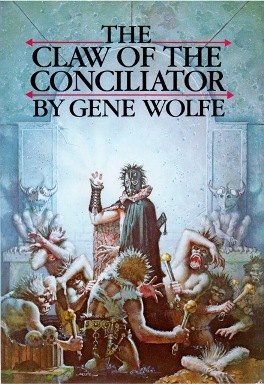
The initiate is (apparently) much different from the disciple. It might be preferable if the disciple was also an initiate. This seems to have been the case with the "Original 12". Gene Wolfe deals with some of these themes in his Torturer epos cycle.
"the 'heroic path' (vîra-mârga), which, under the sign of pure transcendence, have as principle a true anomia, and a scorn for the common moral and religious rules, although the ultimate end is not different from that of the 'Right-Hand Path', which instead uses such rules as a support ("the rules which do not chain but sustain those who do not know how to go by themselves"). In general, the recurrence of 'antinomianism' (this word designates the rejection of the rules of the current religion), which almost always indicates connections with the world of Initiation or of esotericism, is well-known in the history of religions."
I will note, however, that this is a different conception of "Anti-Nomos" than most Westerners are familiar with. The main antinomian varieties (in the past) are degenerating elements which have a simple hatred of transcendence, not a committment to it under other forms.